
Making the right decision requires more than comparing price tags. HOA boards must consider long-term costs, safety, reserve funding, asset life expectancy, and the overall value to the community. Understanding how to evaluate repair and replacement options can help boards make informed choices that support both current and future homeowners.
Understanding Repair vs Replacement in HOA Maintenance
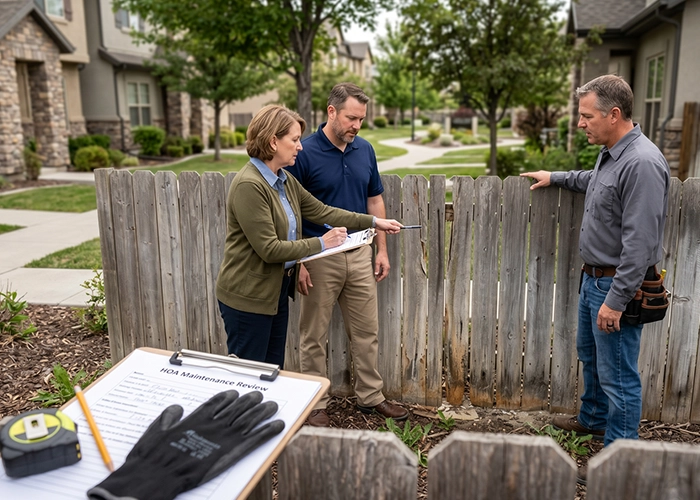
The repair vs replacement discussion often starts when a community asset begins to show signs of wear. A repair restores functionality and addresses a specific problem, while a replacement involves installing an entirely new component or system.
At first glance, repairing may appear to be the more affordable option. In many cases, it is. A minor roof leak, damaged fence panel, or malfunctioning pool pump can often be repaired quickly and cost-effectively.
However, there comes a point when repairs stop providing value. When maintenance issues become frequent, costs continue to rise, or performance declines, replacement may become the more responsible financial decision.
The goal is not simply to spend less today. The goal is to make the choice that delivers the best value over the asset’s remaining life.
Why This Decision Matters for HOA Boards
HOA boards have a fiduciary duty to manage association funds responsibly. Every maintenance decision affects the community’s budget, reserve fund, and overall property values.
Choosing repairs when replacement is needed can create a cycle of recurring expenses. Residents may become frustrated if the same problems continue to reappear. Emergency repairs can also place unexpected pressure on the operating budget.
On the other hand, replacing an asset too early may result in unnecessary spending. Boards must balance immediate financial concerns with long-term planning objectives.
Well-informed decisions help communities avoid waste, maintain assets properly, and preserve resident trust.
Key Factors to Consider Before Making a Decision

Every situation is unique, but several important factors should guide the decision-making process.
Age of the Asset
One of the first questions to ask is how old the asset is compared to its expected lifespan.
For example:
- Asphalt pavement typically lasts 15 to 25 years.
- Roof systems may last 20 to 30 years depending on materials.
- Pool pumps often have a lifespan of 8 to 12 years.
- HVAC systems generally last 15 to 20 years.
If an asset is nearing the end of its useful life, replacement may provide better long-term value than ongoing repairs.
Conversely, if the asset is relatively new, repairs may be the more practical solution.
Frequency of Repairs
A single repair is rarely cause for concern. Repeated repairs tell a different story.
When the same issue continues to occur, boards should evaluate the cumulative cost of maintenance over time. Multiple service calls, replacement parts, and labor expenses can quickly exceed the cost of installing new equipment.
A helpful approach is to review maintenance records. Patterns often emerge that reveal whether an asset is becoming unreliable.
Safety and Liability Risks
Safety should always remain a top priority.
A deteriorating staircase, damaged playground equipment, unstable retaining wall, or failing electrical system can create liability concerns for the association. In these situations, delaying replacement may expose the community to unnecessary risk.
When safety is involved, the least expensive option is not always the best option.
Professional inspections can help determine whether repairs are sufficient or if replacement is necessary to maintain compliance and reduce liability exposure.
Operational Performance
Assets that no longer perform efficiently can affect resident experience and increase operating costs.
An aging irrigation system may waste water. An outdated HVAC system may consume excessive energy. Pool equipment may require constant adjustments to maintain proper operation.
Boards should consider whether a replacement could improve performance, reduce utility expenses, and decrease future maintenance needs.
Looking Beyond the Initial Cost
One of the most common mistakes boards make is focusing only on immediate expenses.
A repair may cost $2,000 today while replacement may cost $15,000. At first glance, repair seems like the obvious choice.
However, if additional repairs totaling $10,000 are likely over the next few years, replacement may actually be more cost-effective.
Evaluating the total cost of ownership provides a clearer picture. This includes:
- Future repair expenses
- Maintenance costs
- Energy consumption
- Downtime or service disruptions
- Expected lifespan after repair
A long-term perspective often leads to better financial outcomes.
How Reserve Studies Support Better Decisions

Reserve studies play an important role in repair and replacement planning.
A reserve study evaluates major community assets and estimates their remaining useful life. It also projects future replacement costs and helps associations plan funding accordingly.
When boards rely on current reserve study information, they gain valuable insight into whether an asset is approaching replacement age.
Reserve studies can also help answer important questions:
- Is replacement already anticipated in the reserve plan?
- Are sufficient funds available?
- Would repairing the asset delay replacement significantly?
- How will the decision affect future reserve contributions?
Using reserve study data helps remove guesswork from the decision-making process.
Situations Where Repair Often Makes Sense
Repairing an asset is often the best choice when certain conditions exist.
The Damage Is Isolated
A single damaged fence section or a localized roof issue can often be repaired without affecting the entire system.
Targeted repairs help extend the life of the asset while minimizing costs.
The Asset Has Significant Remaining Life
If an asset is still relatively young and functioning well overall, repairs can preserve its value and maximize the original investment.
Boards should avoid replacing assets prematurely when effective repairs are available.
Repair Costs Are Reasonable
Many industry professionals use a simple guideline. If repair costs represent only a small percentage of replacement costs and the repair significantly extends asset life, repair is often justified.
The key is ensuring the repair provides meaningful value rather than serving as a temporary fix.
Situations Where Replacement Is Usually the Better Option
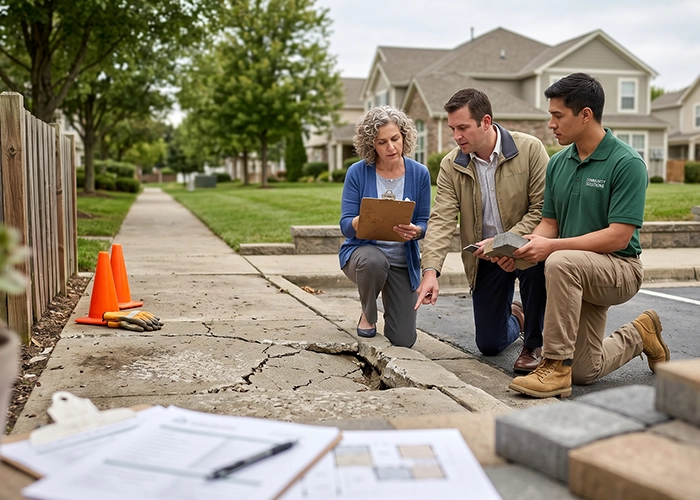
There are also circumstances where replacement becomes the more practical choice.
Repairs Have Become Frequent
Repeated failures often indicate that the asset is reaching the end of its service life.
When maintenance costs continue to increase, replacement may reduce expenses and improve reliability.
Parts Are Difficult to Obtain
Older equipment sometimes requires obsolete components that are difficult or expensive to source.
Replacement can eliminate these challenges and simplify future maintenance.
Efficiency Has Declined
Newer systems often offer significant improvements in efficiency, technology, and performance.
Reduced utility costs and lower maintenance requirements can offset a portion of the replacement expense over time.
Community Appearance Is Suffering
Curb appeal matters in every HOA.
Aging fencing, worn clubhouse furnishings, deteriorating signage, or cracked pavement can negatively affect the appearance of the community. Strategic replacements can improve aesthetics and help protect property values.
The Importance of Professional Evaluations
HOA boards should avoid making major repair or replacement decisions based solely on assumptions.
Professional evaluations provide objective information about asset condition, remaining life expectancy, and recommended actions.
Qualified contractors, engineers, reserve specialists, and maintenance professionals can help boards understand:
- The extent of the damage.
- Expected repair longevity.
- Remaining useful life.
- Replacement timelines.
- Estimated costs.
Obtaining multiple opinions may also help boards make more informed decisions, particularly for large capital projects.
Communicating Decisions With Homeowners

Repair and replacement projects often generate questions from residents.
Transparent communication helps reduce misunderstandings and build support for board decisions.
When discussing projects, boards should explain:
- Why the issue requires attention.
- Options that were considered.
- Cost comparisons.
- Professional recommendations.
- Long-term benefits for the community.
Homeowners are more likely to support expenditures when they understand the reasoning behind them.
Providing updates throughout the process also helps maintain trust and confidence.
Creating a Long-Term Asset Management Strategy
The most successful HOA communities do not treat repair vs replacement decisions as isolated events.
Instead, they develop proactive asset management strategies that include routine inspections, preventive maintenance, reserve funding, and long-term planning.
A structured approach allows boards to anticipate future needs rather than reacting to emergencies. It also helps spread costs over time and reduces the likelihood of special assessments.
When maintenance planning becomes part of the community’s overall strategy, boards can make decisions with greater confidence and consistency.
Making Smart Choices for Community Success
Repair and replacement decisions become much easier when your board has experienced guidance and professional support. HOA boards can make choices that benefit both current residents and future homeowners.
With the right management partner, your board can approach repair and replacement decisions with clarity, confidence, and long-term financial stability.
Call us at 401-414-5130 or contact us online today to learn how we can help your community manage assets wisely and plan confidently for the future.
Related Articles:
- What Are HOA Dues?
- Breaking Down HOA Fees and Where the Money Really Goes
- Attached vs Detached Homes: Which Housing Style Is Right for Your HOA Community
Accidents can happen anywhere, even in well-managed communities. That is why having properly stocked first aid kits for HOAs is more than a good idea—it is a responsibility that protects residents and reduces risk.
From pool decks to clubhouses, quick access to the right supplies can make a meaningful difference. For HOA boards, planning ahead ensures that small incidents stay manageable and do not turn into larger emergencies.
Why First Aid Kits for HOAs Are a Necessity
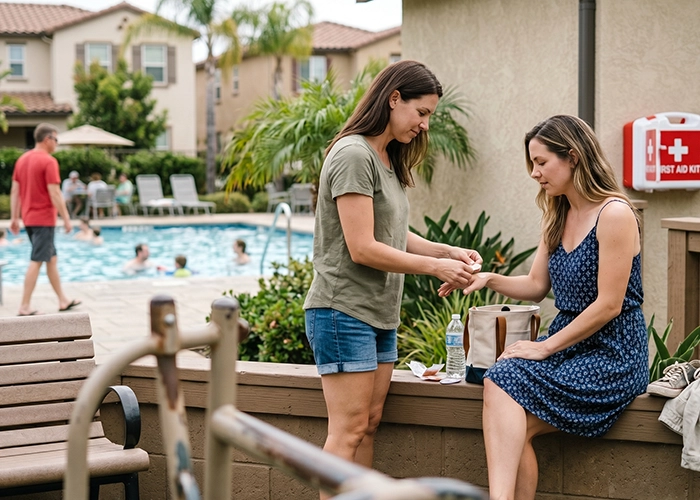
When people think about community safety, they often focus on security cameras or lighting. Those matter, but first aid kits for HOAs play a different and equally important role. They support immediate response in those first few minutes after an incident occurs.
In shared spaces, there is always a chance of minor injuries. Children playing, residents exercising, or guests visiting amenities can all lead to unexpected situations. Having a first aid kit nearby helps staff or residents respond quickly without scrambling for supplies.
There is also a liability component that boards cannot ignore. When an HOA shows that it has taken reasonable safety steps, it strengthens its position should an incident arise. It demonstrates care, preparation, and a commitment to resident well-being.
Where First Aid Kits Should Be Located in a Community
Placement matters just as much as the kit itself. A well-stocked kit does little good if no one can find it when needed.
HOAs should think about high-traffic and higher-risk areas across the property. These are spaces where activity levels are higher or where injuries are more likely to occur.
Common Placement Areas
- Pool areas and splash pads
- Fitness centers and gyms
- Clubhouses and event rooms
- Playground areas
- Maintenance or workshop spaces
Each of these areas sees regular use, and in many cases, they involve physical activity. That increases the likelihood of minor injuries such as cuts, scrapes, or strains.
It is also helpful to consider visibility. Kits should be clearly marked and easy to access, not locked away in offices that may not be open at all times.
What Should Be Included in HOA First Aid Kits
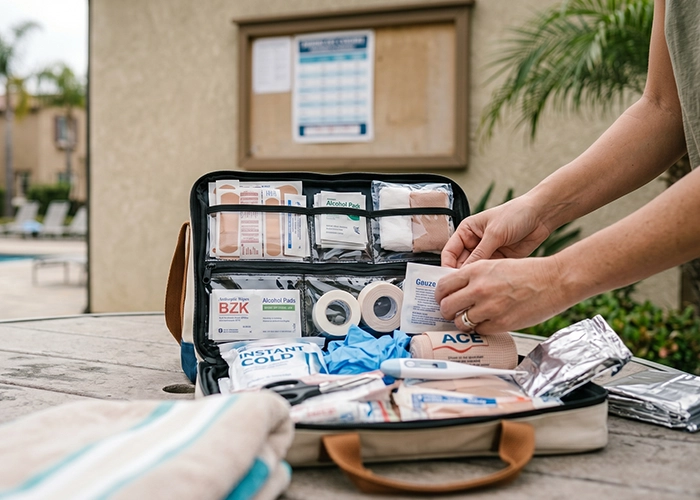
Not all first aid kits are created equal. For HOAs, a basic home kit is usually not enough. Community spaces require a more thoughtful approach based on usage and risk.
Core Supplies Every Kit Should Have
- Adhesive bandages in various sizes
- Sterile gauze pads and rolls
- Antiseptic wipes or solution
- Medical tape
- Disposable gloves
- Tweezers and small scissors
- Instant cold packs
- Burn cream or gel
- CPR face shield or mask
These items address the most common minor injuries. Cuts, scrapes, burns, and sprains are typical in shared spaces, and these supplies allow for quick treatment.
Additional Recommended Items
- Eye wash solution
- Elastic bandages for sprains
- Emergency blanket
- Thermometer
- First aid manual or quick reference guide
These additions help cover less frequent but still important situations. While not every kit needs to be advanced, having a few extra items can expand its usefulness.
It is also important to tailor kits based on location. A poolside kit, for example, may need more emphasis on slips and water-related incidents, while a fitness center kit may focus more on strains or minor injuries.
How Often Kits Should Be Checked and Maintained
A first aid kit is only effective if it is ready when needed. That means regular checks are not optional—they are part of responsible HOA management.
Maintenance Best Practices
- Assign responsibility to a specific staff member or vendor
- Check kits at least once a month
- Replace expired or used items promptly
- Keep a simple log of inspections
These steps ensure that nothing is missing when it matters most. Supplies like antiseptics and medications can expire, and items often get used without being replaced.
Consistency is key here. A simple routine prevents small oversights from turning into bigger issues later.
Training and Awareness Within the Community
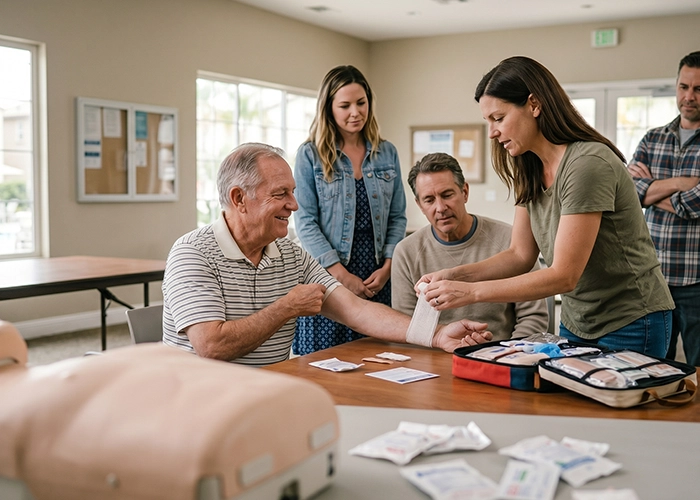
Even the best first aid kits for HOAs are not helpful if no one knows how to use them. While formal medical training is not required for everyone, basic awareness can go a long way.
Boards may consider offering occasional safety workshops or sharing simple guides with residents. This creates a more prepared community without overwhelming anyone.
For staff, basic first aid and CPR training is often a worthwhile investment. It builds confidence and ensures that someone is ready to step in if needed.
Clear signage also helps. When residents know where kits are located, response time improves during an incident.
Legal and Liability Considerations for HOAs
HOAs are not medical providers, but they do have a duty to maintain reasonably safe environments. First aid kits are part of that broader responsibility.
Having kits in place shows that the board has taken proactive steps to address common risks. It does not eliminate liability, but it can reduce exposure and demonstrate good governance.
It is also wise to review local regulations or insurance requirements. Some policies may include recommendations or expectations around safety equipment.
Boards should document their efforts as well. Maintenance logs, placement plans, and training records all contribute to a clear picture of responsible management.
Common Mistakes HOAs Should Avoid
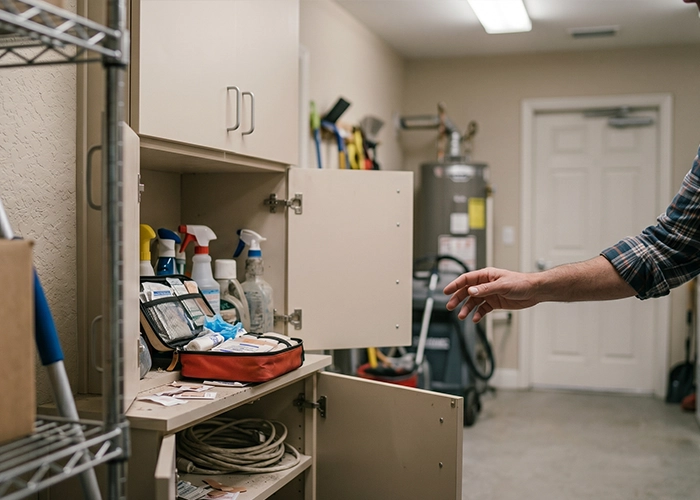
Even well-intentioned boards can overlook details when it comes to first aid kits. Avoiding a few common mistakes can make a noticeable difference.
Frequent Oversights
- Storing kits in locked or hard-to-access areas
- Forgetting to restock after items are used
- Using kits that are too small for community needs
- Failing to label kit locations clearly
- Ignoring expiration dates
Each of these issues reduces the effectiveness of the kit. In an emergency, even small delays or missing supplies can complicate the situation.
Taking a proactive approach helps avoid these gaps and keeps safety measures reliable.
How First Aid Kits Fit Into Broader HOA Safety Planning
First aid kits should not be viewed in isolation. They are one part of a larger safety strategy that includes maintenance, communication, and planning.
For example, well-maintained walkways reduce trip hazards, while proper lighting improves visibility at night. Combined with accessible first aid kits, these efforts create a safer overall environment.
Emergency planning also plays a role. Knowing how to respond to different situations, whether minor injuries or larger incidents, helps boards and residents stay calm and effective.
When all these elements work together, the community benefits from a more thoughtful and prepared approach to safety.
Choosing the Right Vendor or Kit Provider

Not every HOA has the time or expertise to build and maintain kits from scratch. In many cases, working with a vendor can simplify the process.
A reliable provider can supply appropriately sized kits, help with restocking, and even offer inspection services. This reduces the burden on staff while ensuring consistency.
When evaluating options, boards should look for vendors with experience in commercial or community settings. Residential-scale kits often fall short for HOA needs.
Cost should be considered, but value matters more. A slightly higher investment can result in better coverage and fewer gaps.
A Small Investment That Supports Community Safety
First aid kits may seem like a small detail, but they play a meaningful role in protecting residents and supporting quick response. Want to strengthen your community’s safety plan without overcomplicating the process?
Our team can help you assess, place, and maintain first aid kits tailored to your HOA’s needs. Contact Harbour Master Management Group today to make safety simple, practical, and reliable for your residents.
EV charging stations for HOAs are quickly becoming a topic boards can’t ignore. As more residents switch to electric vehicles, communities are feeling the pressure to adapt. Planning ahead now can help your association stay competitive and avoid costly decisions later.
Why Demand Is Growing
Electric vehicles are no longer a niche choice. They are showing up in everyday communities, from townhomes to high-rise condos. Residents are starting to ask a simple question: where do I charge my car at home?
For HOAs, this shift creates both opportunity and responsibility. Boards are expected to balance resident needs with shared property limitations. That balance can be tricky, especially when infrastructure upgrades are involved.
The demand is also being driven by state and local policies. Many regions now encourage or even require EV readiness in new developments. Older communities are now catching up, often faster than expected.
How EV Charging Works in Community Settings
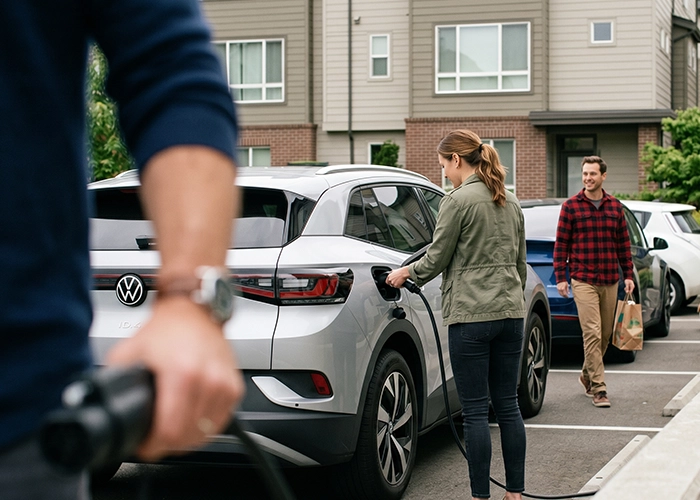
At a basic level, EV charging stations supply electricity to a vehicle through a dedicated unit. In HOA communities, these units can be installed in common areas, assigned parking spaces, or garages.
There are different charging levels, and each serves a different purpose:
- Level 1 Charging: Uses a standard outlet. It is slow but requires little to no infrastructure changes.
- Level 2 Charging: The most common option for HOAs. It provides faster charging and requires a 240-volt connection.
- DC Fast Charging: Rare in residential settings due to cost and power requirements.
Most HOAs focus on Level 2 chargers because they offer a good balance between speed and affordability. Residents can charge overnight, which fits typical usage patterns.
Placement is another key factor. Shared parking areas may require multiple stations, while assigned parking spaces allow for more controlled installations.
Understanding Installation Requirements and Limitations
Installing EV charging stations is not as simple as adding a few outlets. Electrical capacity must be reviewed first. Many older communities were not built with this type of demand in mind.
A professional assessment is usually required to determine:
- Available electrical capacity
- Distance from power sources
- Panel upgrade needs
- Load management options
If capacity is limited, load-sharing systems can be used. These systems distribute power across multiple chargers, preventing overload while still supporting several users.
Physical space also matters. Trenching, conduit placement, and accessibility must all be considered. Some installations may require permits and inspections, which can add time to the project.
Costs Associated With EV Charging Stations

Cost is often the first concern for HOA boards. The total investment depends on several factors, including the number of stations, electrical upgrades, and site conditions.
Typical cost components include:
- Equipment purchase
- Electrical upgrades
- Installation labor
- Permitting and inspection fees
- Ongoing maintenance
In many cases, the cost per station can range widely. A simple installation may cost a few thousand dollars, while complex projects can be significantly higher.
There are also funding options to explore:
- Government incentives or rebates
- Utility company programs
- Resident pay-per-use models
- Special assessments or reserve allocations
Planning the financial approach early helps avoid confusion later. It also allows boards to communicate clearly with residents about expectations.
Policy Considerations for HOA Boards
Adding EV charging stations is not just a technical project. It also requires clear policies that protect both the association and its residents.
Boards should address key questions such as:
- Who pays for installation and electricity usage?
- Are chargers assigned or shared?
- How is access managed?
- What happens when demand exceeds supply?
Rules should be documented and consistent. This reduces disputes and ensures fair access for all residents.
Some HOAs allow individual owners to install chargers in their assigned spaces. Others prefer a shared system managed by the association. Each approach has pros and cons, depending on the community layout.
Benefits of EV Charging Stations for Communities
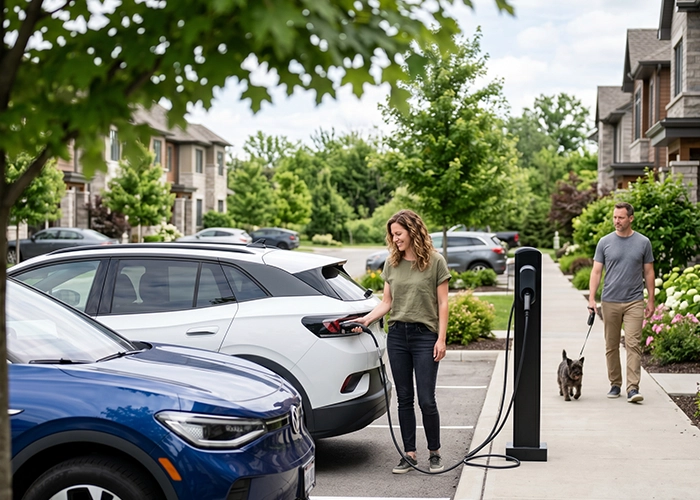
While the upfront cost can feel significant, the long-term benefits are often worth it. Communities that invest in EV infrastructure tend to see increased appeal among buyers and renters.
Key benefits include:
- Higher property values
- Increased marketability
- Future-ready infrastructure
- Improved resident satisfaction
Sustainability is another advantage. Many residents value environmentally responsible communities. Offering EV charging aligns with that mindset and can strengthen your association’s reputation.
There is also a practical side. As EV adoption grows, communities without charging options may struggle to attract new residents.
Common Challenges and How to Address Them
Every HOA faces challenges when introducing new infrastructure. EV charging is no exception, but most issues can be managed with proper planning.
Some common concerns include:
- Limited electrical capacity
- Uneven demand among residents
- Cost distribution disagreements
- Parking space limitations
Solutions often involve a phased approach. Starting with a small number of stations allows the board to test demand and adjust over time.
Communication also plays a major role. Residents should understand the reasoning behind decisions and how the system will work. Transparency helps build trust and reduces resistance.
Planning for Future Growth
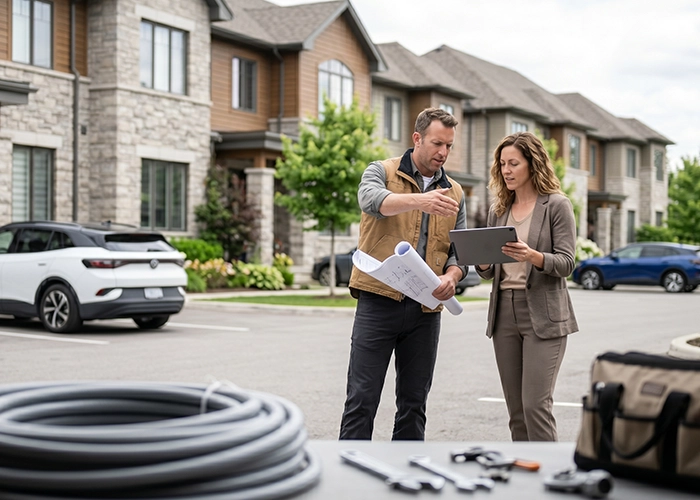
EV adoption is expected to continue rising. What feels like a small request today may become a standard expectation within a few years.
Planning for growth means thinking beyond current demand. Even if only a few residents need charging now, infrastructure should be designed with expansion in mind.
Future-ready planning may include:
- Installing conduit for additional stations
- Upgrading electrical panels to handle increased load
- Choosing scalable charging systems
This approach can save money in the long run. Retrofitting later is often more expensive than preparing upfront.
Working With Professionals for a Smooth Process
HOA boards are not expected to manage EV projects alone. Working with experienced professionals can simplify the process and reduce risk.
Helpful partners may include:
- Electrical engineers
- Licensed contractors
- EV charging vendors
- HOA management companies
These professionals can guide the board through each step, from planning to installation. They can also help ensure compliance with local codes and regulations.
Having the right team in place makes a noticeable difference. It allows the board to focus on decision-making rather than technical details.
What Residents Should Know About EV Charging
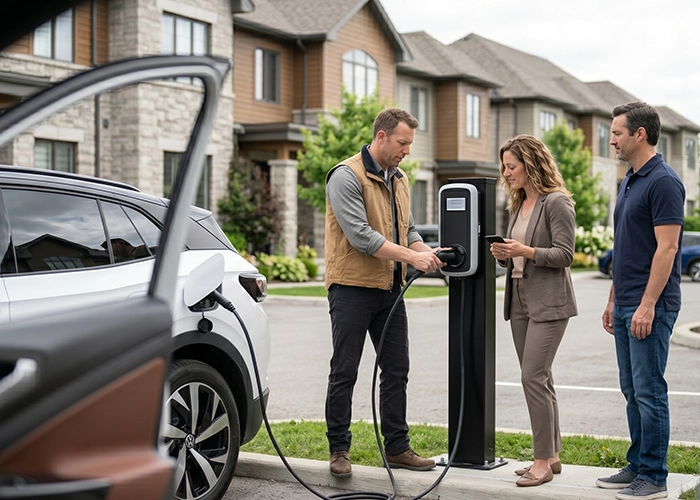
Residents play an important role in the success of any EV charging program. Clear expectations help avoid misunderstandings.
Residents should understand:
- Charging availability and scheduling
- Usage costs and billing methods
- Community rules and guidelines
Education can go a long way. When residents know how the system works, they are more likely to support it.
Some HOAs also provide updates as demand grows. This keeps everyone informed and helps the community adapt together.
A Smarter Way Forward for Modern Communities
EV charging stations for HOAs are no longer just a nice-to-have feature. They are becoming part of what defines a modern, forward-thinking community. Thinking about adding EV charging stations to your community? The right strategy makes all the difference.
A knowledgeable HOA management can help you. Contact Harbour Master Management Group to evaluate your options and create a plan that fits your community’s needs.
Related Articles: