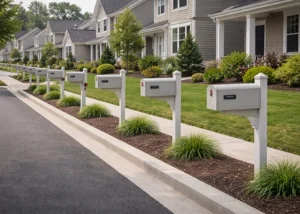
Mailboxes may seem like a small detail, but in HOA communities, they often become a surprisingly common source of confusion. Clear HOA mailbox rules help protect curb appeal, reduce disputes, and keep mail delivery safe and consistent.
Understanding HOA Mailbox Rules and Why They Matter
HOA mailbox rules exist for one main reason: Consistency. In planned communities, mailboxes are part of the neighborhood’s overall appearance, and they often sit in highly visible areas. When one mailbox is rusted, leaning, or painted a different color, it can stand out quickly.
Rules also help prevent practical issues. A damaged mailbox can create safety hazards, interfere with mail delivery, or lead to complaints from residents who feel standards are not being enforced fairly.
Most importantly, mailbox rules reduce the back-and-forth. When boards and residents know who is responsible for what, repairs happen faster and disagreements become less personal.
Who Owns the Mailbox in an HOA Community?
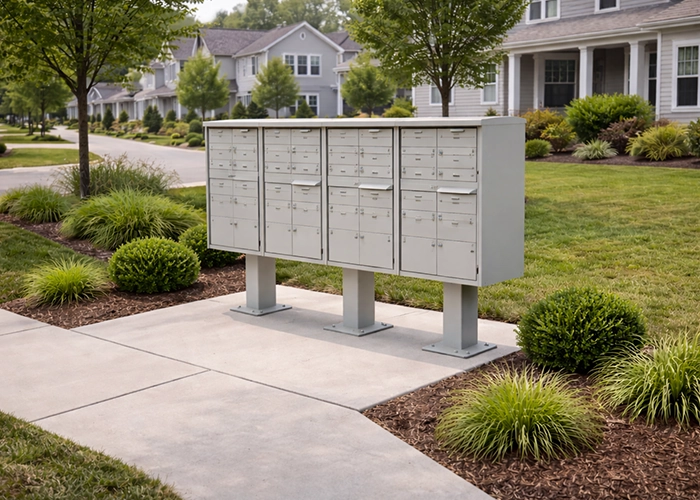
One of the biggest misunderstandings in HOA communities is ownership. Many homeowners assume the HOA owns the mailbox because the HOA enforces rules about it. In reality, ownership depends on how the community was developed and what the governing documents say.
In some associations, the mailbox is considered part of the homeowner’s lot. That means the owner is responsible for maintaining it, repairing it, and replacing it when needed, as long as they follow HOA standards.
In other communities, mailboxes are treated as a common area asset, especially when mailboxes are clustered or installed on HOA-maintained property. In those cases, the association may handle repairs and replacement, sometimes using reserve funds.
If there is any uncertainty, the declaration, bylaws, and rules and regulations should be reviewed. A board should avoid making assumptions, especially when money is involved.
HOA Mailbox Rules vs USPS Requirements
HOAs can set standards, but they cannot override USPS delivery requirements. That’s an important point because mailbox placement and accessibility affect whether mail can be delivered at all.
USPS guidelines generally cover things like mailbox height, distance from the curb, and clear access for carriers. If an HOA installs decorative mailbox posts or requires a mailbox style that blocks access, the community may create delivery problems.
This is one reason HOA boards should be cautious when changing mailbox designs. A mailbox can look great and still be impractical for mail delivery.
When mailbox upgrades are being considered, it’s smart to confirm that the style and placement will still meet USPS expectations. This is especially important for curbside mailboxes and cluster mailbox units.
Common HOA Mailbox Standards in Most Communities
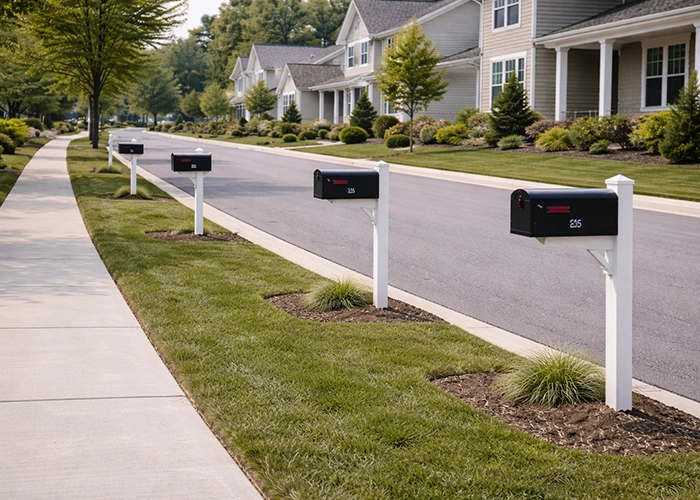
Most HOAs focus on mailbox appearance and uniformity. These rules are usually tied to curb appeal, but they also help ensure the neighborhood looks maintained and consistent.
Mailbox rules often address the mailbox style, color, post type, and house number format. Some associations require black mailboxes with white numbers. Others require bronze finishes or specific decorative posts that match the neighborhood’s theme.
Many HOAs also include rules about keeping the mailbox in good condition. Rust, peeling paint, missing flags, and leaning posts are common violations.
It is also typical for HOAs to restrict personal decorations. That can include stickers, oversized numbers, sports logos, or seasonal decor that stays up too long.
Maintenance Responsibilities: HOA vs Homeowner
Mailbox maintenance is one of those topics where frustration can build quickly. Residents want the HOA to handle it, and boards often assume the homeowner should take care of it.
The cleanest way to approach this is to separate maintenance into categories.
If the mailbox is owned by the homeowner, the homeowner usually handles basic upkeep. That includes repainting, replacing a broken flag, tightening a loose post, and keeping the area clean.
If the mailbox is HOA-owned, the association may handle repairs and replacements. This is common with cluster mailboxes, where a shared unit serves multiple homes.
Even when the homeowner is responsible, the HOA still has the right to enforce standards. That means a resident can be required to fix a mailbox that is damaged or out of compliance.
What Happens When a Mailbox Is Damaged?
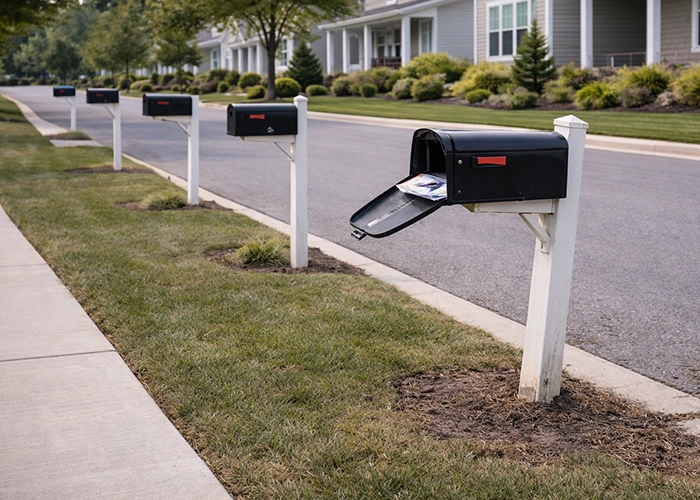
Mailbox damage happens in all kinds of ways. It can be caused by storms, vehicles, landscaping equipment, vandalism, or even simple wear over time.
When a mailbox is damaged, the first question should be whether mail delivery is affected. If the mailbox is unusable, it becomes a practical issue, not just an appearance issue.
The second question is responsibility. If the homeowner owns the mailbox, they are usually expected to repair it quickly. If the HOA owns it, the board or management company should coordinate repair.
In many HOAs, residents are expected to report mailbox damage. That includes damage to shared cluster units, missing keys, broken doors, or unsafe conditions.
Mailbox Replacement Rules and Architectural Review
Many HOAs require approval before a mailbox is replaced, even when the homeowner is paying for it. That may feel unnecessary to residents, but it is usually tied to uniformity.
Mailbox replacements often fall under architectural standards. That means the HOA may require a specific model, a specific post, and a specific paint color.
Some communities maintain a list of approved mailbox vendors. Others provide exact specifications so residents can purchase the correct materials themselves.
Boards should be careful not to make the process too difficult. If approval takes weeks, residents may delay repairs, which leads to more violations and more complaints.
A good system is one where the mailbox standard is clear, and replacements can be approved quickly as long as the resident follows the guidelines.
Cluster Mailboxes: Unique Rules and Common Issues
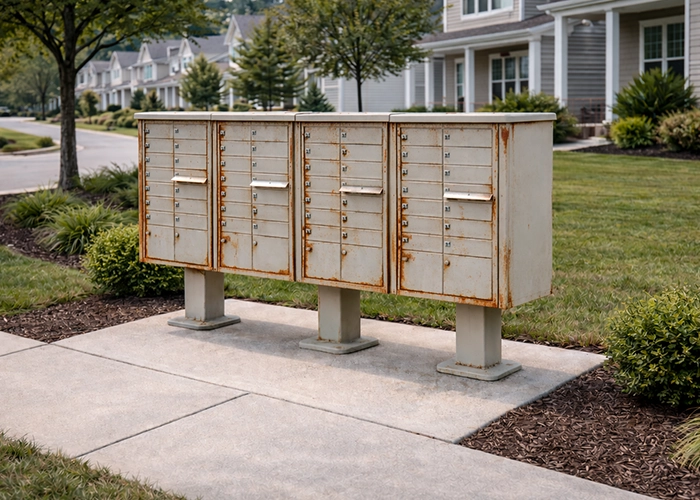
Cluster mailboxes are different from curbside mailboxes in almost every way. They are shared, they are typically installed on HOA-maintained property, and they involve keys and locks that residents depend on daily.
Most cluster mailbox units are considered common property. That means repairs often fall under the HOA’s responsibility.
Cluster units can also create more complicated problems. Locks can fail. Doors can break. Units can rust. And when a box is damaged, multiple residents may be affected.
If a cluster mailbox is aging, replacement should be planned instead of delayed. These units are expensive, and emergency replacement can strain the budget.
When cluster mailboxes are involved, communication becomes even more important. Residents want updates, timelines, and clear instructions for accessing their mail during repairs.
Mailbox Numbers, Labels, and Visibility Rules
Mailbox numbering is one of the simplest standards, but it can still cause disagreements.
Most HOAs require numbers to be readable from the street. This helps emergency services, delivery drivers, and visitors. It also improves the overall appearance of the community.
Rules may specify the size of the numbers, the font style, and the color contrast. For example, white numbers on a black mailbox are common because they are easy to see.
Some communities also require the house number to appear on both sides of the mailbox. That helps carriers and drivers who approach from different directions.
Even when numbers seem minor, inconsistent numbering can make a neighborhood look disorganized. That is why boards often enforce these rules closely.
Decorative Mailboxes and Personalization: Where HOAs Draw the Line
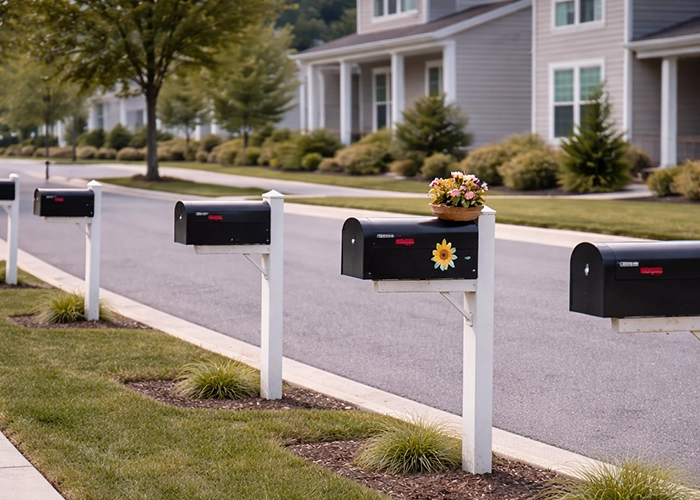
Residents often want to personalize their mailbox. It may feel like a harmless detail, but in HOA communities, personalization can spread quickly.
One customized mailbox becomes five. Then ten. Then the neighborhood loses the uniform look the HOA was created to protect.
HOAs usually restrict decorations like decals, oversized ornaments, flags, or mailbox toppers. They may also limit holiday decor to short timeframes.
This is not about being strict for the sake of it. It is about keeping standards consistent and avoiding selective enforcement.
If a community wants to allow tasteful personalization, the board should define what is allowed and what is not. Clear rules prevent future disputes.
Handling Mailbox Violations Without Creating Conflict
Mailbox violations can feel personal to homeowners. That is why the approach matters as much as the rule itself.
A good violation notice should be clear, polite, and specific. It should explain what the issue is, what standard applies, and what the homeowner needs to do.
It also helps to include a reasonable deadline. A mailbox repair may require ordering materials or scheduling a contractor, especially if posts need to be replaced.
Boards should also keep enforcement consistent. If one homeowner is cited for a faded mailbox but another is ignored, complaints will follow.
Management companies can play a valuable role here. When enforcement is handled professionally and consistently, it reduces tension between neighbors and board members.
Budgeting for Mailbox Repairs and Community-Wide Replacement
Mailbox replacement can become a major project in some communities, especially if the mailboxes are aging or if a large portion of the neighborhood is out of compliance.
If mailboxes are homeowner-owned, the HOA may still coordinate a community-wide replacement program. That helps maintain consistency and can reduce costs through bulk purchasing.
If the mailboxes are HOA-owned, the board should consider long-term planning. Cluster mailbox units, in particular, should be evaluated as part of the reserve study.
A reserve plan can prevent sudden special assessments. It also makes repairs less stressful for residents because costs are expected and explained in advance.
When boards treat mailbox maintenance as part of asset planning, the community benefits. Repairs become routine instead of urgent.
Best Practices for Clear HOA Mailbox Rules
Mailbox rules should not be complicated. The best rules are simple, visible, and easy to follow.
It helps when the HOA provides a mailbox standard document that includes photos, approved colors, and replacement specifications. When residents can see what is expected, compliance improves.
Boards should also review mailbox rules every few years. Communities change, vendors discontinue products, and standards may need to be updated.
If rules are outdated, residents may struggle to find the correct mailbox model. That can lead to inconsistent replacements and more enforcement issues.
A modern HOA should aim for clarity, not complexity. The goal is a neighborhood that looks good and functions well, without constant conflict.
Mailbox Rules Made Simple
Mailboxes may be small, but they affect curb appeal, daily convenience, and neighborhood consistency. With clear HOA mailbox rules and fair enforcement, boards can prevent common disputes and keep the community looking its best.
If your community needs help clarifying mailbox responsibilities, updating standards, or managing repairs, Harbour Master Management is here to help. Call 401-414-5130 or contact us online today.