Clear and consistent rules help every community association operate smoothly. One of the most effective tools boards use to clarify decisions and guide operations is HOA resolutions. When written correctly, they provide structure for everyday governance while helping homeowners understand how decisions are made.
Understanding HOA Resolutions and Why They Matter
HOA resolutions are formal decisions adopted by a homeowners association board to clarify policies, procedures, or rules within the community. While governing documents such as the CC&Rs establish the foundation of an association, resolutions help boards address day-to-day situations that those documents may not fully explain.
Most communities eventually face situations that were not anticipated when the original documents were written. Changes in technology, maintenance practices, and resident expectations all create new challenges for boards. A well-crafted resolution allows the board to respond to these evolving needs without constantly amending the governing documents.
Another important benefit is consistency. When the board adopts a resolution, it creates a written reference point that helps prevent confusion or uneven enforcement of rules. Homeowners can review the resolution and understand exactly how the policy applies to them.
For community associations across the United States, this clarity builds trust between the board and residents. When people know the reasoning behind a policy, they are more likely to support it.
How HOA Resolutions Fit Within Governing Documents
Every association operates under a hierarchy of documents that guide decision-making. These documents typically include the declaration or CC&Rs, bylaws, and sometimes additional rules and regulations.
Resolutions work within that structure rather than replacing it. The board cannot use a resolution to override the governing documents or contradict state laws. Instead, resolutions serve as an extension of those documents by providing detailed guidance.
For example, the governing documents may say that residents must maintain their property in good condition. However, they might not specify exactly what that means. A board could adopt a resolution that defines acceptable landscaping standards, maintenance timelines, or procedures for addressing violations.
Because resolutions are easier to adopt than amendments to the governing documents, they allow boards to remain flexible. They also provide a clear written record of how policies evolve over time.
Community management professionals often encourage boards to use resolutions when a policy needs clarification but does not require a full amendment.
Common Types of HOA Resolutions

Not all HOA resolutions serve the same purpose. Most associations rely on several different categories depending on the issue being addressed.
Administrative Resolutions
Administrative resolutions deal with the internal operations of the association. These policies guide how the board conducts business and manages the community’s daily functions.
Examples may include policies about meeting procedures, financial reporting, or communication methods with homeowners. Administrative resolutions help create consistency in how the board handles its responsibilities.
Policy Resolutions
Policy resolutions are among the most common types used by associations. These resolutions clarify rules that affect homeowners directly.
They may address topics such as architectural review procedures, parking guidelines, or the use of shared amenities. Because these policies influence daily life within the community, they should always be written in clear and simple language.
Special Resolutions
Special resolutions address unique situations that require board action. These are often temporary and are created to resolve a specific issue.
For example, a board might adopt a resolution outlining emergency repair procedures after a major storm. Once the situation is resolved, the policy may no longer be needed.
General Resolutions
General resolutions often apply to broad operational matters. They may involve long-term planning, budget policies, or maintenance standards for common areas.
These resolutions usually remain in place for many years and become part of the association’s overall governance framework.
The Process of Adopting HOA Resolutions
Boards should follow a clear and transparent process when creating new resolutions. This helps ensure the policy is legally sound and accepted by the community.
The process usually begins with identifying the issue that needs clarification. Board members may notice recurring questions from homeowners or discover that an existing rule is difficult to enforce.
Once the issue has been identified, the board drafts the resolution language. Many associations work with their community manager or legal counsel during this stage. Careful wording is important because vague language can lead to misunderstandings later.
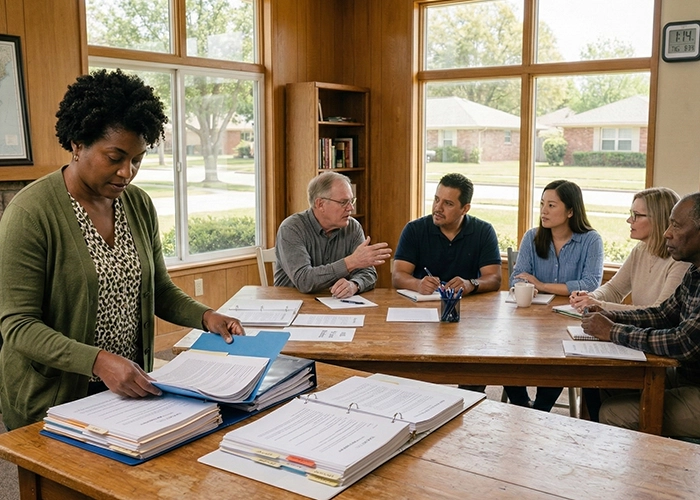
Next, the board reviews the draft during a board meeting. In many states, homeowners have the right to attend these meetings, which promotes transparency in the decision-making process.
Some associations also invite homeowner feedback before adopting a new resolution. This step is not always required, but it often improves community support for the policy.
After discussion and revisions, the board votes to adopt the resolution. The final version is then recorded in the association’s official records and shared with residents.
Writing Clear and Effective HOA Resolutions

A resolution should be written in a way that homeowners can easily understand. Complex legal language often creates confusion and unnecessary disputes.
Strong resolutions typically include a few essential components:
- Purpose of the Resolution
The document should clearly explain why the resolution exists and what issue it addresses. - Authority of the Board
The resolution should reference the governing documents that grant the board authority to adopt the policy. - Detailed Policy Language
The resolution must describe the rule or procedure in simple terms. Residents should be able to understand how it applies to them. - Implementation Date
Including the effective date helps eliminate uncertainty about when the policy begins. - Board Approval
The resolution should note the meeting date when the board formally adopted it.
While the format may vary between communities, these elements help create a strong and reliable policy document.
Communicating Resolutions to Homeowners

Adopting a resolution is only the first step. The board must also ensure homeowners are aware of the policy and understand how it affects them.
Communication plays a major role in successful governance. When residents learn about new policies early, they are less likely to feel surprised or frustrated later.
Associations often use several communication channels to share updates:
- Community newsletters
- Email announcements
- Resident portals
- Official meeting minutes
Some boards also hold informational sessions to explain major policy changes. This allows homeowners to ask questions and understand the reasoning behind the resolution.
Transparency strengthens the relationship between the board and the community. Residents are more likely to support policies when they feel included in the process.
Avoiding Common Mistakes When Creating Resolutions

Even experienced boards occasionally make mistakes when adopting new policies. Being aware of these challenges can help associations avoid unnecessary conflicts.
One common mistake is writing resolutions that conflict with the governing documents. This can create legal complications and may require the board to withdraw the policy later.
Another issue occurs when the resolution language is too vague. If homeowners cannot clearly understand the rule, enforcement becomes difficult.
Boards should also avoid adopting resolutions too quickly. Taking time to review the policy and seek professional guidance often prevents future problems.
Finally, poor communication can undermine even the best policies. When residents are not informed about a new resolution, confusion often follows.
Thoughtful planning and clear communication help ensure resolutions work as intended.
The Role of Professional HOA Management
Managing a community association involves many responsibilities. From financial oversight to rule enforcement, board members often balance several complex tasks at once.
Professional HOA management companies provide valuable support throughout the resolution process. Experienced managers help boards identify policy gaps and recommend practical solutions.
They also assist with drafting resolutions that align with governing documents and state regulations. This guidance helps boards avoid legal complications while maintaining consistent policies.
Another important benefit is organization. Management companies maintain official records of resolutions and ensure they remain accessible to homeowners when needed.
For many communities, this partnership allows board members to focus on long-term planning while professionals handle the administrative details.
Building Stronger Communities Through Clear Policies
Clear policies help communities operate smoothly and fairly. HOA resolutions provide a flexible way for boards to address evolving challenges while maintaining transparency.
When written carefully and communicated effectively, these policies strengthen trust between residents and leadership. They also ensure that rules are applied consistently throughout the neighborhood.
Strong governance does not happen by accident. It develops through thoughtful decisions and clear communication that keep the entire community moving forward.
Moving Forward With Confidence
HOA resolutions help community boards turn complex situations into clear and manageable policies. With thoughtful planning and open communication, these tools support fair governance and protect the interests of every homeowner.
If your association needs guidance on policy development or community management, working with experienced professionals can make the process far easier.
Our team helps community boards develop clear policies, improve communication, and keep operations running smoothly. Contact Harbour Management today to learn how professional HOA management can strengthen your community.
Related Articles