
A thriving community rarely happens by accident. A clear HOA strategy plan guides decisions, supports long-term goals, and helps the board stay focused even as members rotate over time. Strong planning also reassures homeowners that their dues support a thoughtful vision rather than a series of short-term fixes.
Why an HOA Strategy Plan Matters

A well-built HOA strategy plan bridges the gap between the community’s governing documents and the daily tasks that keep things running. Too many boards fall into a pattern of reacting to problems as they arise. Without a strategic roadmap, attention shifts from one urgent issue to another, leaving no progress toward important goals like facility upgrades or long-term financial stability.
A written plan protects the association from this cycle. Incoming directors gain instant clarity on the community’s major priorities, existing commitments, and the reasoning behind past decisions. This smooth handoff reduces confusion and helps the board avoid abrupt changes that disrupt the community’s momentum.
Clear strategy also supports trust. When homeowners see a plan outlining goals such as increasing reserves or improving aging amenities, they understand the purpose behind financial decisions. Even a difficult assessment increase becomes easier to accept when the long-term value is clearly communicated.
Setting the Foundation With an HOA Strategy Plan

A strong strategy begins with clarity. Once the board agrees on the community’s purpose and long-term direction, smart decisions become easier.
Vision and Mission as the Starting Point
A community’s mission explains why the association exists and the values it intends to protect. Many associations use this statement to emphasize property values, well-maintained shared spaces, and a sense of neighborly cooperation. A brief but clear statement works best since it becomes the reference point for every major board decision.
Reviewing each proposed initiative with the mission in mind helps prevent wasted time and unnecessary spending. If a project does not support the core purpose, it does not belong in the HOA strategy plan.
Using a SWOT Review for Honest Assessment
A helpful next step involves looking closely at the association’s Strengths, Weaknesses, Opportunities, and Threats. This review may highlight high owner participation or strong vendor relationships as strengths. Weaknesses often include deferred maintenance or low compliance rates. External opportunities might involve community partnerships, while threats may stem from increasing insurance costs or upcoming legal requirements.
A SWOT review encourages realistic goal setting. It keeps the board grounded in the association’s current condition while also pointing out where improvements can create meaningful progress.
Prioritizing Goals That Support the HOA Strategy Plan

Once the board understands the community’s position and long-term mission, goals can be shaped into specific, trackable commitments. Clear goals bring structure to the strategy plan and ensure the board has measurable ways to monitor progress.
Core Categories for HOA Goals
Most associations find that strategic goals fall into three main categories:
Physical Assets
Maintenance, repair schedules, and capital projects belong here. Examples include repaving roads by a certain year or refreshing pool furniture within a set timeframe. Reserve Study recommendations often guide these choices.
Financial Health
This category focuses on stability. Goals may include increasing reserves to a target percentage within several years or lowering delinquency rates. Strong financial direction protects the community from unexpected expenses and helps maintain property values.
Governance and Community Engagement
Improving communication, increasing resident involvement, or strengthening committee structures all fall under this area. Goals might include launching a new communication platform or encouraging higher voter turnout in annual elections.
These goals should follow the SMART framework: Specific, Measurable, Achievable, Relevant, and Time-bound. Clear goals such as replacing the clubhouse HVAC unit in a specific year allow the board to plan ahead rather than respond to emergencies.
The Reserve Study as a Strategic Anchor
Any HOA strategy plan must incorporate the Reserve Study. This document outlines projected repair and replacement costs for major components, making it a cornerstone of long-term planning. A financially healthy association cannot afford to ignore it.
The plan should describe the target reserve funding level and lay out how the association intends to meet that goal. Annual budgets should reflect these commitments so the community stays on track.
Bringing the HOA Strategy Plan Into Action

Even the strongest strategy loses its value without consistent implementation. Once goals are set, the board and management team must coordinate responsibilities and timelines.
Clear Delegation to Strengthen Accountability
Assigning each objective to a specific board member, committee, or management partner keeps tasks from falling through the cracks. For instance, improving delinquency rates may be carried out by the Treasurer and management company, while planning neighborhood events may sit with a social committee.
During this stage, reviewing the management contract becomes helpful. The board must confirm that the manager’s duties and available hours match the work expected under the strategy plan. Both sides should agree on expectations so the plan is realistic.
Building Action Steps and Aligning the Annual Budget
Large goals need smaller steps. Breaking tasks into manageable action items with clear due dates creates steady movement. For example, a major paving project may start with gathering bids, securing funding in the following quarter, and scheduling work after that.
Budget alignment strengthens the plan by ensuring financial resources match the goals. When the annual budget funds the priorities listed in the strategy, the plan becomes tangible. Without this alignment, even well-written strategies struggle to succeed.
Keeping the HOA Strategy Plan Alive Through Review and Communication
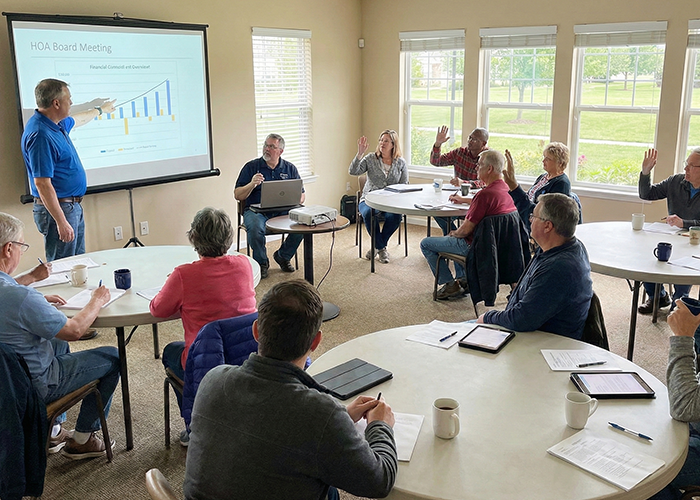
A strategic plan grows and changes as the community evolves. Regular reviews and open communication help the board stay on course and keep homeowners informed.
Regular Reviews Using Measurable Indicators
Quarterly reviews give the board time to measure progress and address issues early. Key performance indicators, such as reserve fund percentages or compliance rates, make reviews clearer and more objective.
Some situations require adjustments. A storm may damage common areas, or insurance premiums may rise unexpectedly. A flexible plan allows the board to reprioritize without losing sight of the long-term goals.
Open Communication With Homeowners
Sharing the HOA strategy plan increases transparency and trust. Summaries can appear in annual meeting packets, newsletters, or the community portal. Homeowners appreciate understanding how monthly assessments support meaningful goals instead of short-term fixes.
Clear communication makes the board’s work visible. When residents know the strategy, they can see how their cooperation and dues contribute to community upkeep and future improvements.
Looking Ahead With Strategic Confidence
A thoughtful HOA strategy plan guides the community from reactive decision-making toward purposeful, proactive leadership. Strong goals, supported by the Reserve Study and reinforced through ongoing review, help the board protect the association’s long-term financial health and physical condition. Clear communication then connects this work to the homeowners who rely on it.
Communities that follow a well-communicated plan tend to show greater stability, stronger participation, and a clearer vision for the future.