
Managing a neighborhood takes a lot of time and effort from everyone involved. You can find more success by forming HOA committees to handle various community needs. This approach allows board members to focus on big decisions while residents help with the daily details.
The Importance of HOA Committees for Your Community
Every successful homeowners association relies on the help of dedicated volunteers. These HOA committees serve as the hands and feet of the board of directors. They take on specific tasks that might otherwise overwhelm the five or seven people sitting on the main board.
When residents join these groups, they bring unique skills to the table. A retired CPA might help with the budget, while a gardener could improve the landscaping. This specialized focus ensures that every part of the neighborhood gets the attention it deserves.
Using these groups also helps build a stronger sense of community. People feel more connected to their home when they have a say in how things work. It creates a culture of service that makes the neighborhood a more pleasant place for everyone.
Knowing the Difference Between Standing and Ad Hoc Groups

Most associations use two main types of groups to get work done. Standing committees are permanent fixtures in the community that operate year after year. These usually cover ongoing needs like finance, architectural reviews, or landscaping maintenance.
Ad hoc committees are created for a specific purpose and a short period. For example, the board might form one to plan a special anniversary party or research a new pool builder. Once the task is finished, the group is officially disbanded.
Understanding which type you need helps the board stay organized. You do not want to keep a temporary group active longer than necessary. Clear labels for these groups help volunteers understand the level of commitment they are making.
How the Architectural Review Committee Maintains Home Values
The architectural review committee is often the most important group in an association. They are responsible for making sure all home improvements follow the community standards. This work is what keeps the neighborhood looking consistent and attractive.
Members of this group look at applications for new fences, paint colors, or home additions. They compare these requests against the rules found in the governing documents. Their goal is to protect property values by preventing eyesores or rule violations.
This group should consist of people who are fair and detail oriented. They need to follow the rules exactly as they are written. When this group works well, the entire community benefits from a professional and polished appearance.
Managing Neighborhood Finances with a Budget Committee

Financial health is the foundation of a stable homeowners association. A finance or budget committee helps the treasurer track spending and plan for the future. They spend time looking at the numbers so the board can make informed choices.
This group often helps draft the annual budget for the board to approve. They might also review the reserve study to see if the association is saving enough for big repairs. Having extra eyes on the bank statements provides an extra layer of transparency for the homeowners.
You should look for volunteers with backgrounds in accounting or business for this role. Their expertise can save the association a lot of money over time. They help ensure that assessments stay stable and that the bills are paid on time.
Keeping the Common Areas Green with a Landscape Committee
The first thing people notice when they drive into a neighborhood is the greenery. A landscape committee works to keep the entrances and parks looking their best. They act as a bridge between the board and the professional lawn care company.
These volunteers often walk the property to look for dead trees or broken sprinklers. They can suggest new flowers for the spring or ways to save water during a drought. Their input helps the board decide where to spend the landscaping budget most effectively.
A good landscape group can also help educate neighbors about their own yards. They might host a yard of the month contest to encourage everyone to keep things tidy. This creates a friendly competition that raises the curb appeal for every house on the block.
Planning Fun Events with a Social or Welcome Committee

An HOA is more than just a set of rules and a budget. It is a place where people live and raise their families. Social committees help turn neighbors into friends by planning parties and gatherings.
These groups might organize a summer barbecue, a holiday light contest, or a community yard sale. They handle the logistics of the event so the board does not have to worry about the details. These events are the best way to improve morale in the community.
A welcome committee is a specific branch that greets new homeowners. They might drop off a gift basket or a folder with important neighborhood information. This small gesture makes a huge difference in how a new neighbor feels about their new home.
Safety First with a Neighborhood Watch or Security Group
Safety is a top priority for most people when they choose where to live. A safety committee or neighborhood watch group helps keep the area secure. They work closely with local law enforcement to stay updated on local trends.
These volunteers do not act as police officers or security guards. Instead, they encourage neighbors to keep their porch lights on and report suspicious activity. They might also host meetings to teach people about home security systems or fire safety.
Having an active safety group can actually lower crime rates in an area. It sends a message that the residents are paying attention and looking out for each other. This peace of mind is one of the greatest benefits an association can provide.
The Legal Side of Forming and Using Committees

It is important to remember that committees usually do not have the power to make final decisions. Most state laws and bylaws say that only the board can spend money or change rules. The committee is there to research and make recommendations.
Every group should have a clear understanding of its limits. If a group thinks they can fire a vendor on their own, it can lead to legal trouble. The board must always have the final vote on any significant action.
You should check your association bylaws to see how many people can serve on a group. Some documents have strict rules about who can join or how meetings must be held. Following these legal requirements protects the association from potential lawsuits.
Creating a Strong Charter for Every Volunteer Group
A committee charter is a simple document that explains why the group exists. It lists the goals of the group and what they are expected to do. This document acts as a roadmap for the volunteers so they do not get off track.
The charter should also list who the group reports to and how often they should meet. It is helpful to include a budget if the group is allowed to spend any money. Having this in writing prevents confusion between the volunteers and the board.
Without a charter, groups often lose their way or start doing things they were never asked to do. It is worth the time to write these down at the start of every year. It keeps everyone accountable and focused on the tasks that actually matter.
How to Find the Best Volunteers in Your Neighborhood

Finding people to volunteer can be a challenge for many associations. The best way to get people involved is to ask them directly. Most neighbors are happy to help if they are asked to do something that matches their skills.
You can use the neighborhood newsletter or social media pages to announce openings. Make sure to explain that the time commitment is manageable. Many people are afraid to join because they think it will take up all of their free time.
Hosting a volunteer recruitment social can also be a great idea. It allows people to ask questions in a relaxed setting without feeling pressured. When you treat your volunteers well, they are more likely to stay for a long time.
Effective Communication Between the Board and Its Committees
Communication is the most common place where things go wrong in an association. The board needs to know what the groups are doing, and the groups need feedback from the board. A board liaison is the best way to bridge this gap.
A liaison is one board member who attends the committee meetings. They do not run the meeting, but they are there to answer questions and take notes back to the board. This ensures that everyone is on the same page during the monthly board meeting.
Written reports are another great tool for staying in touch. A simple one page summary of what the group did that month is usually enough. This keeps a paper trail that can be helpful for future board members.
Running Productive Meetings Without Wasting Any Time
Nobody likes to sit in a meeting that lasts for hours without getting anything done. Committee meetings should be short, focused, and organized. Using a simple agenda can help keep the conversation on the right track.
The chair of the group should make sure that everyone has a chance to speak. However, they also need to stop people from talking about things that are not on the agenda. Setting a time limit for the meeting is a great way to respect everyone’s schedule.
Taking minutes is also a requirement for most groups. These do not have to be a transcript of everything that was said. Just record the main points and any decisions that were made to share with the board later.
Dealing with Conflict or Disagreements in Your Groups
It is normal for people to have different opinions when they care about their neighborhood. However, the board needs to make sure that these disagreements do not turn into personal fights. Setting clear ground rules for behavior can help prevent problems.
If a group cannot stop fighting, the board may need to step in and make a change. Sometimes a simple change in leadership is all that is needed to get things moving again. The goal should always be to find a compromise that benefits the community.
Remind your volunteers that they are all on the same team. They all want the neighborhood to be a great place to live. Keeping this shared goal in mind makes it easier to work through tough conversations.
Changing Members and Planning for Future Leadership
Committees are the best place to find and train future board members. It allows residents to learn how the association works before they take on a bigger role. You should encourage your volunteers to think about running for the board eventually.
It is also healthy to change the members of a group every few years. This brings in fresh ideas and prevents people from getting burned out. You do not want the same three people doing everything for a decade.
Having a plan for leadership transitions ensures that knowledge is not lost. The outgoing chair should help the new chair learn the ropes for a month or two. This keeps the community running smoothly even when people move away.
Making the Most of Professional Management Support
Managing multiple groups can be a lot for a volunteer board to handle. This is where a professional management company can make a huge difference. They have the experience to help you form groups and write clear charters.
A manager can also help store your meeting minutes and financial reports in a safe place. They act as a resource for your volunteers when they have questions about the law or the rules. This support allows your board and your groups to be as effective as possible.
If you want to take your community to the next level, Harbour Master Management Group will help you every step of the way. Our team understands how to build strong relationships between the board and your residents.
Contact us today to learn how our management services can help your HOA committees succeed.
Mailboxes may seem like a small detail, but in HOA communities, they often become a surprisingly common source of confusion. Clear HOA mailbox rules help protect curb appeal, reduce disputes, and keep mail delivery safe and consistent.
Understanding HOA Mailbox Rules and Why They Matter
HOA mailbox rules exist for one main reason: Consistency. In planned communities, mailboxes are part of the neighborhood’s overall appearance, and they often sit in highly visible areas. When one mailbox is rusted, leaning, or painted a different color, it can stand out quickly.
Rules also help prevent practical issues. A damaged mailbox can create safety hazards, interfere with mail delivery, or lead to complaints from residents who feel standards are not being enforced fairly.
Most importantly, mailbox rules reduce the back-and-forth. When boards and residents know who is responsible for what, repairs happen faster and disagreements become less personal.
Who Owns the Mailbox in an HOA Community?
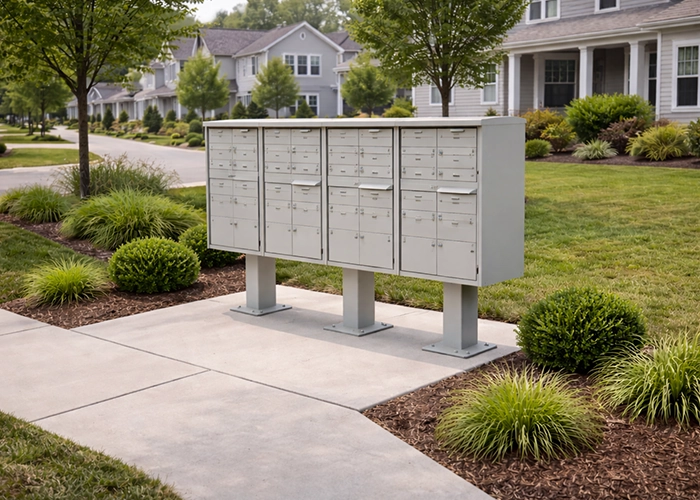
One of the biggest misunderstandings in HOA communities is ownership. Many homeowners assume the HOA owns the mailbox because the HOA enforces rules about it. In reality, ownership depends on how the community was developed and what the governing documents say.
In some associations, the mailbox is considered part of the homeowner’s lot. That means the owner is responsible for maintaining it, repairing it, and replacing it when needed, as long as they follow HOA standards.
In other communities, mailboxes are treated as a common area asset, especially when mailboxes are clustered or installed on HOA-maintained property. In those cases, the association may handle repairs and replacement, sometimes using reserve funds.
If there is any uncertainty, the declaration, bylaws, and rules and regulations should be reviewed. A board should avoid making assumptions, especially when money is involved.
HOA Mailbox Rules vs USPS Requirements
HOAs can set standards, but they cannot override USPS delivery requirements. That’s an important point because mailbox placement and accessibility affect whether mail can be delivered at all.
USPS guidelines generally cover things like mailbox height, distance from the curb, and clear access for carriers. If an HOA installs decorative mailbox posts or requires a mailbox style that blocks access, the community may create delivery problems.
This is one reason HOA boards should be cautious when changing mailbox designs. A mailbox can look great and still be impractical for mail delivery.
When mailbox upgrades are being considered, it’s smart to confirm that the style and placement will still meet USPS expectations. This is especially important for curbside mailboxes and cluster mailbox units.
Common HOA Mailbox Standards in Most Communities
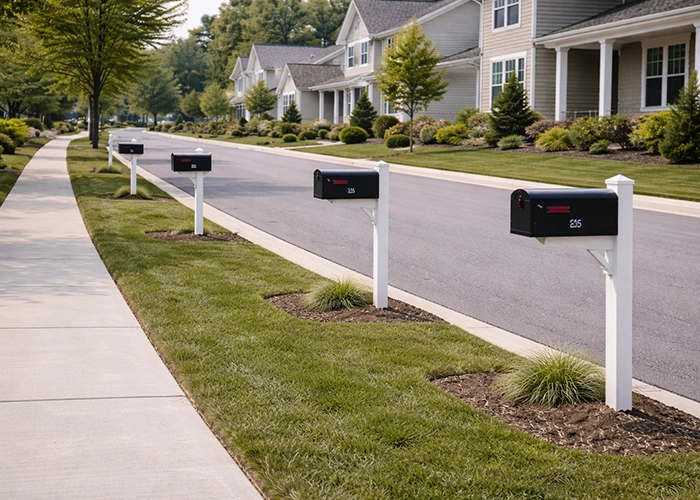
Most HOAs focus on mailbox appearance and uniformity. These rules are usually tied to curb appeal, but they also help ensure the neighborhood looks maintained and consistent.
Mailbox rules often address the mailbox style, color, post type, and house number format. Some associations require black mailboxes with white numbers. Others require bronze finishes or specific decorative posts that match the neighborhood’s theme.
Many HOAs also include rules about keeping the mailbox in good condition. Rust, peeling paint, missing flags, and leaning posts are common violations.
It is also typical for HOAs to restrict personal decorations. That can include stickers, oversized numbers, sports logos, or seasonal decor that stays up too long.
Maintenance Responsibilities: HOA vs Homeowner
Mailbox maintenance is one of those topics where frustration can build quickly. Residents want the HOA to handle it, and boards often assume the homeowner should take care of it.
The cleanest way to approach this is to separate maintenance into categories.
If the mailbox is owned by the homeowner, the homeowner usually handles basic upkeep. That includes repainting, replacing a broken flag, tightening a loose post, and keeping the area clean.
If the mailbox is HOA-owned, the association may handle repairs and replacements. This is common with cluster mailboxes, where a shared unit serves multiple homes.
Even when the homeowner is responsible, the HOA still has the right to enforce standards. That means a resident can be required to fix a mailbox that is damaged or out of compliance.
What Happens When a Mailbox Is Damaged?
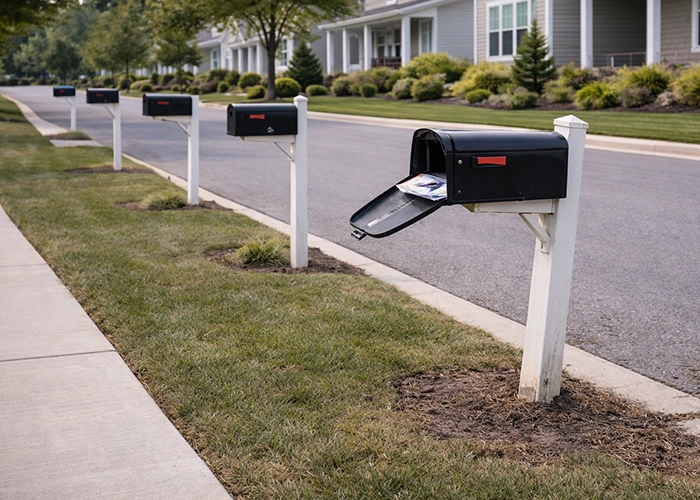
Mailbox damage happens in all kinds of ways. It can be caused by storms, vehicles, landscaping equipment, vandalism, or even simple wear over time.
When a mailbox is damaged, the first question should be whether mail delivery is affected. If the mailbox is unusable, it becomes a practical issue, not just an appearance issue.
The second question is responsibility. If the homeowner owns the mailbox, they are usually expected to repair it quickly. If the HOA owns it, the board or management company should coordinate repair.
In many HOAs, residents are expected to report mailbox damage. That includes damage to shared cluster units, missing keys, broken doors, or unsafe conditions.
Mailbox Replacement Rules and Architectural Review
Many HOAs require approval before a mailbox is replaced, even when the homeowner is paying for it. That may feel unnecessary to residents, but it is usually tied to uniformity.
Mailbox replacements often fall under architectural standards. That means the HOA may require a specific model, a specific post, and a specific paint color.
Some communities maintain a list of approved mailbox vendors. Others provide exact specifications so residents can purchase the correct materials themselves.
Boards should be careful not to make the process too difficult. If approval takes weeks, residents may delay repairs, which leads to more violations and more complaints.
A good system is one where the mailbox standard is clear, and replacements can be approved quickly as long as the resident follows the guidelines.
Cluster Mailboxes: Unique Rules and Common Issues
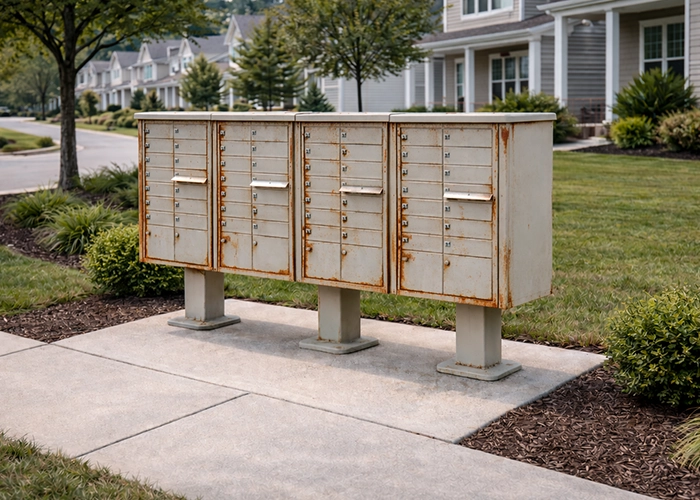
Cluster mailboxes are different from curbside mailboxes in almost every way. They are shared, they are typically installed on HOA-maintained property, and they involve keys and locks that residents depend on daily.
Most cluster mailbox units are considered common property. That means repairs often fall under the HOA’s responsibility.
Cluster units can also create more complicated problems. Locks can fail. Doors can break. Units can rust. And when a box is damaged, multiple residents may be affected.
If a cluster mailbox is aging, replacement should be planned instead of delayed. These units are expensive, and emergency replacement can strain the budget.
When cluster mailboxes are involved, communication becomes even more important. Residents want updates, timelines, and clear instructions for accessing their mail during repairs.
Mailbox Numbers, Labels, and Visibility Rules
Mailbox numbering is one of the simplest standards, but it can still cause disagreements.
Most HOAs require numbers to be readable from the street. This helps emergency services, delivery drivers, and visitors. It also improves the overall appearance of the community.
Rules may specify the size of the numbers, the font style, and the color contrast. For example, white numbers on a black mailbox are common because they are easy to see.
Some communities also require the house number to appear on both sides of the mailbox. That helps carriers and drivers who approach from different directions.
Even when numbers seem minor, inconsistent numbering can make a neighborhood look disorganized. That is why boards often enforce these rules closely.
Decorative Mailboxes and Personalization: Where HOAs Draw the Line
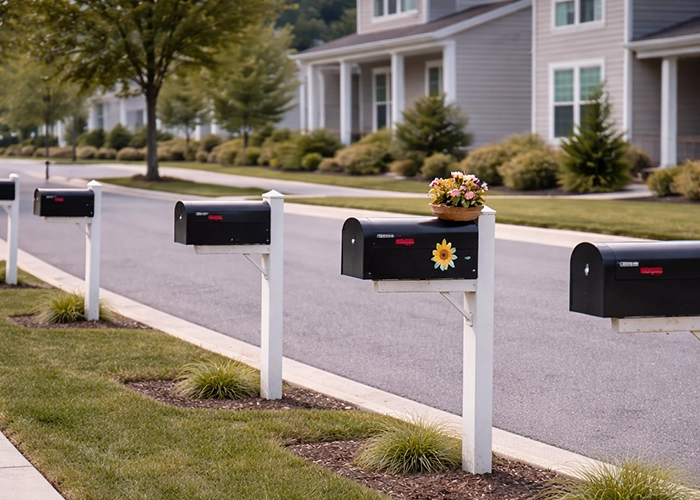
Residents often want to personalize their mailbox. It may feel like a harmless detail, but in HOA communities, personalization can spread quickly.
One customized mailbox becomes five. Then ten. Then the neighborhood loses the uniform look the HOA was created to protect.
HOAs usually restrict decorations like decals, oversized ornaments, flags, or mailbox toppers. They may also limit holiday decor to short timeframes.
This is not about being strict for the sake of it. It is about keeping standards consistent and avoiding selective enforcement.
If a community wants to allow tasteful personalization, the board should define what is allowed and what is not. Clear rules prevent future disputes.
Handling Mailbox Violations Without Creating Conflict
Mailbox violations can feel personal to homeowners. That is why the approach matters as much as the rule itself.
A good violation notice should be clear, polite, and specific. It should explain what the issue is, what standard applies, and what the homeowner needs to do.
It also helps to include a reasonable deadline. A mailbox repair may require ordering materials or scheduling a contractor, especially if posts need to be replaced.
Boards should also keep enforcement consistent. If one homeowner is cited for a faded mailbox but another is ignored, complaints will follow.
Management companies can play a valuable role here. When enforcement is handled professionally and consistently, it reduces tension between neighbors and board members.
Budgeting for Mailbox Repairs and Community-Wide Replacement
Mailbox replacement can become a major project in some communities, especially if the mailboxes are aging or if a large portion of the neighborhood is out of compliance.
If mailboxes are homeowner-owned, the HOA may still coordinate a community-wide replacement program. That helps maintain consistency and can reduce costs through bulk purchasing.
If the mailboxes are HOA-owned, the board should consider long-term planning. Cluster mailbox units, in particular, should be evaluated as part of the reserve study.
A reserve plan can prevent sudden special assessments. It also makes repairs less stressful for residents because costs are expected and explained in advance.
When boards treat mailbox maintenance as part of asset planning, the community benefits. Repairs become routine instead of urgent.
Best Practices for Clear HOA Mailbox Rules
Mailbox rules should not be complicated. The best rules are simple, visible, and easy to follow.
It helps when the HOA provides a mailbox standard document that includes photos, approved colors, and replacement specifications. When residents can see what is expected, compliance improves.
Boards should also review mailbox rules every few years. Communities change, vendors discontinue products, and standards may need to be updated.
If rules are outdated, residents may struggle to find the correct mailbox model. That can lead to inconsistent replacements and more enforcement issues.
A modern HOA should aim for clarity, not complexity. The goal is a neighborhood that looks good and functions well, without constant conflict.
Mailbox Rules Made Simple
Mailboxes may be small, but they affect curb appeal, daily convenience, and neighborhood consistency. With clear HOA mailbox rules and fair enforcement, boards can prevent common disputes and keep the community looking its best.
If your community needs help clarifying mailbox responsibilities, updating standards, or managing repairs, Harbour Master Management is here to help. Call 401-414-5130 or contact us online today.
Most people hear about HOA dues at closing, then think about them again when the first bill shows up. A little clarity goes a long way, especially if you are comparing neighborhoods or trying to set a realistic monthly budget.
HOA Dues Basics
HOA dues are the regular payments owners make to support the shared parts of a community and the services tied to them. A set schedule is typical, such as monthly, quarterly, or annually, depending on the association’s structure and governing documents.
The payment is usually separate from the mortgage, even though it can feel like part of the same monthly housing cost. A budget gets built around what the community needs to run, and those dues help cover it.
Where the Money Goes

The simplest way to picture HOA dues is as the community’s operating fuel. The lights stay on, the landscaping stays under control, and the vendors who keep things running get paid.
Common line items often include items like these:
- Landscaping and common-area maintenance
- Insurance for shared property and liability
- Utilities for common areas, such as water for irrigation or electricity for lighting
- Management services and administrative costs
- Pool, gym, gate, elevator, or clubhouse upkeep, when those features exist
A reserve account is also funded in many communities, because large repairs do not wait for convenient timing. Money set aside over time can reduce the need for sudden financial surprises later.
Budget Season and Board Decisions
A real budget sits behind every dues amount, even when it does not feel that way. The board typically reviews past spending, current contracts, and expected costs for the year ahead, then sets a plan to match.
A fair budget process also includes notice and transparency. Meeting minutes, proposed budgets, and year-end financials help owners see what is being funded and why.
In well-run communities, questions are expected and welcomed. Better communication tends to lower conflict, even when the numbers are not anyone’s favorite.
Reserves and Long-Term Planning

Short-term bills are only part of the story. Roofs wear out, asphalt cracks, paint fades, and mechanical systems age, whether anyone feels ready for the cost or not.
Reserve funding helps spread those bigger costs over time. That approach often feels more reasonable than asking every owner for a large amount all at once.
A reserve study may be used to estimate future repair timelines and costs. Even without a formal study, planning still matters, because deferred maintenance has a habit of turning into emergency work.
Dues Increases and What Drives Them
An increase in HOA dues is usually tied to higher costs, not a sudden change in attitude. Insurance premiums can rise, vendor pricing can shift, and repairs can become more expensive as materials and labor costs move.
Aging communities often see higher maintenance needs, which can push dues upward over time. Newer communities can also see increases when initial developer budgets turn out to be unrealistic once owners take control.
A steady, measured approach is typically easier for owners to handle than years of flat dues followed by a sharp jump. Consistency tends to work better for everyone.
When Extra Charges Show Up
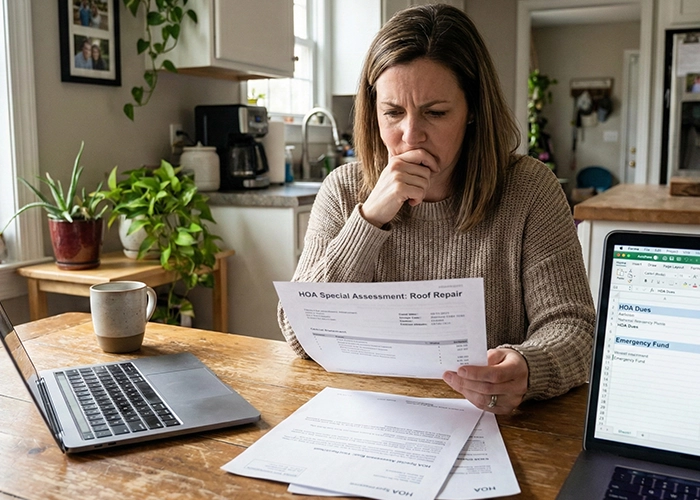
Some owners use the term HOA fees as a catch-all, but not every charge works the same way. Regular dues are planned and recurring, while other charges are tied to specific events or decisions.
Your documents may refer to periodic charges as HOA assessments, and the language can vary by state and by association type. The practical meaning is still the same for most owners: a required payment that supports shared community obligations.
One-time charges are sometimes used for major projects or urgent repairs when reserves are not enough. Those situations can be stressful, which is why strong reserve planning and clear communication matter so much.
Late Payments and the Real-World Consequences
Missed HOA dues can lead to late charges, interest, and collection steps, depending on the association’s rules and state law. A delinquency can also create headaches during a refinance or sale, since unpaid balances often must be resolved before a transaction closes.
A lien may be filed in some cases, and legal action can follow if a balance remains unpaid for long enough. The details vary widely, so the governing documents and local requirements matter.
A conversation early in the process is often the smartest move. Payment plans and hardship options exist in many communities, but they usually require the owner to speak up before the problem grows.
Questions Worth Asking Before You Buy

A clean listing photo will not tell you whether a community is financially healthy. The paperwork and the numbers usually tell the real story.
Useful questions often include these:
- What does the current dues amount cover, and what does it not cover?
- How much is in reserves, and has a reserve study been done?
- Are there major projects planned in the next one to three years?
- What is the delinquency rate, and how are collections handled?
- Have dues increased often, and what were the reasons?
Those answers can help you estimate your true monthly cost and your risk of surprise expenses. The goal is not perfection, just fewer unknowns.
Keeping Costs Fair Without Cutting Corners
A community does not need to choose between quality and affordability, but tradeoffs do exist. Competitive bidding, vendor performance reviews, and routine preventative maintenance can protect the budget over time.
Clear standards also help. When owners know what maintenance is covered, what is owner responsibility, and what the association’s service level actually is, frustration tends to drop.
Consistency matters here as well. A thoughtful plan, reviewed every year, usually beats last-minute decisions made under pressure.
The Money That Protects Your Neighborhood
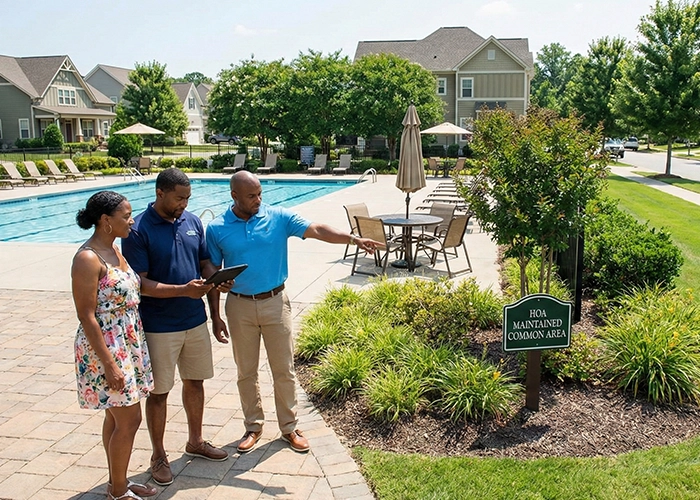
HOA dues are not just another bill, even though they can feel that way. They are the practical tool that keeps shared property maintained, obligations met, and the community running as a single unit. With the right information, the payment becomes easier to evaluate and far less mysterious.
Looking for professional help in handling HOA dues? Harbour Master Management offers professional HOA management services tailored to your needs. Call us at 401-414- 5130 or contact us online to get started!
Related Articles
- Managing Organized Sports in HOAs: Building Fitness, Safety, and Community
- HOA Board VS HOA Management Duties: What Are The Differences?
- HOA On-site Manager Guide: Understanding the Local Advantage
A solid HOA meeting agenda keeps board business moving and helps homeowners feel informed instead of surprised. Most meetings run long because the plan is fuzzy, not because the topics are hard. With a few repeatable steps, the agenda becomes a tool your community can trust.
Your HOA Meeting Agenda Starts Here
An HOA meeting agenda is more than a list of topics. A simple roadmap gets everyone on the same page before the room even settles. Clarity up front also lowers side conversations, repeat questions, and that familiar moment when the meeting drifts into unrelated issues.
Better meetings usually follow a predictable rhythm. That consistency matters for fairness, too, because owners can see what is being discussed and when. When residents know what to expect, participation tends to improve.
What the Agenda Really Needs to Do

The best agendas do three jobs at once. A clear purpose is set, decisions are identified, and time is protected. That mix keeps the board from spending thirty minutes “discussing” something that was never ready for a vote.
A meeting can still be friendly while staying focused. The goal is not to sound stiff. The goal is to keep momentum, so the board can handle business and still respect everyone’s evening.
Building Blocks That Belong on Most Agendas
A few sections show up in almost every association, even when the details change. Meeting date, start time, and location are obvious, yet they prevent confusion later. The same goes for listing whether the session is open, executive, annual, or special.
Approval items deserve their own space. Minutes, prior actions, and any routine ratifications fit best near the start, so the board can move forward with a clean slate. Reports can follow, but only when each report has a reason to be there.
A short owner comment slot often works best when it has clear guardrails. The agenda of the meeting should make that time feel structured, not improvised. A simple note about time limits and topic scope can prevent the comment period from overtaking the entire night.
Turning a Topic List Into a Real Plan

Topics feel harmless until they hit the clock. A practical HOA meeting agenda assigns a rough time budget to each segment. Estimates do not need to be perfect. They only need to be honest enough to guide the chair.
A good trick is grouping items by the kind of action needed. Discussion-only items belong together. Decision items should sit where the board is most alert and least rushed. Information items can stay near the end, since they rarely require a vote.
Transitions matter here. When a discussion ends, the agenda should make the next step obvious. That shift is easier when the chair can say, “We are moving to approvals,” instead of asking the room what comes next.
Deciding Who Adds Items and When
Chaos shows up when agenda items arrive at the last minute. A simple intake process solves most of that. Requests can come from directors, managers, committee chairs, or homeowners, depending on your governing documents and local requirements.
A cutoff time helps everyone. Many boards use a deadline several days before the meeting, which gives the manager time to gather backup materials. Late items can still be addressed, yet they should be rare and treated as exceptions.
Consistency also protects the board. When item requests are handled the same way each month, accusations of favoritism tend to fade. People may not like every decision, but the process feels steadier.
Keeping the Meeting on Track Without Feeling Harsh

An agenda should support the chair, not fight the chair. If the discussion starts looping, a simple reminder can bring the room back. The chair can point to the next item and offer a quick wrap-up path.
Time boundaries can be framed as respect, not control. Homeowners and volunteers appreciate a board that values their time. Meetings that end when promised build confidence faster than most newsletters ever will.
A stronger meeting structure also reduces conflict. When people see predictable rules, they tend to debate the issue instead of the process. That shift changes the tone in the room.
Using a Consent Agenda the Right Way
Routine items can eat half a meeting. A consent agenda groups low-risk, non-controversial approvals into one vote. Minutes approval, simple vendor renewals, and informational committee updates often fit well.
Transparency still matters. Each item should be listed clearly, and any director should be able to pull an item for separate discussion. That approach keeps the process fast while protecting board judgment.
Residents often like consent agendas once they see the benefits. A shorter meeting feels like a win for everyone. The key is showing that speed does not mean secrecy.
Handling Homeowner Input With Less Friction
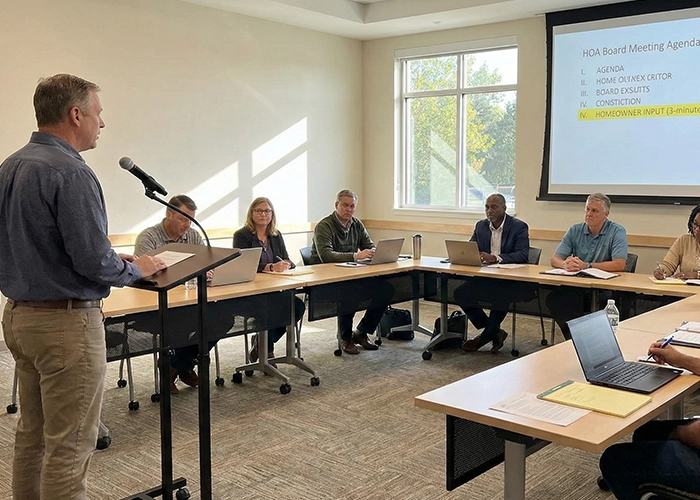
Owner input tends to go better when expectations are clear. A short note in the HOA meeting agenda can explain how the comment period works. Topics can be limited to association business, and time can be shared fairly.
Some boards place owner comments near the beginning, so people can speak early. Others place it after key decisions, so feedback can match what was discussed. Either option can work when the agenda is consistent month to month.
Follow-through matters more than perfect placement. When questions cannot be answered on the spot, a clear next step helps. The agenda can note that certain issues may be routed to management, a committee, or a later meeting.
Executive Session Items Deserve Careful Framing
Many associations use executive session for confidential topics like legal matters, collections, contracts under negotiation, or personnel issues. Public agendas often list executive session in general terms while protecting private details.
A clean approach is naming the category, not the specifics. Residents can still see that executive session exists and understand the general purpose. Trust is supported when the board treats confidentiality as a duty, not a hiding place.
Minutes and follow-up actions should be handled the right way, based on your documents and legal guidance. The agenda can also help by showing when the board will return to open session, if that applies.
Backup Materials Make the Agenda Work

An agenda without support papers invites confusion. A strong HOA meeting agenda is paired with a board packet that matches each decision item. Vendor bids, scope details, budget notes, and draft motions belong in that packet.
Short summaries help busy directors. A one-paragraph manager note under each action item can reduce questions during the meeting. Better preparation leads to faster votes and fewer “table it” moments.
Owners benefit too when materials are organized. Even when not all documents are shared publicly, the board’s preparation shows. Meetings feel less like guesswork.
A Simple Agenda Outline You Can Reuse
Below is a clean outline many boards adapt. The exact order can shift based on your association’s needs, yet the flow stays familiar:
- Call to order and quorum confirmation
- Approval of prior minutes
- Officer and manager reports (as needed)
- Consent agenda (routine approvals)
- Action items (decisions and votes)
- Discussion items (planning topics)
- Homeowner forum (if used)
- Executive session (if scheduled)
- Summary of next steps and assignments
- Adjournment
That outline works best when each action item includes a clear motion goal. A line like “Vote to approve landscape contract” signals what success looks like. Directors can prepare, and the meeting stays calmer.
After the Meeting, the Agenda Still Helps
The agenda should not disappear once the room clears. Action items can be turned into a short task list for management and board leads. That follow-up reduces the chance of repeating the same debate next month.
Patterns also become visible over time. When meetings always run long in one section, the agenda can be adjusted. A small tweak to time budgets can bring the whole meeting back into balance.
From Plan to Progress
A steady HOA meeting agenda makes meetings easier to attend, easier to lead, and easier to trust. Small habits like time budgets, clear action items, and consistent sections can change the tone of the entire board year. With the right format, the agenda becomes a simple promise the community can count on.
Need help in creating a proper HOA meeting agenda? Harbour Master Management offers professional HOA management services tailored to your needs. Call us at 401-414- 5130 or contact us online to get started!
Related Articles
- Managing Organized Sports in HOAs: Building Fitness, Safety, and Community
- HOA Board VS HOA Management Duties: What Are The Differences?
- HOA On-site Manager Guide: Understanding the Local Advantage
Few topics get more attention in an association than HOA assessments. Homeowners want predictability, boards want enough funding, and everyone wants the community to stay well cared for. Clear expectations help, especially when costs rise and projects pop up.
Understanding HOA Assessments

HOA assessments are the payments owners make to fund the association’s responsibilities. Most communities charge them on a set schedule, such as monthly, quarterly, or annually. The money supports shared expenses and helps keep the property in good shape.
A helpful way to think about it is simple. A neighborhood runs like a small business, and the assessment is the shared way the business stays open. Landscaping, lighting, gates, pools, elevators, hallways, roofs, and private roads still need attention even when no one notices them.
What Your Assessment Really Pays For
A big portion of an assessment goes to daily operations. Another portion should go toward longer-term savings, often called reserves. Both matter, and both affect how stable payments feel over time.
Operating costs cover routine services and predictable bills. Reserve funds are meant for major repairs and replacements that wear out over years. A community with healthy reserves tends to avoid sudden financial stress.
Common items funded by assessments include:
- Property and liability insurance for common areas
- Landscaping, tree care, irrigation, and seasonal cleanups
- Pool, gym, elevator, gate, or clubhouse maintenance
- Lighting, security monitoring, and access systems
- Utilities for common areas, such as water and electricity
- Management, accounting, legal, and administrative support
- Reserve contributions for roofs, paving, paint, and mechanical systems
The exact list depends on the property. A high-rise has very different needs than a single-family neighborhood with a park and an entry gate.
HOA Dues and the “Regular” Payment

Some communities call the regular assessment HOA dues. The term is common, but the idea is the same. A scheduled payment is collected to cover budgeted expenses, including reserve contributions when those are properly planned.
Confusion tends to start when different words get used in the same conversation. One homeowner says “dues,” another says “assessment,” and a third says “fees,” and everyone thinks they are talking about different charges. Most of the time, they are describing the same regular obligation.
HOA Fees and Extra Charges
Another term you may hear is HOA fees. In everyday talk, people use it as a catch-all. In many communities, though, “fees” can also refer to separate charges tied to a specific action or rule.
Late fees, document fees, move-in deposits, or amenity key replacements are examples of charges that might be listed separately from the regular assessment. Those amounts are usually avoidable, and they are not meant to fund the entire operating budget.
A clean budget helps homeowners see the difference. Regular assessments fund community-wide costs. Individual fees often show up when a rule is broken, a service is requested, or a special administrative task is needed.
Why Assessment Amounts Change
Assessment increases rarely happen for just one reason. Several pressures can stack up at the same time, and the budget has to reflect real numbers.
Insurance is a frequent driver. Premiums can rise fast, and coverage requirements can change. Utility costs can jump as well, especially water and electricity in common areas.
Labor and materials have also been harder to predict. Vendors adjust pricing, supply costs shift, and older properties need more frequent repairs. Even well-run communities feel these changes.
Another common issue is delay. When maintenance is pushed back for too long, the eventual fix tends to cost more. Small problems turn into bigger projects, and the budget gets strained.
How Boards Set HOA Assessments
A board does not pick a number at random. A yearly budget is usually built from contracts, historical spending, reserve planning, and expected needs. The goal is to match income to expenses without creating constant surprises.
A reserve study is often used to estimate major future repairs. When reserve planning is ignored, the association can look stable on paper while heading toward a funding problem later. Regular saving reduces the risk of sudden large increases.
Notice requirements and approval rules vary by state and by the governing documents. Some boards can raise assessments within set limits. Larger increases may require member input, a vote, or formal notice periods. The documents matter, and so does local law.
Special Assessments and When They Happen
A special assessment is usually a one-time charge for a cost that is not covered by the regular budget. Emergencies can trigger it, but so can major projects that were not fully funded in reserves.
Storm damage, structural repairs, unexpected building code requirements, or major mechanical failures are common examples. Sometimes the need is not sudden at all. A long-delayed roof replacement might be predictable, yet still funded through a special assessment if reserves were too low.
Payment structure depends on the situation. Some associations offer a lump-sum due date. Others allow installments over several months. A loan may be considered in some communities, which can spread costs out but adds interest and administrative work.
Owners usually respond better when the purpose is clear. A short explanation, a defined scope of work, and a realistic timeline can lower tension. Homeowners do not need a sales pitch. Straight facts build trust.
Delinquencies and the Community Impact
When owners fall behind, the association still has to pay bills. Vendors do not pause service because a portion of the community skipped payments. That gap can create stress for everyone.
The board typically has a collection policy that includes reminders, late charges, and formal steps such as payment plans. In serious cases, liens may be used when allowed by law and the governing documents. The goal is usually compliance, not punishment.
Fairness matters here. Consistent enforcement helps avoid the impression that some owners get special treatment. It also protects the association from claims of uneven handling.
A strong delinquency rate can also affect the community in other ways. Some lenders and buyers pay attention to financial health, reserve levels, and collection trends. Stability supports property values and day-to-day livability.
Practical Ways Homeowners Can Stay Prepared
Financial surprises feel worse when they arrive with no context. Owners can reduce stress by staying informed and planning ahead.
A few habits help:
- Reviewing the annual budget and reserve information when it is shared
- Attending at least one budget-focused meeting each year
- Asking questions early, before a vote or contract decision is locked in
- Keeping a personal “home plus HOA” savings cushion for changes
- Reading notices carefully, since deadlines and options may be included
A simple shift in mindset can help, too. An assessment is not only a bill. It is also the funding tool that supports shared assets that would cost far more to replace without planning.
Keeping It Predictable
Well-planned HOA assessments are easier to live with because they support steady maintenance and realistic long-term funding. Owners benefit when the budget is clear and reserve planning is taken seriously. When everyone understands what assessments cover and why changes happen, the community runs with fewer surprises.
Looking for professional help in handling HOA assessments? Harbour Master Management offers professional HOA management services tailored to your needs. Call us at 401-414- 5130 or contact us online to get started!
Related Articles
- HOA On-site Manager Guide: Understanding the Local Advantage
- Bad Neighbors in Your HOA: How to Protect Peace in Your Community
- Effective Communication in HOA Communities: Strategies Every Board Should Know
HOA rules only work when residents trust that enforcement is consistent, reasonable, and grounded in the governing documents. A fair approach when you enforce HOA fine policies protects property values, reduces conflict, and keeps the board focused on compliance instead of confrontation.
Start With Clear Authority and Written Standards
A fair fine policy begins with clarity about where the board’s authority comes from and how it will be used. Governing documents, adopted rules, and state statutes should line up so residents are not left guessing which standard applies. Confusion tends to create resentment, especially when a homeowner feels blindsided by a rule they did not realise existed or a penalty they did not expect.
Consistency also depends on specificity. Rules that rely on vague phrases like “in good taste” or “excessive” are harder to enforce evenly. When possible, boards benefit from objective standards tied to measurable expectations, along with a clear fine schedule that shows what happens after the first notice, how long the cure period is, and when fines escalate.
Use Proactive Communication to Prevent Violations

Fair enforcement looks a lot like good customer service. Many violations come from misunderstandings, outdated expectations, or residents who simply missed a rule update. A short, plain-language reminder sent on a regular cadence can prevent a surprising amount of conflict. The goal is not to “warn” residents as much as to keep everyone operating with the same information.
Multiple channels help. Email works for many households, but website posts, community portals, mailed notices, and bulletin boards still matter in some communities. New-owner welcome packets and move-in orientations deserve extra attention, since that is where compliance habits often begin. A resident who starts off feeling informed is more likely to respond well if a problem comes up later.
Tone matters, too. Language that explains the “why” behind the rule tends to land better than language that sounds like a threat. Residents usually respond more calmly when they understand that enforcement is tied to safety, maintenance, neighbour impact, or the association’s legal obligations.
Apply Reasonable Discretion Without Undermining the Rules
Discretion is part of fairness, but it needs boundaries. A one-size-fits-all approach can feel harsh when a violation is minor, temporary, or clearly unintentional. At the same time, too much flexibility can create the impression that rules are optional.
Many associations find success with a two-step approach for low-impact issues. A courtesy notice can serve as the first touchpoint, paired with a reasonable correction window. That kind of outreach keeps the interaction focused on resolution. Formal notices and fines then remain available for repeat violations, refusals to comply, or issues that create genuine risk.
Safety and liability deserve priority. Items that affect access, emergency routes, structural integrity, electrical hazards, or trip-and-fall risks are not the right place for informal handling. A fair policy treats those issues as urgent because the consequences can extend far beyond an aesthetic disagreement.
Enforce Consistently and Avoid Selective Enforcement

The fastest way to damage credibility is selective enforcement. Even if a board acts with good intentions, inconsistent responses can look personal. Residents notice patterns, and they talk to each other. That is why fairness requires a repeatable process, not case-by-case improvisation.
Uniform enforcement also protects the association. Challenges to enforcement often focus on “you let my neighbour do the same thing,” and that argument becomes much harder to rebut without a clear history of consistent action. Similar violations should receive the same timeline, the same notice format, and the same opportunity to correct.
A practical habit can help: treating enforcement as a systems issue rather than a people issue. The violation should be the focus, not the homeowner’s personality, board relationships, or community status.
Account for Fair Housing and Protected Rights
Fine policies have to operate within federal, state, and local law. Fair Housing concerns can come up when rules impact protected classes or when an accommodation request is involved. Religious displays, disability-related modifications, and assistance animal situations often require extra care, and the best path is usually a process that is consistent, well documented, and informed by counsel when needed.
Content-based restrictions can create problems, too. Rules tend to hold up better when they regulate objective factors such as size, placement, lighting, noise levels, and duration rather than viewpoint or message. Neutral standards are easier to defend and easier to apply fairly.
Boards do not need to become legal experts, but a baseline awareness helps. When an issue touches protected rights, caution and documentation matter more than speed.
Follow Due Process Every Time
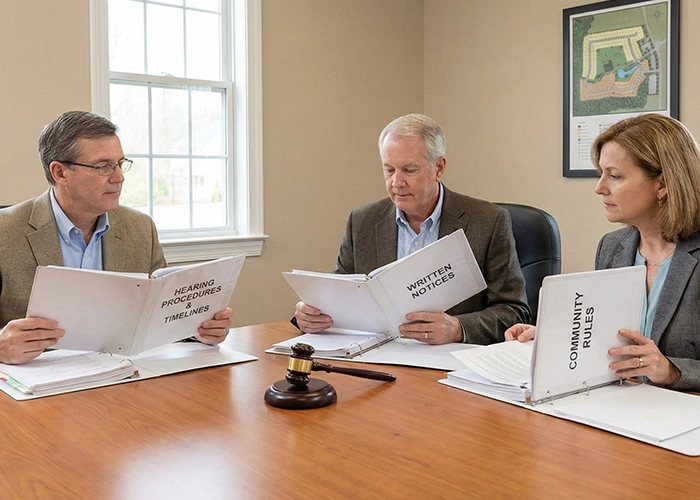
Due process is not a formality. It is the foundation for fair enforcement and one of the board’s strongest protections when a dispute escalates. A board that follows its procedure every time is far less likely to face claims of arbitrariness.
Notices should be written, clear, and tied to the exact rule being enforced. The cure deadline needs to be obvious, along with the next step if the violation continues. Hearing rights should be stated the way the governing documents require, including how a homeowner can request one and what the timeline looks like.
Hearings deserve a respectful structure. A homeowner should have a chance to explain the situation, share relevant facts, and propose a correction plan. Minutes should reflect what was considered and what decision was reached. Waivers and reductions can be fair when tied to a documented reason, but unexplained exceptions tend to create future headaches.
Document Everything and Maintain Strong Records
Documentation is what makes “fair” provable. Without records, enforcement becomes a memory contest, and that rarely ends well. A strong file usually includes the observation date, photos where appropriate, the cited rule, copies of notices, delivery method, cure deadlines, and follow-up results.
Standardisation helps. Templates reduce the chance of missing required elements. Checklists keep the process predictable across board terms and management transitions. A consistent paper trail also supports collections, alternative dispute resolution, and legal action when it becomes necessary.
Recordkeeping should also include internal consistency checks. When fines are issued, the board should be able to show that similar cases were handled the same way, using the same timeline and the same steps.
Use Committees and Informal Resolution Options

Committees can reduce friction when they are used properly. A compliance committee or covenant review committee can handle first-level outreach, help interpret standards, and flag patterns the board may not see. The board still holds decision-making authority, but the committee layer can add consistency and reduce the sense that enforcement is personal.
Informal resolution also has a place. Some issues improve quickly after a conversation, a clarification, or a written plan. Mediation and internal dispute resolution procedures can be valuable tools when a homeowner is willing to engage but feels stuck. A fair policy leaves room for resolution without making the association look weak.
Review and Improve the Fine Schedule Over Time
Fine policies should not be treated as “set it and forget it.” Over time, boards often learn which rules generate repeat issues, which penalties are too low to motivate compliance, and which procedures create unnecessary conflict. A periodic review can tighten the process and improve resident buy-in.
Patterns matter. If the same violation keeps showing up, the issue may be unclear rules, confusing communication, or a fine schedule that escalates too fast. Adjustments that make compliance easier tend to reduce enforcement workload, and that helps everyone.
A fair system is one residents can predict. Clear rules, consistent steps, due process, and steady documentation create that predictability, and the community runs smoother because of it.
Fair Fines, Stronger Community
Clear rules and consistent follow-through keep HOA fine policies fair, predictable, and easier for residents to respect. When notices, hearings, and documentation are handled the same way every time, enforcement stays focused on compliance instead of conflict.
Need help in policy enforcement in your HOA community? Harbour Master Management offers professional HOA management services tailored to your needs. Call us at 401-414- 5130 or contact us online to get started!
Related Articles
- HOA On-site Manager Guide: Understanding the Local Advantage
- Bad Neighbors in Your HOA: How to Protect Peace in Your Community
- Effective Communication in HOA Communities: Strategies Every Board Should Know
Strong communities rarely happen by accident. HOA volunteers often fill the small gaps that keep a neighborhood looking cared for and feeling connected.
What HOA Volunteers Mean for a Community
At a basic level, HOA volunteers are residents who give their time to support shared spaces, standards, and routines. The work is usually simple, but the impact adds up fast.
Most communities achieve the greatest results when volunteer efforts align with the maintenance plan. A clean entrance sign, a well-run planting day, or a smooth pool opening can help a board stay ahead of complaints and avoid last-minute scrambles.
Why People Step Up
A sense of pride pulls many residents in. Others volunteer because they want to meet neighbors, understand how decisions get made, or help keep dues from rising due to preventable issues.
Clear expectations matter here. When tasks feel manageable and well-organized, HOA volunteers tend to stick around, and new hands join more easily.
Some boards also notice a ripple effect. A visible volunteer culture can reduce the “us versus them” feeling that sometimes shows up between residents and leadership.
Setting the Line Between Help and Work
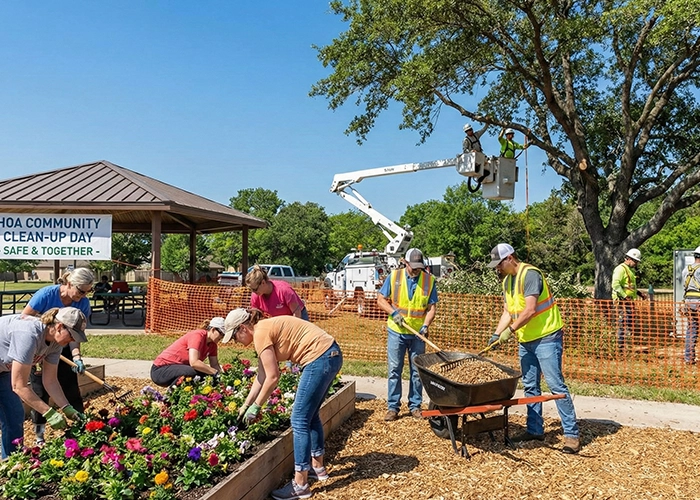
A helpful rule of thumb keeps things safe and fair. Volunteer projects should stay in the “light duty” lane, while skilled, high-risk, or regulated work should stay with trained professionals.
Many tasks look easy until something goes wrong. Ladder work, electrical fixes, pool chemicals, pressure washing, and tree trimming can turn into injuries or property damage in a heartbeat, so those jobs should be handled by licensed and insured vendors.
A written volunteer policy helps everyone. The best ones outline allowed tasks, safety basics, tool rules, supervision, and how scheduling works for HOA volunteers.
Low-Risk Projects That Make a Difference
Plenty of projects fit the volunteer lane and still move the needle. The best options are visible, simple, and easy to pause if the weather turns or attendance drops.
Common examples include:
- Entryway trash pick-up and litter walks
- Light weeding in common beds, without power tools
- Mulch spreading in small areas, with proper gloves
- Seasonal décor set-up and take-down in approved zones
- Welcome table staffing for community events
- Door-hanger delivery for notices and reminders
One phrase comes up often in board conversations: volunteers in HOA communities help most when they do the things that are hard to schedule through a vendor, but easy to standardize. A quick monthly “spruce-up” can also surface small maintenance issues before they become expensive repairs.
Planning Matters More Than Muscle

A volunteer day runs more smoothly when the goal is specific. A vague plan like “clean up the grounds” usually leads to scattered effort and mixed results.
A tight scope helps instead. One area, one task type, one set of tools, and one person in charge can make the work feel lighter and more successful.
Communication plays a big role, too. A short sign-up message with start time, end time, meeting spot, and what to bring reduces confusion and lowers no-shows.
Safety Comes First
Volunteer work still counts as work, so safety must be taken seriously. A quick safety talk at the start can cover the biggest risks, like heat, hydration, sun exposure, traffic, and lifting.
Basic protections should be expected, not optional. Closed-toe shoes, gloves, and eye protection for messy jobs can prevent common injuries, and a simple first-aid kit should be on-site.
Coverage should be discussed before the first project, not after an incident. Many communities review their general liability coverage, confirm volunteer-related protections, and use waivers when appropriate, especially when community volunteers will be working in shared areas.
Working With Your Maintenance Partner

Volunteer efforts work best when they support, not replace, a real maintenance program. A maintenance specialist can help identify tasks that are safe for residents and point out areas where a pro crew is needed.
A simple process keeps coordination easy. A short walk-through before the event can set boundaries, and a quick check after can confirm the area is left clean and undamaged.
Good volunteer work can also feed your work-order system. When HOA volunteers report peeling paint, trip hazards, irrigation leaks, or broken fixtures during a project, those notes can be turned into planned repairs instead of surprise emergencies.
Making Volunteering Fair and Sustainable
A volunteer culture should feel open, not cliquish. Communities do better when roles rotate, sign-ups remain transparent, and the same few residents do not carry the entire workload.
Accessibility matters as well. Some residents cannot lift, bend, or work outside for long, yet they still want to help, so small administrative roles can be offered, such as taking photos, checking supplies, or helping with event setup.
Recognition does not have to be flashy. A thank-you note, a quick shoutout in the newsletter, or a small community perk can keep morale steady without turning volunteering into a popularity contest.
A Simple Volunteer Playbook
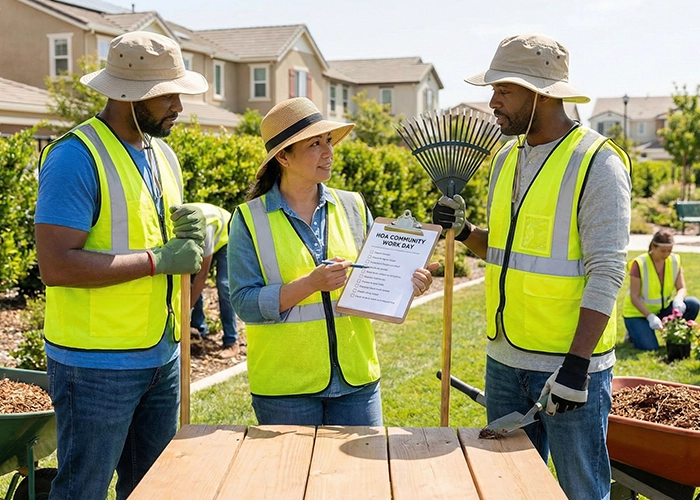
A short playbook makes volunteer projects repeatable. It also reduces stress on the board and helps new leaders get up to speed quickly.
A practical checklist can include:
- A clear task list with “allowed” and “not allowed” items
- A named project lead and a back-up contact
- A start and stop time, plus a rain plan
- A basic safety briefing and required gear
- A supply list and where items will be stored afterward
- A simple reporting method for issues spotted during the work
That structure keeps projects predictable. With the right guardrails, HOA volunteers can help the community feel cared for without creating risk or stepping into work that belongs with professionals.
Neighbors at Work
A well-run volunteer effort can improve curb appeal, reduce minor issues, and build better day-to-day relationships. The right mix of planning and boundaries lets volunteer energy support the community without compromising safety or quality.
Need help in handling HOA volunteers? Harbour Master Management offers professional HOA management services tailored to your needs. Call us at 401-414- 5130 or contact us online to get started!
Related Articles:
- Managing Organized Sports in HOAs: Building Fitness, Safety, and Community
- HOA Board VS HOA Management Duties: What Are The Differences?
- HOA Board Election Rules: Essential Guidelines to Follow
Most HOA committees start with good intentions and a full calendar. Trouble usually shows up later, when the work gets blurry and the “who decides what” question turns into an argument. An HOA committee charter prevents that from happening by documenting the committee’s responsibilities, limitations, and workflow.
Your HOA Committee Charter Starts Here
An HOA committee charter is a short document that outlines what a committee is supposed to do, what it is not supposed to do, and how it reports to the board. Think of it as the committee’s playbook, written in plain language and approved by the board. Clarity matters because committees often handle work that touches budgets, vendors, and day-to-day neighbor expectations.
A charter also protects volunteers from getting pulled into tasks they never agreed to take on. Better boundaries usually lead to better follow-through, especially when committee members rotate over time.
Why Charters Keep Committees on Track
A committee without a charter can slowly turn into a “shadow board,” even when no one means for it to happen. Small decisions start getting made in side conversations. Vendor directions come from three different people. Meetings drift into topics that belong with management or the board. Burnout follows, and the committee loses momentum.
A solid HOA committee charter fixes those problems early. Scope stays tighter, reporting becomes routine, and the board gets cleaner recommendations. Vendors and maintenance partners benefit too, because expectations stay consistent and approvals come from the right place.
Where the Charter Fits in the Paper Stack

Most communities already have several layers of guidance, such as declarations, bylaws, and rules. A committee charter should support those documents, not compete with them. When the governing documents already define a committee’s authority, the charter should mirror that language and fill in the “how” details.
In many associations, the board adopts a charter through a board resolution or similar written action. That approach makes the committee’s authority traceable, which helps when questions come up later. Some communities also align their committee process with basic parliamentary procedure for meetings, mainly to keep discussion orderly and decisions clear.
What a Strong Charter Usually Includes
The best charters stay readable while still covering the practical points that prevent confusion later. Most of the time, these topics show up in some form:
- Purpose and mission of the committee
- Scope of work, including what topics fall outside the committee
- Authority level, including what the committee may decide versus recommend
- Membership rules, including eligibility, term length, and removal
- Leadership structure, such as chair selection and basic duties
- Meeting expectations, including frequency, notice, and minute-taking
- Reporting process to the board, including how recommendations are presented
- Budget guidance, including spending limits and approval steps
- Vendor coordination rules, including who communicates direction and sign-off
- Review the schedule, so the charter gets updated instead of forgotten
One sentence in the charter should spell out the big picture: the committee supports the board, and the board remains responsible for final governance decisions.
Decision Lines That Stay Clear

Many conflicts come from a simple gap: nobody wrote down the difference between “recommend” and “approve.” A charter should make that difference obvious. That is where spending thresholds, bid rules, and sign-off steps earn their keep.
Some committees can make limited decisions, but that authority should be narrow and written. A maintenance-focused committee, for example, might track recurring issues, gather homeowner input, and compare vendor proposals. Final approval for contracts and major expenses typically stays with the board, and management usually handles day-to-day vendor scheduling.
Clean decision lines also protect your maintenance partners. When direction flows through one point of contact, work moves faster, and punch lists stay shorter. Conflicting instructions are less likely, and accountability becomes much easier to manage.
Roles That Feel Fair to Volunteers
Volunteer energy is precious, and a charter should treat it that way. Expectations should be realistic for people with jobs, families, and limited time. Committee size, quorum rules, and meeting frequency should match the actual workload, not an ideal version of it.
A single paragraph can cover HOA committee roles and HOA committee responsibilities without turning the charter into a job manual. Chair duties, basic participation expectations, and communication etiquette usually cover what most committees need. Confidentiality rules also matter, especially for committees that handle violations, disputes, or sensitive contract details.
Meetings and Reporting That Do Not Drag On

Committee meetings work best when the goal is clear. Updates are shared, decisions are recorded, and next steps are assigned. Minutes do not need to read like a transcript, but they should show attendance, motions or recommendations, and any votes taken.
Reporting back to the board should feel routine, not dramatic. A simple cadence helps, such as a short written report before each board meeting or a monthly summary when projects run hot. A charter can also set boundaries on homeowner communication, so committee members do not end up speaking “for the HOA” by accident.
Drafting the Charter Without Overcomplicating It
A practical way to start is by gathering the people who will live with the charter: one or two board members, management, and the committee chair (or a lead volunteer if the committee is new). A brief review of the governing documents should occur early, since the charter should meet those requirements.
From there, the drafting process can stay simple. One page often works for smaller committees, while more active committees may need two or three pages. The board should approve the final version in an open meeting, then store it with the association’s records so future volunteers can find it.
Once adopted, the HOA committee charter deserves a quick check-in each year. Changes in vendors, budgets, community priorities, or state laws can all create small gaps that are easy to fix when the document stays current.
Why Maintenance Work Improves With a Charter

Maintenance committees often sit close to the work that residents experience every day, such as landscaping quality, lighting outages, trip hazards, irrigation timing, paint condition, pool wear, and clubhouse upkeep. That visibility is helpful, but it can also create pressure. Neighbors flag issues directly to committee members, and committee members can feel stuck between “helpful” and “in charge.”
A strong HOA committee charter reduces that friction by setting a clean workflow. Issue intake can route through management. Site walks can be scheduled. Vendor feedback can follow a consistent format. Approval steps can remain consistent, which matters when a maintenance specialist prepares bids, orders materials, or schedules crews.
Better charters also reduce rework. When the committee knows its lane, it can focus on identifying patterns, gathering input, and presenting clear recommendations. The board gets better information, and vendors get clearer direction. The whole cycle becomes calmer.
Common Problems That Charters Prevent
A few patterns show up again and again when committees struggle. Most of them trace back to missing boundaries or unclear authority.
- Vague scope, where “maintenance” quietly turns into “anything I care about.”
- Unclear spending limits, which lead to delays or surprise invoices
- No reporting cadence, so the board gets updates only when something is already a problem
- Too many voices from vendors, which creates conflicting instructions and wasted labor
- No end date for ad hoc committees, so temporary groups linger and lose purpose
A charter will not fix every person’s problem, but it will prevent many avoidable ones. It also gives the board a neutral reference point when someone needs to be redirected.
Clarity Pays Off
A committee charter keeps volunteer work focused, fair, and productive. With a clear HOA committee charter, committees support the board rather than compete with it, and maintenance partners can deliver better results with fewer surprises.
Looking for professional help in handling your HOA’s committee charters? Harbour Master Management offers professional HOA management services tailored to your needs. Call us at 401-414- 5130 or contact us online to get started!
Related Articles
- HOA On-site Manager Guide: Understanding the Local Advantage
- Bad Neighbors in Your HOA: How to Protect Peace in Your Community
- Effective Communication in HOA Communities: Strategies Every Board Should Know
Community sports often bring people together in ways few other amenities can. Many residents seek neighborhoods with easy access to athletic facilities, and organized activities tend to strengthen those ties further. Managing organized sports in HOAs requires thoughtful planning, as a balance must be struck among safety, fair use, and the long-term condition of shared amenities.
Value of Organized Sports in HOAs
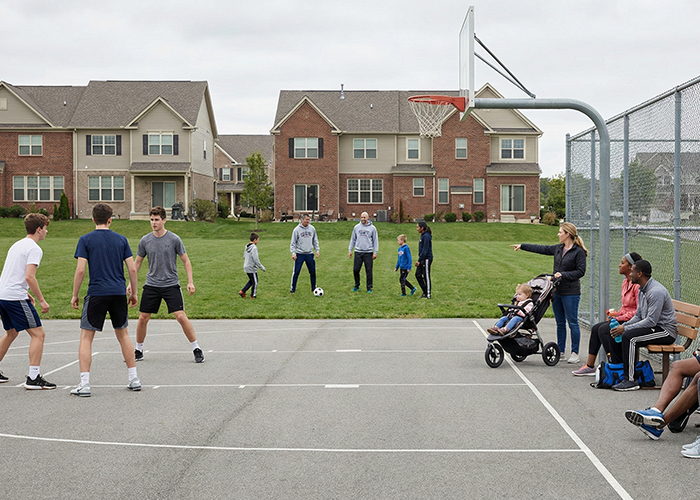
A strong sense of community often grows around shared interests, and organized sports provide a natural setting for that connection. Neighbors who may not cross paths during a regular week often meet one another at games, practices, or tournaments. These casual interactions slowly build a friendlier environment, one that feels welcoming and active.
Property values also benefit when sports amenities are maintained well and used regularly. Courts, fields, and recreation areas signal an invested community that supports wellness and engagement. Prospective buyers tend to view these features positively because active amenities often indicate a stable, well-managed association. Even modest recreation programs can boost a neighborhood’s overall appeal when handled properly.
But with these strengths comes the need for clear oversight. Organized sports introduce scheduling demands, higher facility usage, and added liability concerns. Without structured policies, disputes can develop quickly. Fairness and safety often depend on rules that are consistently enforced and easy for residents to understand.
Safety and Liability in Sports Facilities
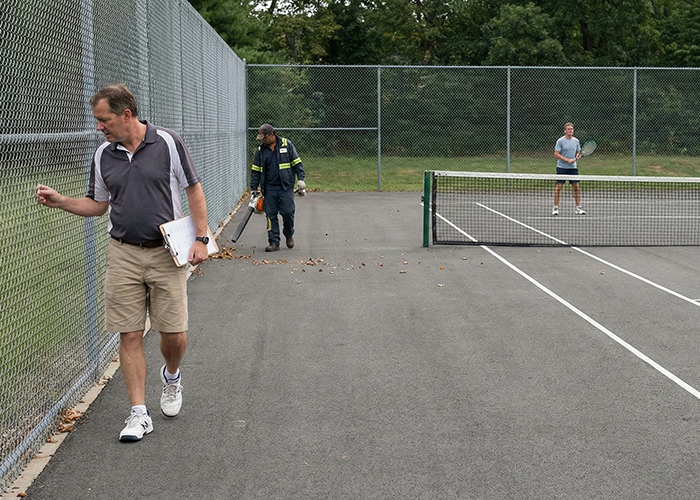
Ensuring safety across all sports amenities remains one of the board’s most important responsibilities. Courts, fields, and other recreation areas should be kept in safe working condition at all times. A predictable maintenance process helps reduce accidents and limits the community’s exposure to unnecessary risk.
Routine Facility Maintenance
Regular inspection schedules help HOAs stay ahead of problems. Even small issues, such as loose fencing or uneven turf, can create hazards if ignored for too long. Tennis courts with cracks, playgrounds with worn surfaces, or pool areas with weakened ladders present real risks that could lead to serious injuries.
Maintenance planning should include long-term capital needs as well. Surfaces eventually need resurfacing, nets require replacement, and outdoor equipment wears out faster with frequent use. When these tasks follow a set timeline, the community demonstrates responsible management, which becomes especially important if an accident ever results in a claim. Records of each repair and inspection offer key protection against allegations of negligence.
Insurance Requirements
Insurance plays a major role in liability planning. Associations depend on a master policy that includes broad general liability coverage, particularly when facilities support active use. Organized sports introduce additional risks that must be acknowledged in the policy’s scope.
Conversations with the association’s insurance agent help clarify what is covered and what is not. HOAs that allow non-residents to participate must confirm that their policy extends to those guests. Some policies limit coverage for outside users, so the board should fully understand these details before authorizing participation from anyone who does not live in the community.
A well-structured insurance plan protects both the association and its membership. It also provides clarity whenever the board must approve new sports programs or modify existing ones.
Ensuring Fair Access for All Residents

Demand for sports amenities can spike during certain seasons, especially when popular programs like pickleball, basketball, or soccer draw large groups. Without fair access rules, frustration builds among residents who feel pushed out by recurring practices or league events.
Reliable Reservation Systems
An organized reservation policy helps reduce these situations. HOAs often create schedules that outline how residents may reserve a court or field, whether for a short practice or a recurring activity. Clear limits prevent one team or group from dominating the space throughout an entire week.
Casual users also deserve opportunities to enjoy the amenities without having to compete with heavily structured programs. Some associations choose to prioritise unscheduled resident use unless a reservation was approved in advance. This kind of framework keeps playtime balanced for both organized teams and individuals who want to enjoy spontaneous recreation.
Managing Guest and Non-Resident Use
Communities sometimes allow guests or non-resident players, though this requires stronger oversight. Liability waivers often come into play here, especially when minors participate. Restrictions on peak hours also help preserve resident access, since outside groups can quickly fill up the schedule if guidelines are not in place.
Some HOAs introduce amenity fees for non-resident participants or groups that use the facilities frequently. This additional revenue assists with increased wear and tear. It also helps ensure that the community is not absorbing the full cost of maintaining facilities that are heavily used by outside parties.
Rules That Support Organized Team Play
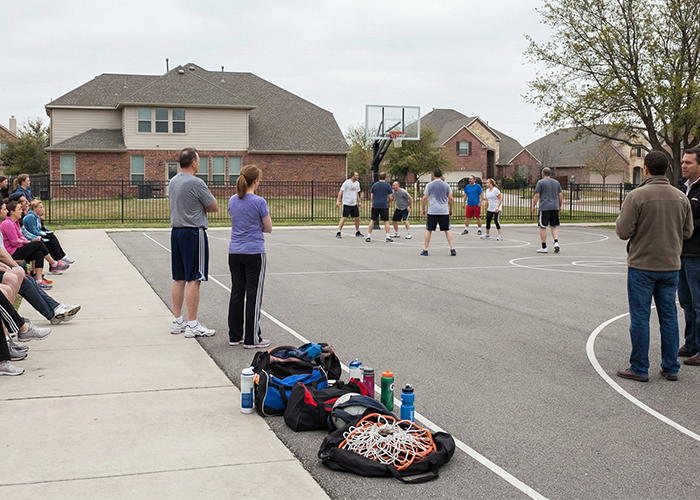
Organized sports naturally bring more activity, equipment, and foot traffic to the community. Managing that activity helps protect the facilities and maintain a comfortable environment for everyone living nearby.
Spectator and Noise Guidelines
Larger games often attract spectators, and the added crowd can bring noise, parking issues, or disruption if not managed well. Rules that address gathering size and quiet hours help residents enjoy their homes without unnecessary disturbance. HOAs may also outline where spectators can stand, sit, or park to avoid blocking access points or fire lanes.
Managers or enforcement committees may intervene when rules are ignored. Even well-intentioned teams must prioritise safety and respect for nearby homes during their events.
Care for Equipment and Facilities
Sports equipment left behind or stored improperly can damage surfaces and create hazards. Teams should be required to remove gear immediately after each use. Drinks or materials that can stain courts should be restricted, and rules should specify where equipment may or may not be stored.
Damage from organized play should be documented as soon as it is found. When a particular team or group is responsible, the HOA may charge repair costs directly to the sponsor or resident who reserved the facility. This ensures accountability and helps protect the association’s budget.
Role of Management in Overseeing Sports Activities
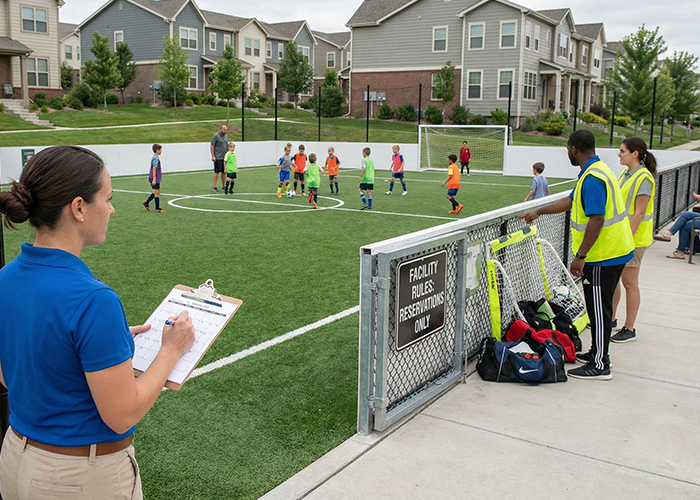
The management company plays a key role in coordinating sports programs. While the board creates the rules, the manager handles day-to-day enforcement, scheduling, and communication. This central oversight keeps the process fair and consistent.
Managers maintain reservation calendars, verify compliance with insurance requirements, and check facilities regularly for safety concerns. Their involvement removes pressure from volunteer board members, who may not have the time to oversee every detail.
When conflicts arise, managers act as neutral parties who can address issues without escalating tensions. They document violations, issue reminders, and guide the board through any formal action needed to suspend privileges. This structured approach helps maintain order and fairness across all sports activities.
Strong Management Leads to Stronger Programs
Managing organized sports in HOAs calls for clear rules, responsible oversight, and a commitment to fairness. Communities that invest in regular maintenance, proper insurance, and accessible scheduling create enjoyable spaces that residents value. These efforts help protect the property’s long-term health while supporting an active and connected neighborhood.
A healthy HOA depends on a clear working relationship between its volunteer leaders and its professional support team. When HOA Board vs HOA Management Duties are understood from the start, daily operations run more smoothly and homeowners gain confidence in how their community is managed. Confusion often leads to burnout, financial exposure, and frustration among residents, which is why clarity is essential.
Understanding the Division of HOA Board vs HOA Management Duties

A strong partnership between the HOA board and the management company forms the backbone of stable community operations. Their relationship is best viewed as governance paired with administration. The board sets direction, while management handles the operational work needed to carry out those decisions.
Board members serve as fiduciaries and policy makers. They establish priorities, approve budgets, and set expectations for how the association should function. Management supports those goals by providing the systems, professional knowledge, and logistical work required to keep the community running day after day.
Seeing this division more like the structure of a ship can be helpful. The board guides the course, and management provides the skilled hands needed to keep that course steady. This balance protects volunteer time while ensuring homeowners receive reliable, consistent service.
The Legal and Fiduciary Role of the HOA Board

The HOA board acts as the community’s legal authority. Every board member is elected by the homeowners and must act in the best long-term interest of the association. Their role cannot be handed off to a third party, even if the board works closely with management.
Policy and Decision-Making
Policy creation remains at the core of board responsibility. This includes approving the annual budget, determining assessment levels, adopting rules, and signing large contracts. These actions require formal board meetings, proper notices, and recorded votes.
Boards also oversee the enforcement process. While management may begin the initial steps, the board evaluates appeals and decides fines or loss of privileges. These decisions carry legal weight, which is why they must be handled directly by the elected representatives of the community.
Financial and Legal Oversight
The board carries the ultimate responsibility for financial integrity. Management can prepare financial reports and assist with bookkeeping, but the board must review statements, approve transfers, and select auditors. Reserve investments also fall under board authority.
Legal oversight works much the same way. Attorneys may guide the association, yet the board makes the final decisions on amendments, litigation, and complex interpretations of state law. This attention to legal detail protects the association from unnecessary risk.
The Operational and Administrative Role of HOA Management

The management company works under a contract that outlines specific duties. Their role focuses on carrying out the board’s decisions, providing professional expertise, and offering continuity that volunteer boards often cannot provide alone.
Financial Administration
Management typically handles the day-to-day financial tasks needed to support the board’s budget plans. This includes processing payments, preparing monthly financial packets, depositing funds, and paying approved bills. They also help with early drafts of budget proposals so board members have clear information for decision-making.
These tasks require accuracy, consistency, and a reliable system. Management ensures every transaction is recorded properly before the board reviews and approves it.
Property and Vendor Coordination
Maintenance of the common areas depends heavily on the management company. They coordinate vendors, schedule routine upkeep, and respond to maintenance requests. When issues arise, they issue work orders and gather bids for larger projects at the board’s request.
This level of coordination helps the board stay focused on strategy while giving the community confidence that the physical environment is cared for.
The Critical Intersections and Shared Responsibilities

Despite their distinct roles, the board and management company share several areas where collaboration matters. These intersections require clear expectations and steady communication to avoid misunderstandings.
Communication and Record Keeping
Management is responsible for distributing notices, updates, minutes, and violation letters. However, the board must approve the content when major decisions or policy changes appear in those communications.
Record keeping also falls under management’s administrative role. They maintain meeting minutes, legal documents, and financial records. Even so, the board remains the legal custodian, which means they must ensure state requirements are met. This shared responsibility creates transparency and supports homeowner trust.
Rules Enforcement
Rules enforcement often works best when each party handles its appropriate step. Management identifies potential violations, documents the issue, and sends the initial notice. The board steps in later when hearings or penalties must be decided.
This structure keeps the enforcement process fair. The person issuing the first notice is not the same person making the final judgment, which promotes consistency and reduces claims of bias.
Meetings and Agenda Preparation
Management assists with meeting preparation by assembling financial reports, vendor proposals, and policy items for board review. They help the Board President prepare an organized agenda so discussions stay focused.
During the meeting, management answers operational questions and clarifies details when needed. Although they participate as advisors, they never vote on any matter. The board directs the meeting and makes all final decisions.
Consequences of Blurred Lines

Communities often struggle when the division of HOA Board vs HOA Management Duties becomes unclear. Boundaries protect the association from unnecessary conflict, and breaking those boundaries usually leads to costly problems.
Board Overreach and Micromanagement
Trouble often begins when a board steps into tasks meant for management. Calling vendors directly or trying to oversee routine maintenance can slow progress and confuse homeowners about the proper communication channel. It can also overwhelm volunteers who already have limited time.
Another issue arises when boards push management to make decisions that legally belong to the board. A management company cannot set assessments, change rules, or approve legal actions. These responsibilities belong to the elected board, and handing them off creates liability for everyone involved.
Management Overstepping
A management company may also cause problems if it acts without proper authorization. Signing contracts, approving fines, or shifting funds without clear approval steps outside the boundaries of the management agreement.
Management’s role centers on execution. Decisions must come from the board unless an immediate emergency threatens safety or property. A well-defined contract helps prevent misunderstandings about who has authority in each situation.
Strong Communities Grow From Clear Roles
A successful partnership depends on respect for each party’s responsibilities. The HOA board focuses on policy, long-term planning, and financial oversight. The management company supports those goals by handling the operations that keep the community functioning smoothly. When both sides understand where their duties begin and end, the result is a well-run HOA with less conflict and a stronger sense of community among residents.