
A healthy HOA depends on a clear working relationship between its volunteer leaders and its professional support team. When HOA Board vs HOA Management Duties are understood from the start, daily operations run more smoothly and homeowners gain confidence in how their community is managed. Confusion often leads to burnout, financial exposure, and frustration among residents, which is why clarity is essential.
Understanding the Division of HOA Board vs HOA Management Duties

A strong partnership between the HOA board and the management company forms the backbone of stable community operations. Their relationship is best viewed as governance paired with administration. The board sets direction, while management handles the operational work needed to carry out those decisions.
Board members serve as fiduciaries and policy makers. They establish priorities, approve budgets, and set expectations for how the association should function. Management supports those goals by providing the systems, professional knowledge, and logistical work required to keep the community running day after day.
Seeing this division more like the structure of a ship can be helpful. The board guides the course, and management provides the skilled hands needed to keep that course steady. This balance protects volunteer time while ensuring homeowners receive reliable, consistent service.
The Legal and Fiduciary Role of the HOA Board

The HOA board acts as the community’s legal authority. Every board member is elected by the homeowners and must act in the best long-term interest of the association. Their role cannot be handed off to a third party, even if the board works closely with management.
Policy and Decision-Making
Policy creation remains at the core of board responsibility. This includes approving the annual budget, determining assessment levels, adopting rules, and signing large contracts. These actions require formal board meetings, proper notices, and recorded votes.
Boards also oversee the enforcement process. While management may begin the initial steps, the board evaluates appeals and decides fines or loss of privileges. These decisions carry legal weight, which is why they must be handled directly by the elected representatives of the community.
Financial and Legal Oversight
The board carries the ultimate responsibility for financial integrity. Management can prepare financial reports and assist with bookkeeping, but the board must review statements, approve transfers, and select auditors. Reserve investments also fall under board authority.
Legal oversight works much the same way. Attorneys may guide the association, yet the board makes the final decisions on amendments, litigation, and complex interpretations of state law. This attention to legal detail protects the association from unnecessary risk.
The Operational and Administrative Role of HOA Management

The management company works under a contract that outlines specific duties. Their role focuses on carrying out the board’s decisions, providing professional expertise, and offering continuity that volunteer boards often cannot provide alone.
Financial Administration
Management typically handles the day-to-day financial tasks needed to support the board’s budget plans. This includes processing payments, preparing monthly financial packets, depositing funds, and paying approved bills. They also help with early drafts of budget proposals so board members have clear information for decision-making.
These tasks require accuracy, consistency, and a reliable system. Management ensures every transaction is recorded properly before the board reviews and approves it.
Property and Vendor Coordination
Maintenance of the common areas depends heavily on the management company. They coordinate vendors, schedule routine upkeep, and respond to maintenance requests. When issues arise, they issue work orders and gather bids for larger projects at the board’s request.
This level of coordination helps the board stay focused on strategy while giving the community confidence that the physical environment is cared for.
The Critical Intersections and Shared Responsibilities

Despite their distinct roles, the board and management company share several areas where collaboration matters. These intersections require clear expectations and steady communication to avoid misunderstandings.
Communication and Record Keeping
Management is responsible for distributing notices, updates, minutes, and violation letters. However, the board must approve the content when major decisions or policy changes appear in those communications.
Record keeping also falls under management’s administrative role. They maintain meeting minutes, legal documents, and financial records. Even so, the board remains the legal custodian, which means they must ensure state requirements are met. This shared responsibility creates transparency and supports homeowner trust.
Rules Enforcement
Rules enforcement often works best when each party handles its appropriate step. Management identifies potential violations, documents the issue, and sends the initial notice. The board steps in later when hearings or penalties must be decided.
This structure keeps the enforcement process fair. The person issuing the first notice is not the same person making the final judgment, which promotes consistency and reduces claims of bias.
Meetings and Agenda Preparation
Management assists with meeting preparation by assembling financial reports, vendor proposals, and policy items for board review. They help the Board President prepare an organized agenda so discussions stay focused.
During the meeting, management answers operational questions and clarifies details when needed. Although they participate as advisors, they never vote on any matter. The board directs the meeting and makes all final decisions.
Consequences of Blurred Lines
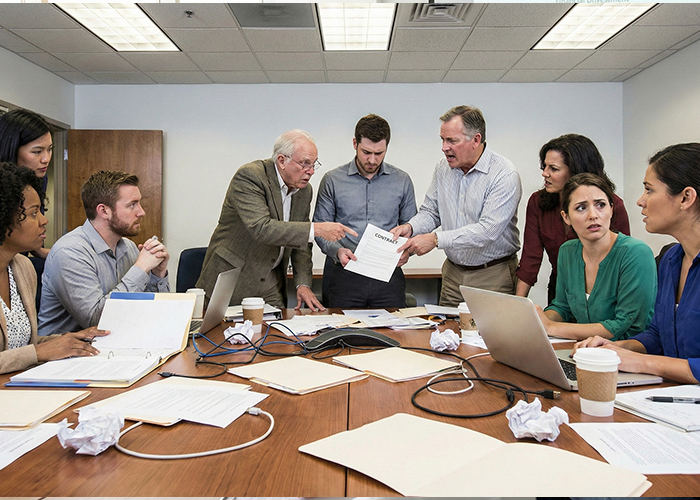
Communities often struggle when the division of HOA Board vs HOA Management Duties becomes unclear. Boundaries protect the association from unnecessary conflict, and breaking those boundaries usually leads to costly problems.
Board Overreach and Micromanagement
Trouble often begins when a board steps into tasks meant for management. Calling vendors directly or trying to oversee routine maintenance can slow progress and confuse homeowners about the proper communication channel. It can also overwhelm volunteers who already have limited time.
Another issue arises when boards push management to make decisions that legally belong to the board. A management company cannot set assessments, change rules, or approve legal actions. These responsibilities belong to the elected board, and handing them off creates liability for everyone involved.
Management Overstepping
A management company may also cause problems if it acts without proper authorization. Signing contracts, approving fines, or shifting funds without clear approval steps outside the boundaries of the management agreement.
Management’s role centers on execution. Decisions must come from the board unless an immediate emergency threatens safety or property. A well-defined contract helps prevent misunderstandings about who has authority in each situation.
Strong Communities Grow From Clear Roles
A successful partnership depends on respect for each party’s responsibilities. The HOA board focuses on policy, long-term planning, and financial oversight. The management company supports those goals by handling the operations that keep the community functioning smoothly. When both sides understand where their duties begin and end, the result is a well-run HOA with less conflict and a stronger sense of community among residents.