A solid HOA meeting agenda keeps board business moving and helps homeowners feel informed instead of surprised. Most meetings run long because the plan is fuzzy, not because the topics are hard. With a few repeatable steps, the agenda becomes a tool your community can trust.
Your HOA Meeting Agenda Starts Here
An HOA meeting agenda is more than a list of topics. A simple roadmap gets everyone on the same page before the room even settles. Clarity up front also lowers side conversations, repeat questions, and that familiar moment when the meeting drifts into unrelated issues.
Better meetings usually follow a predictable rhythm. That consistency matters for fairness, too, because owners can see what is being discussed and when. When residents know what to expect, participation tends to improve.
What the Agenda Really Needs to Do

The best agendas do three jobs at once. A clear purpose is set, decisions are identified, and time is protected. That mix keeps the board from spending thirty minutes “discussing” something that was never ready for a vote.
A meeting can still be friendly while staying focused. The goal is not to sound stiff. The goal is to keep momentum, so the board can handle business and still respect everyone’s evening.
Building Blocks That Belong on Most Agendas
A few sections show up in almost every association, even when the details change. Meeting date, start time, and location are obvious, yet they prevent confusion later. The same goes for listing whether the session is open, executive, annual, or special.
Approval items deserve their own space. Minutes, prior actions, and any routine ratifications fit best near the start, so the board can move forward with a clean slate. Reports can follow, but only when each report has a reason to be there.
A short owner comment slot often works best when it has clear guardrails. The agenda of the meeting should make that time feel structured, not improvised. A simple note about time limits and topic scope can prevent the comment period from overtaking the entire night.
Turning a Topic List Into a Real Plan

Topics feel harmless until they hit the clock. A practical HOA meeting agenda assigns a rough time budget to each segment. Estimates do not need to be perfect. They only need to be honest enough to guide the chair.
A good trick is grouping items by the kind of action needed. Discussion-only items belong together. Decision items should sit where the board is most alert and least rushed. Information items can stay near the end, since they rarely require a vote.
Transitions matter here. When a discussion ends, the agenda should make the next step obvious. That shift is easier when the chair can say, “We are moving to approvals,” instead of asking the room what comes next.
Deciding Who Adds Items and When
Chaos shows up when agenda items arrive at the last minute. A simple intake process solves most of that. Requests can come from directors, managers, committee chairs, or homeowners, depending on your governing documents and local requirements.
A cutoff time helps everyone. Many boards use a deadline several days before the meeting, which gives the manager time to gather backup materials. Late items can still be addressed, yet they should be rare and treated as exceptions.
Consistency also protects the board. When item requests are handled the same way each month, accusations of favoritism tend to fade. People may not like every decision, but the process feels steadier.
Keeping the Meeting on Track Without Feeling Harsh

An agenda should support the chair, not fight the chair. If the discussion starts looping, a simple reminder can bring the room back. The chair can point to the next item and offer a quick wrap-up path.
Time boundaries can be framed as respect, not control. Homeowners and volunteers appreciate a board that values their time. Meetings that end when promised build confidence faster than most newsletters ever will.
A stronger meeting structure also reduces conflict. When people see predictable rules, they tend to debate the issue instead of the process. That shift changes the tone in the room.
Using a Consent Agenda the Right Way
Routine items can eat half a meeting. A consent agenda groups low-risk, non-controversial approvals into one vote. Minutes approval, simple vendor renewals, and informational committee updates often fit well.
Transparency still matters. Each item should be listed clearly, and any director should be able to pull an item for separate discussion. That approach keeps the process fast while protecting board judgment.
Residents often like consent agendas once they see the benefits. A shorter meeting feels like a win for everyone. The key is showing that speed does not mean secrecy.
Handling Homeowner Input With Less Friction
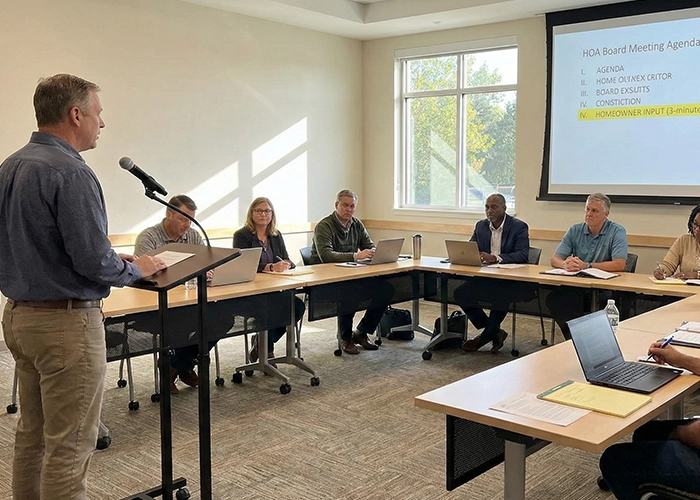
Owner input tends to go better when expectations are clear. A short note in the HOA meeting agenda can explain how the comment period works. Topics can be limited to association business, and time can be shared fairly.
Some boards place owner comments near the beginning, so people can speak early. Others place it after key decisions, so feedback can match what was discussed. Either option can work when the agenda is consistent month to month.
Follow-through matters more than perfect placement. When questions cannot be answered on the spot, a clear next step helps. The agenda can note that certain issues may be routed to management, a committee, or a later meeting.
Executive Session Items Deserve Careful Framing
Many associations use executive session for confidential topics like legal matters, collections, contracts under negotiation, or personnel issues. Public agendas often list executive session in general terms while protecting private details.
A clean approach is naming the category, not the specifics. Residents can still see that executive session exists and understand the general purpose. Trust is supported when the board treats confidentiality as a duty, not a hiding place.
Minutes and follow-up actions should be handled the right way, based on your documents and legal guidance. The agenda can also help by showing when the board will return to open session, if that applies.
Backup Materials Make the Agenda Work

An agenda without support papers invites confusion. A strong HOA meeting agenda is paired with a board packet that matches each decision item. Vendor bids, scope details, budget notes, and draft motions belong in that packet.
Short summaries help busy directors. A one-paragraph manager note under each action item can reduce questions during the meeting. Better preparation leads to faster votes and fewer “table it” moments.
Owners benefit too when materials are organized. Even when not all documents are shared publicly, the board’s preparation shows. Meetings feel less like guesswork.
A Simple Agenda Outline You Can Reuse
Below is a clean outline many boards adapt. The exact order can shift based on your association’s needs, yet the flow stays familiar:
- Call to order and quorum confirmation
- Approval of prior minutes
- Officer and manager reports (as needed)
- Consent agenda (routine approvals)
- Action items (decisions and votes)
- Discussion items (planning topics)
- Homeowner forum (if used)
- Executive session (if scheduled)
- Summary of next steps and assignments
- Adjournment
That outline works best when each action item includes a clear motion goal. A line like “Vote to approve landscape contract” signals what success looks like. Directors can prepare, and the meeting stays calmer.
After the Meeting, the Agenda Still Helps
The agenda should not disappear once the room clears. Action items can be turned into a short task list for management and board leads. That follow-up reduces the chance of repeating the same debate next month.
Patterns also become visible over time. When meetings always run long in one section, the agenda can be adjusted. A small tweak to time budgets can bring the whole meeting back into balance.
From Plan to Progress
A steady HOA meeting agenda makes meetings easier to attend, easier to lead, and easier to trust. Small habits like time budgets, clear action items, and consistent sections can change the tone of the entire board year. With the right format, the agenda becomes a simple promise the community can count on.
Need help in creating a proper HOA meeting agenda? Harbour Master Management offers professional HOA management services tailored to your needs. Call us at 401-414- 5130 or contact us online to get started!
Related Articles