
The election of an HOA’s Board of Directors shapes the community’s direction, financial priorities, and everyday experience for residents. Fair HOA board election rules help maintain trust and keep the process free from unnecessary disputes. A clear framework also guides owners, managers, and volunteers who take part in the election cycle.
Integrity in HOA Board Election Rules

A strong foundation of election rules supports the association’s duty to protect residents’ interests. Since board members influence policy and oversee finances, the process needs to follow well-defined requirements that keep every step fair. Clear standards also reduce concerns about bias or confusion, which helps the community feel more confident in the results.
State statutes sit at the top of the hierarchy and set the minimum legal requirements. Bylaws then provide the structure, such as terms of office, qualifications, and meeting requirements. An election policy may add more detail for transparency. Because state law always overrides any conflicting bylaw, legal compliance serves as the guiding principle for the entire process.
Written rules help prevent challenges later. When each stage, from the first notice to the final count, follows established expectations, homeowners gain assurance that the board values fairness. This structure also protects the association from unnecessary legal disputes and promotes a more constructive election season.
Candidate Eligibility and the Nomination Process
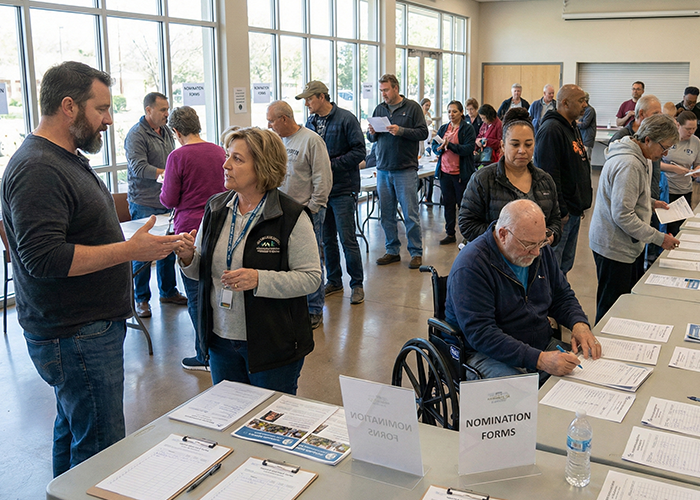
A fair nomination period begins with clear communication. Homeowners should receive advance notice that outlines deadlines, qualifications, and instructions for submitting interest. This step helps every eligible owner understand how to join the candidate pool.
Clear Qualifications for Service
Most associations rely on their governing documents to define who may serve on the board. Requirements may include owning a home, staying current on assessments, or maintaining compliance with major rules. These standards help ensure that candidates understand the responsibilities that come with volunteer leadership.
A board or nominating committee usually verifies eligibility. This review may involve confirming ownership records and checking payment status. Since the purpose is to protect the association from potential conflicts, a careful and neutral approach remains essential.
How the Nomination Window Works
The nomination window gives interested owners time to express their intent to run. Many states require a notice at least 60 to 90 days before the election, although exact timelines vary. The notice should tell owners how many seats are open, which qualifications apply, and when nominations close.
A written statement of interest often accompanies the nomination. This step helps confirm eligibility and also demonstrates that the candidate understands the responsibilities of the position. It creates a useful record as well, which comes in handy if concerns arise about fairness or communication.
Fair Voting Procedures for Homeowners
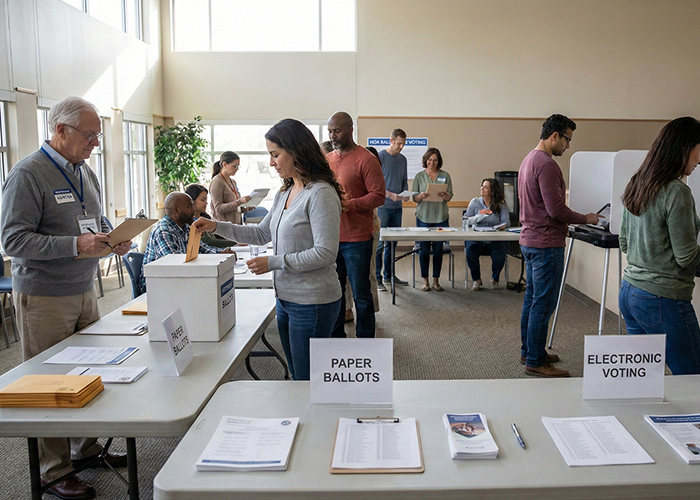
Every vote must be cast and counted in a way that protects accuracy and confidentiality. Modern communities have multiple options for voting, although the goal stays the same: an organized and impartial process.
Why Secret Ballots Matter
Secret ballots remain a common requirement in many states because they protect homeowners from pressure or retaliation. A voter should feel comfortable selecting candidates without worry that their preference will become public. This principle applies to both paper and electronic voting systems.
Electronic platforms must be able to separate identity verification from the vote itself. Paper ballots typically follow a two-envelope system: the ballot stays inside an inner envelope, while the outer envelope includes the voter’s signature. The inspector of elections later verifies signatures before removing the sealed inner envelope for counting.
Proxies and Absentee Participation
Rules for proxies differ among states, so associations must follow the legal definition closely. Some states allow general proxies, while others limit the use of directed proxies that specify how the vote should be cast. The goal is to maintain fairness without giving one person too much influence.
Absentee or mail-in ballots help improve participation, especially in larger communities. These ballots need to reach the association by a firm deadline. Once received, they must remain secure until the inspector begins the official count.
Meeting Requirements and the Vote Count
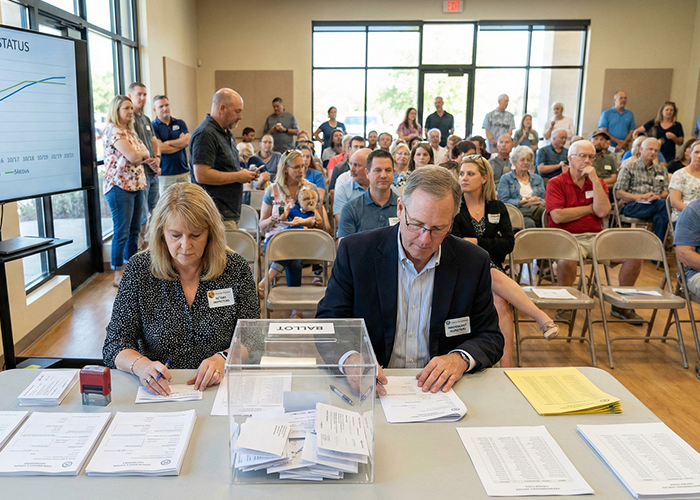
Although voting receives most of the attention, an election cannot take place unless the annual meeting reaches quorum. This step determines whether the community has enough participation to conduct official business.
Quorum as a Key Threshold
Quorum rules appear in the Bylaws and often set a percentage of owners who must be present in person or by proxy. Without quorum, the election cannot move forward, and the meeting must be adjourned. Some states allow reduced quorum requirements after repeated attempts, but associations still need strong communication to encourage involvement.
Quorum serves a practical purpose beyond legal compliance. It reflects how engaged the community is and signals whether the association can confidently proceed with decisions that affect everyone.
The Inspector of Elections
Many states require an independent inspector to oversee the vote. This neutral third party helps maintain integrity and prevents any suggestion that the board influenced the outcome. Inspectors may be notaries, CPAs, election vendors, or another qualified professional with no ties to current board members or candidates.
Their responsibilities often include verifying voter eligibility, securing ballots, counting votes, and certifying results. Having this impartial oversight reassures homeowners that no preferential treatment occurred during the process.
Post-Election Procedures and Record Management
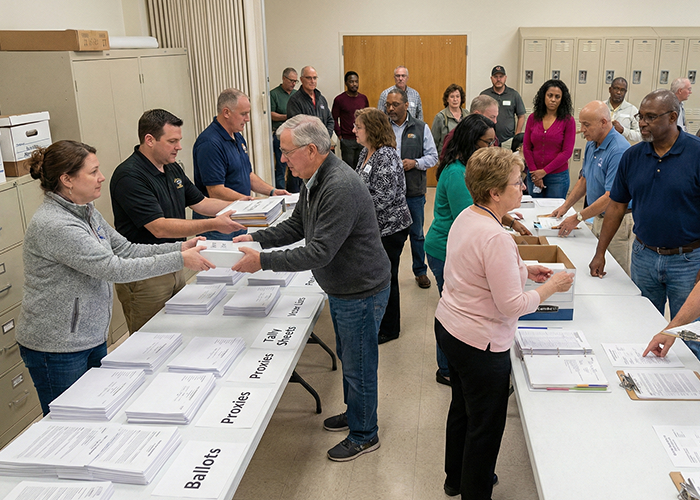
A smooth transition after the election is just as important as the voting itself. Proper documentation and clear communication help close the process respectfully and transparently.
Announcing Results and Seating Directors
Once the inspector certifies the results, the association informs the membership. The new directors then step into their roles, and outgoing members hand over any necessary records. This transition period supports continuity and reduces uncertainty about leadership responsibilities.
Meeting minutes must reflect the official results. Minutes serve as the permanent record proving that the association followed proper procedures and that the newly elected directors were seated according to the rules.
Retaining Election Records
State laws usually set strict retention requirements for election materials. Ballots, proxies, tally sheets, voter lists, notices, and the inspector’s certification must remain stored for a defined period. Keeping these documents safe protects the association if someone challenges the results later.
Record retention shows that the association takes transparency seriously. It also gives homeowners confidence that policies were followed and that the board is ready to address questions if they arise.
How Management Supports Election Compliance
The management company’s role centers on organization and procedural accuracy. Managers track deadlines, prepare notices, coordinate mailings, and provide systems for safe voting. Their experience helps associations avoid errors and ensures that state requirements are met.
A knowledgeable manager also keeps the process consistent from year to year. This continuity becomes valuable in communities where board turnover occurs frequently. With proper support, the election process stays structured, predictable, and compliant.
Community Trust
Strong HOA board election rules help create a fair and dependable system that protects homeowners and the association. Clear qualifications, secure voting procedures, and an accurate record trail all contribute to trust in the outcome. A well-run election strengthens the foundation of community governance and encourages a more stable environment for everyone.