
Accidents can happen anywhere, even in well-managed communities. That is why having properly stocked first aid kits for HOAs is more than a good idea—it is a responsibility that protects residents and reduces risk.
From pool decks to clubhouses, quick access to the right supplies can make a meaningful difference. For HOA boards, planning ahead ensures that small incidents stay manageable and do not turn into larger emergencies.
Why First Aid Kits for HOAs Are a Necessity
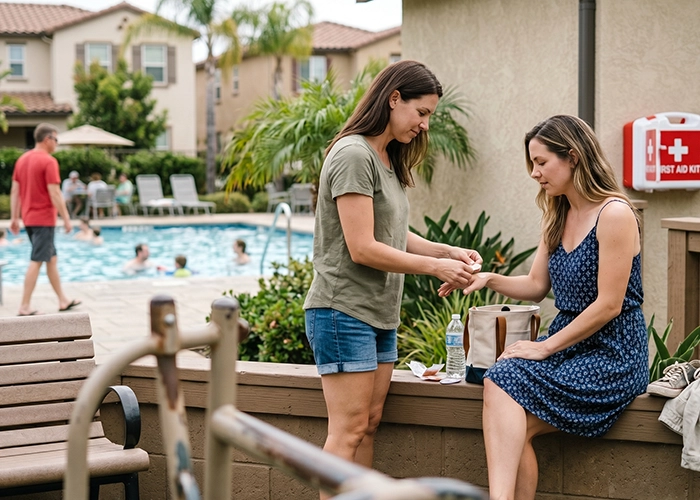
When people think about community safety, they often focus on security cameras or lighting. Those matter, but first aid kits for HOAs play a different and equally important role. They support immediate response in those first few minutes after an incident occurs.
In shared spaces, there is always a chance of minor injuries. Children playing, residents exercising, or guests visiting amenities can all lead to unexpected situations. Having a first aid kit nearby helps staff or residents respond quickly without scrambling for supplies.
There is also a liability component that boards cannot ignore. When an HOA shows that it has taken reasonable safety steps, it strengthens its position should an incident arise. It demonstrates care, preparation, and a commitment to resident well-being.
Where First Aid Kits Should Be Located in a Community
Placement matters just as much as the kit itself. A well-stocked kit does little good if no one can find it when needed.
HOAs should think about high-traffic and higher-risk areas across the property. These are spaces where activity levels are higher or where injuries are more likely to occur.
Common Placement Areas
- Pool areas and splash pads
- Fitness centers and gyms
- Clubhouses and event rooms
- Playground areas
- Maintenance or workshop spaces
Each of these areas sees regular use, and in many cases, they involve physical activity. That increases the likelihood of minor injuries such as cuts, scrapes, or strains.
It is also helpful to consider visibility. Kits should be clearly marked and easy to access, not locked away in offices that may not be open at all times.
What Should Be Included in HOA First Aid Kits
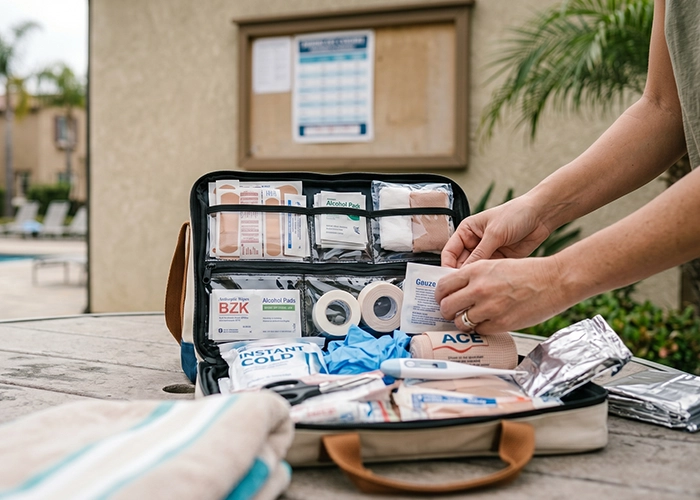
Not all first aid kits are created equal. For HOAs, a basic home kit is usually not enough. Community spaces require a more thoughtful approach based on usage and risk.
Core Supplies Every Kit Should Have
- Adhesive bandages in various sizes
- Sterile gauze pads and rolls
- Antiseptic wipes or solution
- Medical tape
- Disposable gloves
- Tweezers and small scissors
- Instant cold packs
- Burn cream or gel
- CPR face shield or mask
These items address the most common minor injuries. Cuts, scrapes, burns, and sprains are typical in shared spaces, and these supplies allow for quick treatment.
Additional Recommended Items
- Eye wash solution
- Elastic bandages for sprains
- Emergency blanket
- Thermometer
- First aid manual or quick reference guide
These additions help cover less frequent but still important situations. While not every kit needs to be advanced, having a few extra items can expand its usefulness.
It is also important to tailor kits based on location. A poolside kit, for example, may need more emphasis on slips and water-related incidents, while a fitness center kit may focus more on strains or minor injuries.
How Often Kits Should Be Checked and Maintained
A first aid kit is only effective if it is ready when needed. That means regular checks are not optional—they are part of responsible HOA management.
Maintenance Best Practices
- Assign responsibility to a specific staff member or vendor
- Check kits at least once a month
- Replace expired or used items promptly
- Keep a simple log of inspections
These steps ensure that nothing is missing when it matters most. Supplies like antiseptics and medications can expire, and items often get used without being replaced.
Consistency is key here. A simple routine prevents small oversights from turning into bigger issues later.
Training and Awareness Within the Community
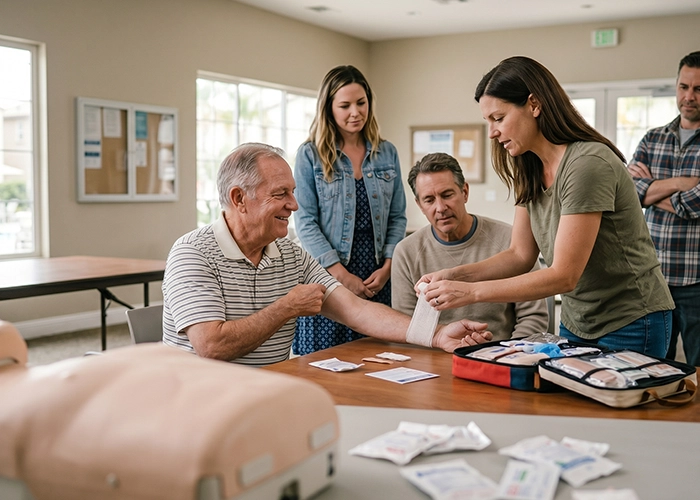
Even the best first aid kits for HOAs are not helpful if no one knows how to use them. While formal medical training is not required for everyone, basic awareness can go a long way.
Boards may consider offering occasional safety workshops or sharing simple guides with residents. This creates a more prepared community without overwhelming anyone.
For staff, basic first aid and CPR training is often a worthwhile investment. It builds confidence and ensures that someone is ready to step in if needed.
Clear signage also helps. When residents know where kits are located, response time improves during an incident.
Legal and Liability Considerations for HOAs
HOAs are not medical providers, but they do have a duty to maintain reasonably safe environments. First aid kits are part of that broader responsibility.
Having kits in place shows that the board has taken proactive steps to address common risks. It does not eliminate liability, but it can reduce exposure and demonstrate good governance.
It is also wise to review local regulations or insurance requirements. Some policies may include recommendations or expectations around safety equipment.
Boards should document their efforts as well. Maintenance logs, placement plans, and training records all contribute to a clear picture of responsible management.
Common Mistakes HOAs Should Avoid
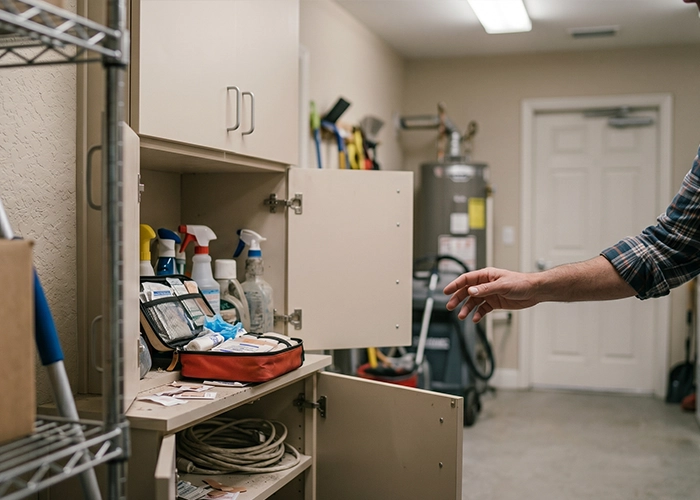
Even well-intentioned boards can overlook details when it comes to first aid kits. Avoiding a few common mistakes can make a noticeable difference.
Frequent Oversights
- Storing kits in locked or hard-to-access areas
- Forgetting to restock after items are used
- Using kits that are too small for community needs
- Failing to label kit locations clearly
- Ignoring expiration dates
Each of these issues reduces the effectiveness of the kit. In an emergency, even small delays or missing supplies can complicate the situation.
Taking a proactive approach helps avoid these gaps and keeps safety measures reliable.
How First Aid Kits Fit Into Broader HOA Safety Planning
First aid kits should not be viewed in isolation. They are one part of a larger safety strategy that includes maintenance, communication, and planning.
For example, well-maintained walkways reduce trip hazards, while proper lighting improves visibility at night. Combined with accessible first aid kits, these efforts create a safer overall environment.
Emergency planning also plays a role. Knowing how to respond to different situations, whether minor injuries or larger incidents, helps boards and residents stay calm and effective.
When all these elements work together, the community benefits from a more thoughtful and prepared approach to safety.
Choosing the Right Vendor or Kit Provider
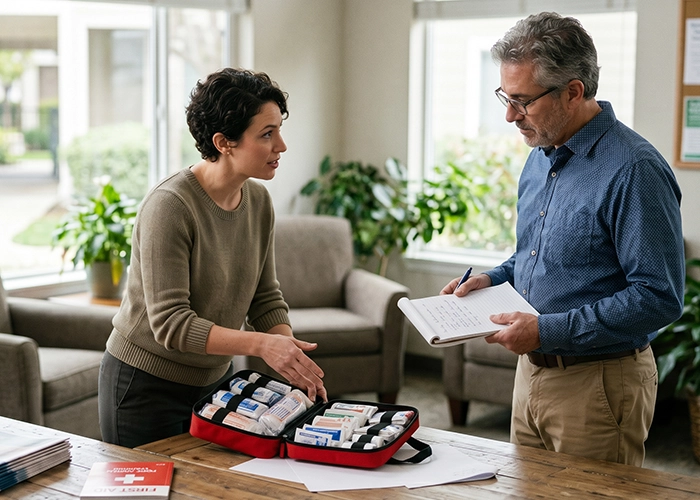
Not every HOA has the time or expertise to build and maintain kits from scratch. In many cases, working with a vendor can simplify the process.
A reliable provider can supply appropriately sized kits, help with restocking, and even offer inspection services. This reduces the burden on staff while ensuring consistency.
When evaluating options, boards should look for vendors with experience in commercial or community settings. Residential-scale kits often fall short for HOA needs.
Cost should be considered, but value matters more. A slightly higher investment can result in better coverage and fewer gaps.
A Small Investment That Supports Community Safety
First aid kits may seem like a small detail, but they play a meaningful role in protecting residents and supporting quick response. Want to strengthen your community’s safety plan without overcomplicating the process?
Our team can help you assess, place, and maintain first aid kits tailored to your HOA’s needs. Contact Harbour Master Management Group today to make safety simple, practical, and reliable for your residents.