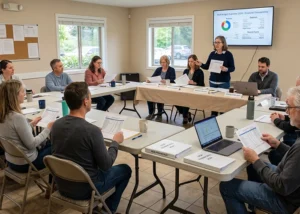
HOA board meetings play a critical role in the success of any community. They are where important decisions are made, budgets are discussed, projects are approved, and homeowner concerns are addressed. When meetings are productive and organized, communities benefit. When they are not, frustration can build among board members and residents alike.
Proper Preparation
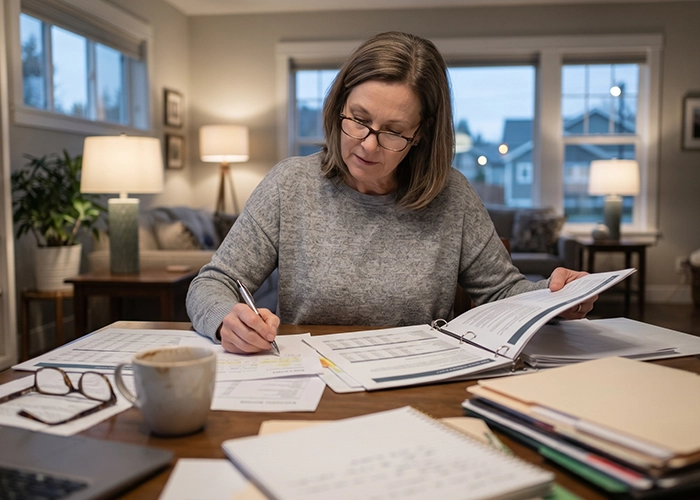
The quality of a board meeting is often determined before anyone enters the room. Preparation sets the tone for productive discussions and informed decision-making.
Board members should receive meeting materials well in advance. This includes agendas, financial reports, committee updates, vendor proposals, and any supporting documents related to upcoming decisions.
Providing information ahead of time allows board members to review details carefully and arrive prepared. Instead of spending valuable meeting time reading documents, the board can focus on discussing solutions and making decisions.
Preparation also helps reduce misunderstandings. When everyone starts with the same information, conversations tend to be more focused and productive.
Create Clear and Focused Agendas
One of the biggest reasons HOA meetings become lengthy and frustrating is the lack of a structured agenda.
A well-designed agenda serves as a roadmap for the meeting. It helps board members stay on track and ensures that important topics receive adequate attention.
An effective HOA meeting agenda often includes:
- Call to order
- Approval of previous meeting minutes
- Financial review
- Committee reports
- Old business
- New business
- Homeowner forum
- Adjournment
Each item should include an estimated time allotment whenever possible. This encourages efficient discussions and prevents any single topic from consuming the entire meeting.
A clear agenda also helps homeowners understand what will be discussed and when they may have an opportunity to participate.
Keep Discussions Focused on Community Business
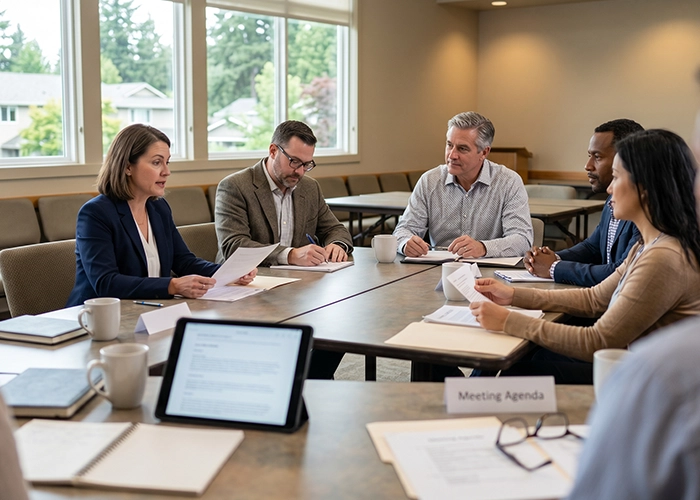
Board members often care deeply about their communities. While that passion is valuable, it can sometimes lead conversations off track.
A productive board meeting focuses on issues that directly affect the association and its members. Personal opinions, unrelated concerns, and side conversations should be minimized.
When discussions begin drifting away from the agenda, the board president or meeting chair should gently redirect attention back to the topic at hand.
Staying focused does not mean limiting healthy discussion. It simply means ensuring that conversations remain relevant to the decisions that need to be made.
This approach allows the board to accomplish more while respecting everyone’s time.
Establish Ground Rules for Participation
Successful meetings depend on mutual respect.
Board members should feel comfortable expressing their opinions, but they should also allow others the opportunity to speak. Establishing meeting expectations can help create a more collaborative environment.
Common meeting guidelines may include:
- Speaking one at a time
- Avoiding interruptions
- Remaining respectful during disagreements
- Limiting repetitive comments
- Focusing on facts rather than personalities
Disagreements are normal and often beneficial. Different perspectives can help the board make better decisions. The key is ensuring those disagreements remain professional and constructive.
Communities benefit when board members can discuss issues openly while maintaining a respectful atmosphere.
Make Financial Discussions Easier to Understand

Financial matters are among the most important topics discussed during HOA meetings. Unfortunately, they can also become confusing when reports are overly technical or presented without context.
Board members should receive financial reports before the meeting and have an opportunity to review them. During the meeting, treasurers or managers should focus on explaining key highlights rather than reading every line item.
Important topics may include:
- Current operating balances
- Reserve fund status
- Budget performance
- Delinquency trends
- Upcoming major expenses
Clear financial communication helps board members make informed decisions and improves transparency for homeowners.
When financial information is presented in a straightforward manner, meetings tend to move more efficiently.
Encourage Meaningful Homeowner Participation
Homeowners want to know that their concerns are being heard. Providing opportunities for participation helps strengthen trust between the board and the community.
Many associations include a homeowner forum during meetings. This allows residents to ask questions, share concerns, or provide feedback on community matters.
To keep discussions productive, boards should establish clear participation guidelines.
Examples include:
- Setting time limits for comments
- Requiring speakers to address community-related topics
- Asking residents to remain respectful
- Limiting debate during homeowner comment periods
These guidelines help ensure that everyone has an opportunity to speak while allowing the meeting to stay on schedule.
Residents who feel heard are often more engaged and supportive of board initiatives.
Use Technology to Improve Meeting Efficiency
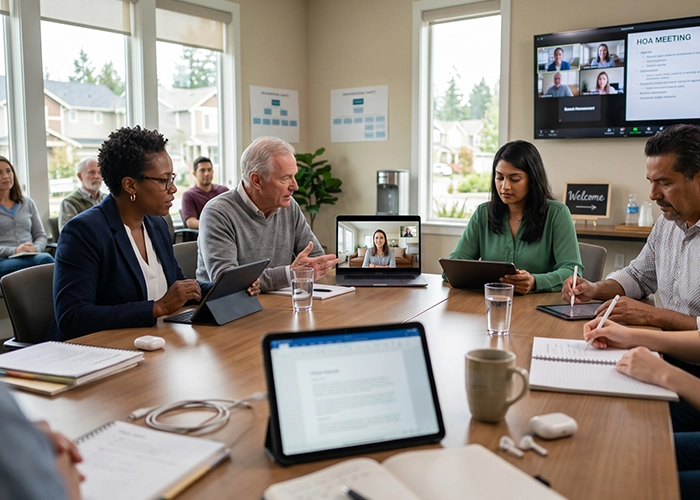
Technology has transformed how many HOA boards conduct business.
Digital tools can simplify communication, document sharing, meeting scheduling, and record keeping. Virtual meeting options have also made participation easier for board members and homeowners who may not be able to attend in person.
Technology can support better HOA board meetings in several ways:
- Electronic agenda distribution
- Online document storage
- Video conferencing platforms
- Digital voting systems where permitted
- Automated meeting reminders
The goal is not to replace personal interaction. Instead, technology should help streamline administrative tasks so the board can focus on governance and decision-making.
When used effectively, technology can save time and improve overall meeting organization.
Avoid Rehashing the Same Issues
One common challenge in HOA meetings is revisiting topics that have already been discussed multiple times.
While some matters require ongoing review, repeatedly debating the same issue can slow progress and create frustration.
Meeting minutes play an important role in preventing this problem. Accurate records help the board track decisions, assignments, and next steps.
Action items should be clearly documented, including:
- What decision was made
- Who is responsible
- Expected completion dates
- Required follow-up actions
When everyone understands the status of a project or decision, meetings become more productive and future discussions remain focused.
Strengthen Leadership Within the Board
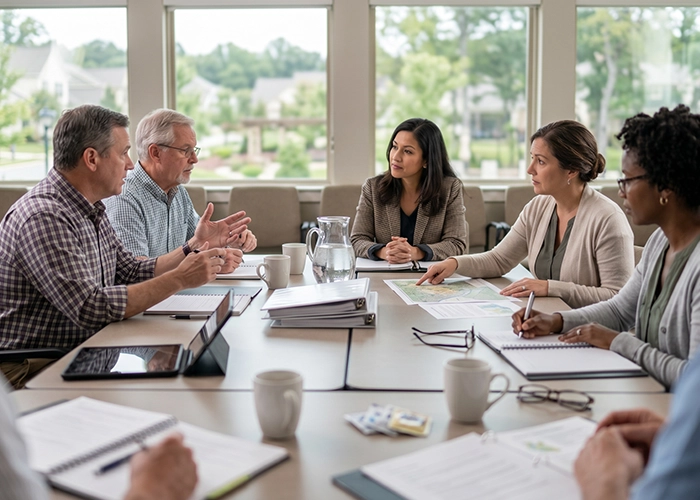
Effective leadership has a direct impact on meeting quality.
The board president typically serves as the meeting facilitator. Strong facilitation skills help maintain order, encourage participation, and keep discussions moving forward.
Good board leaders:
- Follow the agenda
- Encourage balanced participation
- Manage time effectively
- Remain neutral during discussions
- Focus on solutions rather than conflicts
Leadership responsibilities do not fall solely on the president. Every board member contributes to the meeting environment.
When board members work together respectfully and professionally, meetings become more productive and enjoyable for everyone involved.
Partner With Professional HOA Management
Many boards face increasing responsibilities as communities grow. Managing finances, maintenance projects, homeowner communication, vendor relationships, and legal compliance can become overwhelming.
Professional HOA management companies often play a valuable role in supporting board meetings.
Community managers can assist with:
- Agenda preparation
- Meeting coordination
- Financial reporting
- Vendor management
- Compliance guidance
- Record keeping
Having professional support allows board members to focus on governance and strategic decisions rather than day-to-day administrative tasks.
A skilled management partner can also help ensure meetings remain organized, compliant, and productive.
Build a Culture of Continuous Improvement
No HOA board meeting will be perfect every time. Even highly effective boards encounter challenges and disagreements.
The most successful communities view each meeting as an opportunity to improve. Board members regularly evaluate what is working, identify areas for improvement, and adjust their processes as needed.
Simple questions can provide valuable insight:
- Did we accomplish our goals?
- Were discussions productive?
- Did homeowners have an opportunity to participate?
- Did we stay on schedule?
- What can we improve next time?
Small improvements made consistently can lead to significant results over time.
Boards that embrace continuous improvement often experience stronger collaboration, better decision-making, and greater homeowner satisfaction.
Creating Meetings That Move Your Community Forward
Better HOA board meetings are not about making meetings longer or more complicated. They are about creating a structured environment where board members can make informed decisions, address community needs, and work together effectively.
If your board is looking for ways to improve efficiency, communication, and overall operations. Harbour Master Management Group can help your board lead with confidence and create a stronger community for residents. Call us at 401-414- 5130 or contact us online to get started!
Related Articles: