Understanding how State Laws on HOA Elections shape voting procedures helps communities maintain trust, fairness, and consistency. These laws guide every formal step of the election process, and boards rely on them to keep decisions transparent. A clear grasp of these standards supports a healthy association where residents feel confident in the outcome of each vote.
The Mandate for State Laws on HOA Elections

State Laws on HOA Elections serve as the foundation of election procedures for common interest communities. While Bylaws outline local rules, state statutes usually carry greater authority. These statutes were created to protect voting rights, reduce opportunities for manipulation, and ensure that all associations follow uniform practices.
Many states require that certain procedures be followed even when an association’s documents do not address them. When a conflict exists between a governing document and a state statute, the statute prevails. Boards must understand that compliance is not optional, since these rules offer important protections for both the community and the volunteers who serve it.
A structured legal framework transforms the election process into a formal business action. These requirements encourage consistency in how ballots are handled and how disputes are addressed. Careful attention to state law reduces the risk of challenges from owners who may feel the process was unfair or incomplete. It also supports the board’s fiduciary duty by ensuring that decisions reflect lawful and transparent governance.
Core Requirements for Election Notice

Election notice requirements stand among the most uniform elements regulated by state law. Notice ensures that every homeowner receives adequate time and information to participate. Without proper notice, the association risks invalidating the entire election.
Most states require two notices. The preliminary notice is commonly delivered well before the meeting date and invites owners to consider running for open seats. It explains the qualifications for candidacy and outlines how nominations may be submitted. This notice often appears sixty to ninety days ahead of the election to give owners enough time to respond.
The final notice arrives closer to the election and confirms the certified candidates, meeting agenda, and voting instructions. Many states dictate how this notice must be delivered, whether by mail or electronically, and may require proof that it reached each owner. Since this step carries legal weight, boards must follow the correct timeline and delivery method to preserve the validity of the election.
Candidate Eligibility and the Nomination Process

Eligibility rules help create a fair nomination process that promotes strong community leadership. Most state statutes require that candidates be owners of record, ensuring that those serving on the board have a vested interest in the community. Some states allow associations to restrict candidates who are delinquent on assessments or who hold outstanding judgments from the HOA.
A clear and timely nomination process encourages participation. Notice must be given far enough in advance so owners have a reasonable opportunity to express interest. The board or election committee then reviews and certifies the nominees based on the standards outlined in state law and the Bylaws. This review should remain objective and consistent, as inconsistent treatment can erode trust and invite disputes.
Nomination procedures shape the tone of the election. When owners understand the process and see it applied uniformly, the community is more likely to view the election as fair and credible.
Balloting and Voting Integrity
Ballot procedures play a central role in maintaining confidence in HOA elections. State statutes often require secret ballots to protect voter anonymity. This standard helps remove fear of pressure or retaliation and encourages honest participation.
Electronic voting has become more common, yet many states regulate its use to ensure the same level of protection offered by paper ballots. Associations that adopt e-voting must secure written consent from the owner and use a reliable third-party system. This system must protect confidentiality while offering clear authentication and verification methods. These rules give digital ballots the same legitimacy as traditional ones.
Some states also regulate the use of proxies. A proxy allows an owner to authorize someone else to vote on their behalf, though laws may restrict or prohibit them during board elections. When permitted, proxies must follow specific requirements so the board can verify their legitimacy. These regulations protect the process from misuse and encourage direct participation whenever possible.
The Meeting, Quorum, and Vote Counting
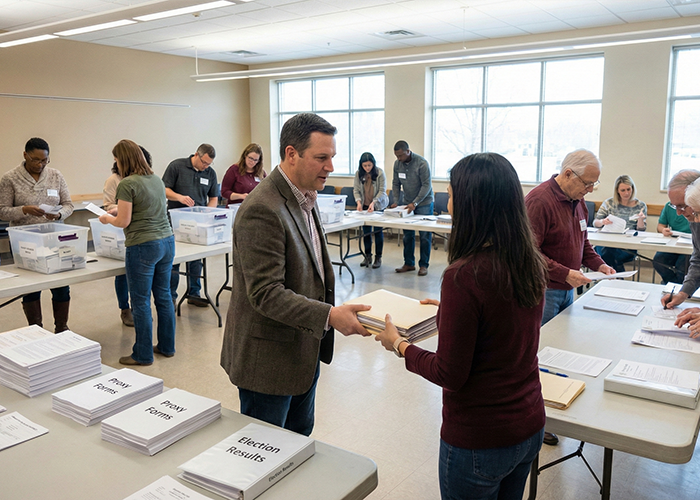
Since elections typically occur during the annual membership meeting, state laws set guidelines for how that meeting must be conducted. Quorum requirements carry particular importance because election results cannot stand without a legally recognized quorum. Each state identifies the minimum number or percentage of owners who must participate, whether in person, by proxy, or through absentee ballot.
Falling short of quorum often forces the association to adjourn and reschedule the election. This delay can strain resources and create frustration among homeowners. Maintaining clear communication and encouraging early participation helps reduce the risk of this setback.
Vote counting is another area where states often demand impartiality. Some require third-party inspectors, such as election vendors or notaries, to oversee the process. Their involvement reduces any appearance of bias and assures owners that ballots were handled appropriately. Once counting is complete, the inspector certifies the results and presents them to the membership.
Post-Election Procedures and Records

After the votes are counted, state laws outline how associations should complete the transition and maintain election records. These records may include ballots, voter lists, proxies, and the inspector’s report. Since these documents act as evidence of a lawful election, they must be kept securely for the period required by statute.
Owners often have the right to review these records upon request. Accessible records contribute to transparency and help resolve questions that may arise after the election. Retaining them also protects the association should a legal challenge occur.
Challenges must follow specific procedures. States generally limit the time an owner has to contest an election, and they may specify whether disputes must go through the courts or an alternative resolution method. Understanding these requirements helps the board respond correctly if a concern is raised.
A smooth transition of power is also guided by state law. Outgoing board members must transfer records, documents, and relevant information to the incoming board. This exchange ensures continuity and allows new directors to begin their service with a full understanding of their responsibilities.
The Interplay Between State Law and Governing Documents
State law occupies the top position in the hierarchy of association rules. Below it sit the CC&Rs, followed by the Bylaws, and then the Rules and Regulations. Whenever a change to state law occurs, an association may need to adjust its election procedures even if its governing documents say something different.
Many states update community association statutes regularly, which means the board must stay informed. When new notice requirements, balloting rules, or meeting standards take effect, associations must comply immediately. In some cases, Bylaws must be amended to eliminate conflicts. Staying proactive prevents costly errors and preserves the validity of each election.
A well-informed board protects the community from potential disputes, builds credibility, and strengthens the election process. Clear knowledge of State Laws on HOA Elections helps associations operate with confidence and fairness.
A Commitment to Fair Governance
Strong governance begins with an election process that meets the legal standards set by State Laws on HOA Elections. Clear notices, fair nominations, secure ballots, and impartial counting help maintain trust throughout the community. With thoughtful oversight and consistent adherence to state requirements, associations create an environment where every member feels represented.