
HOA meeting notices may seem like routine announcements, but they play an important role in keeping a community informed and involved.
HOA Meeting Notices, Explained!
An HOA meeting notice is an official announcement that tells homeowners about an upcoming association meeting. It usually states the date, time, location, and purpose of the meeting.
The notice may also include an agenda, virtual meeting details, voting instructions, or copies of documents that owners should review. The exact content depends on the type of meeting, state law, and the association’s governing documents.
A casual reminder is not always the same as an official notice. A newsletter, text message, or social media post can be helpful, but it may not satisfy the association’s legal notice duties unless the law and governing documents allow that method.
Why Meeting Notices Matter
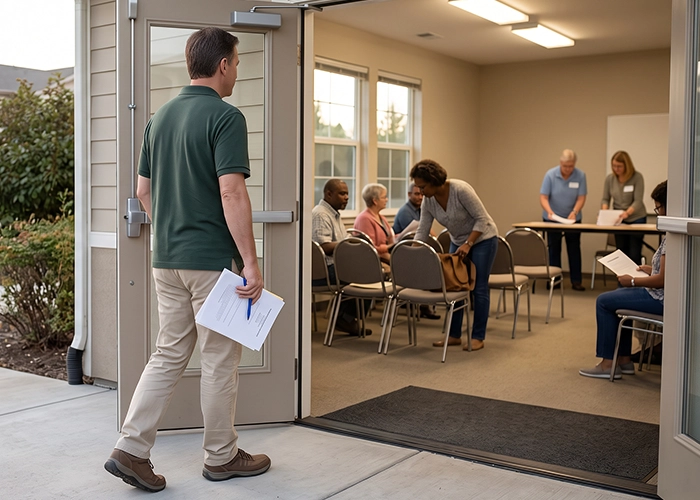
A clear, timely notice helps homeowners prepare for meetings while allowing the board to conduct association business with greater confidence.
HOA meeting notices give homeowners a fair chance to learn when a meeting will take place and what the board plans to discuss. They also help the association show that decisions are being handled openly and with proper care.
When residents receive enough information, they can decide whether to attend, submit a question, review supporting documents, or prepare for a vote. This can lead to more useful discussions and fewer complaints after the meeting.
Proper notice also protects the association. If a board makes an important decision without following state law or the governing documents, that decision may be challenged. Correcting the issue can cost the association time, money, and trust.
Common Types of HOA Meetings
Not every association meeting follows the same notice rules. Before preparing a notice, the board should identify the type of meeting being called.
Board Meetings
Board meetings are held so directors can discuss and vote on association business. Common topics include maintenance contracts, financial reports, rule enforcement, landscaping, insurance, and community projects.
Many states require board meetings to be open to homeowners, with limited exceptions. Owners may also have the right to speak about agenda items, although the board can often adopt reasonable rules for homeowner comments.
Annual Meetings
The annual meeting is normally the main membership meeting of the year. Board elections, financial updates, committee reports, and plans for the coming year are often addressed.
Annual meeting notices usually require more lead time than regular board meeting notices. The notice packet may also need to include ballots, proxy forms, candidate information, financial reports, or voting instructions.
Special Meetings
A special meeting is called to address a specific matter that cannot wait until the next regular meeting. It may involve a proposed amendment, major project, special assessment, recall, or another urgent community issue.
The purpose should be stated clearly in the notice. Boards should avoid taking action on unrelated matters when homeowners were not told that those matters would be discussed.
Committee Meetings
Architectural review, finance, landscaping, and other committees may hold separate meetings. Depending on state law and the committee’s authority, homeowner notice may be required.
A committee that can approve applications or make final decisions about association funds may face stricter requirements than an advisory group. The board should confirm the rules before assuming that notice is optional.
Emergency Meetings
An emergency meeting may be called when immediate action is needed to protect people, property, or association operations. Examples may include storm damage, a major water leak, a sudden security concern, or the failure of an essential community system.
Shorter notice may be allowed during a true emergency. Still, the board should document why the meeting was urgent and provide as much notice as the situation allows.
What Needs to Include

A meeting notice should make the essential details easy to find. Homeowners should not have to search through a long message to learn when or where the meeting will occur.
A complete notice will commonly include:
- The association’s full name
- The type of meeting being held
- The meeting date
- The starting time
- The physical location
- The virtual link or call-in number, when applicable
- A clear meeting agenda
- The purpose of a special meeting
- Voting or proxy instructions, when needed
- Contact information for questions
- Accessibility information, if applicable
The language should be direct and specific. Instead of listing “financial matters,” the agenda could state “review and approval of the 2027 operating budget.” That small change gives homeowners a much better idea of what to expect.
Important supporting materials should be included or made available when required. If the board will consider a budget, contract, rule change, or special assessment, residents may need time to review those documents before the meeting.
How Much Notice Should an HOA Give?
There is no single notice period that applies to every HOA in the United States. Requirements vary by state, meeting type, agenda item, and the association’s governing documents.
For example, Florida generally requires notice of a regular HOA board meeting to be posted in a conspicuous place at least 48 hours before the meeting. Longer notice and direct delivery requirements may apply when special assessments or certain rule changes will be considered.
Texas follows a different structure. Its property owners’ association law sets specific timing and delivery rules for many board meetings. California also has separate notice periods for regular and special board meetings.
Because these deadlines vary, boards should review the following sources before setting a meeting date:
- State HOA or community association laws
- State nonprofit corporation laws
- The declaration or CC&Rs
- The articles of incorporation
- The association’s bylaws
- Adopted meeting and notice policies
If two rules provide different notice periods, the association should seek guidance on which requirement controls. Giving extra time may be helpful, but additional notice does not correct an improper delivery method or an incomplete agenda.
Choosing the Right Delivery Method
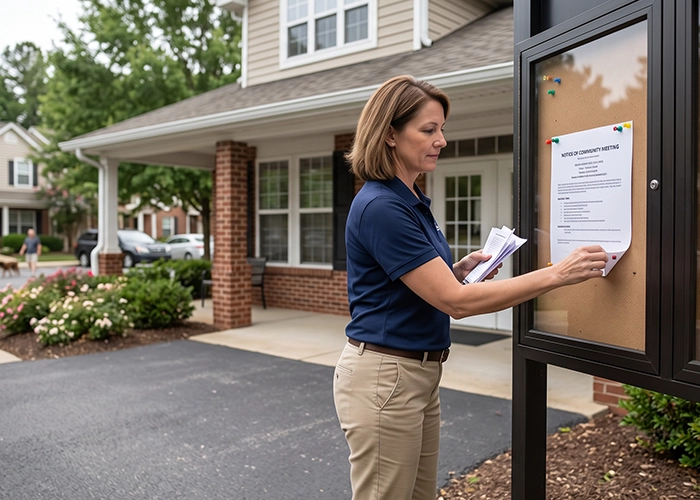
Meeting notices must be delivered in a way that satisfies the law and the governing documents. Depending on the association, this may include mail, hand delivery, posting in a common area, email, a community website, or an owner portal.
Electronic notice can be convenient, but consent may be required before email can replace mailed notice. An association should keep a record of which owners have agreed to receive official communications electronically.
Using more than one channel is often helpful, even when only one method is legally required. The official notice can be mailed or posted as required, while reminders can be shared through email, text alerts, or the community portal.
Helpful delivery practices include:
- Using a consistent physical posting location
- Keeping owner mailing addresses current
- Tracking consent for electronic notices
- Saving copies of sent emails
- Recording the date a notice was mailed or posted
- Keeping screenshots of website or portal postings
- Sending a brief reminder closer to the meeting
Boards should also consider homeowners who do not use digital platforms often. A communication process works best when it is both compliant and practical for the people who live in the community.
Creating an Agenda Homeowners Can Understand
A strong agenda tells owners what will be discussed without turning the notice into a full meeting script. Each item should be clear enough for a reasonable reader to understand the topic.
Vague terms such as “old business,” “new business,” or “general discussion” may not provide enough detail. A more useful agenda might identify pool repairs, a landscaping proposal, the annual insurance renewal, or adoption of a parking rule.
The board can organize the agenda in a logical order:
- Call the meeting to order
- Confirm that quorum is present
- Approve prior meeting minutes
- Review financial reports
- Address unfinished business
- Consider new business
- Allow homeowner comments
- Announce the next meeting
- Adjourn the meeting
The exact order may differ based on the bylaws and the board’s normal procedure. What matters most is that the agenda matches the meeting’s purpose and gives owners an honest preview of the planned business.
Handling Virtual and Hybrid Meeting Notices

Virtual and hybrid meetings can make participation easier, especially for seasonal residents or homeowners who cannot travel. However, the notice must provide enough information for people to join without unnecessary confusion.
The notice should include the meeting platform, direct access link, meeting ID, passcode, and call-in number. It should also explain how homeowners can speak, submit questions, or participate in a vote.
Boards should test the meeting link before sending the notice. A contact person can also be named in case an owner has trouble connecting. Clear instructions help prevent technical questions from delaying the meeting.
Avoiding Common Notice Mistakes
Most notice problems are caused by simple oversights rather than deliberate action. A meeting is scheduled quickly, an old email list is used, or an agenda item is added after the notice has already been posted.
Common mistakes include:
- Sending the notice too late
- Using an outdated owner address list
- Leaving out the meeting location
- Forgetting virtual access details
- Using an agenda that is too vague
- Discussing major matters that were not listed
- Treating an informal reminder as official notice
- Failing to keep proof of delivery or posting
- Assuming email notice is allowed without consent
- Applying regular meeting rules to a special meeting
A checklist can prevent many of these errors. One board member or the community manager should also review the notice before it is released.
If the date, time, location, or agenda changes, the board should determine whether a new notice period must begin. A correction sent shortly before the meeting may not satisfy the original requirement.
Keeping Records of Every Notice

The association should retain a copy of each meeting notice and related agenda. It should also keep evidence showing when and how the notice was distributed.
Useful records may include mailing certificates, email logs, portal records, dated photographs of posted notices, and affidavits of posting. These records can help answer homeowner questions and show that the association followed its procedures.
A simple notice log can track:
- The meeting type
- The meeting date
- The required notice deadline
- The date notice was prepared
- The date it was mailed, sent, or posted
- The person who completed the task
- The location or delivery method used
- Any correction or updated notice
Records should be stored in a place where future board members and the management team can find them. Consistent storage is especially useful when leadership changes.
Improving Homeowner Participation
Legal compliance is essential, but a notice should do more than meet the minimum rule. It should help residents understand why the meeting matters.
Plain language, useful agenda details, and early reminders can improve attendance. Residents are more likely to join when they know that the board will discuss an issue that affects their homes, assessments, amenities, or daily routines.
Boards can also make participation easier by explaining comment rules in advance. If owners must sign up to speak or submit questions before the meeting, that process should be stated in the notice.
How an HOA Manager Can Help
Preparing, distributing, and documenting meeting notices takes time. A professional HOA manager can help the board maintain a calendar, review notice deadlines, prepare agendas, update contact lists, and retain proof of delivery.
The manager can also help coordinate meeting packets, virtual access, ballots, proxies, and homeowner reminders. This support allows volunteer board members to focus on the decisions that require their attention.
Legal questions should still be referred to qualified association counsel. However, an experienced manager can help the board follow a consistent process and spot possible concerns before a notice is sent.
Keep Every Meeting Clear and Well Attended
Well-prepared HOA meeting notices support open communication, informed participation, and orderly board business.
When every notice is clear, timely, and properly documented, the association can approach each meeting with greater confidence.
Looking for dependable support for your association? Contact Harbour Master Management Group today and discover how we can help your board manage with greater clarity, efficiency, and confidence.
Related Articles:
- HOA Record Keeping: What Boards Should Keep and Why It Matters
- Essential Strategies for HOA Security in Your Community
- A Complete Guide to HOA Committees and How to Manage Them
Living in a homeowners association offers many benefits, from well-maintained amenities to protected property values. Even so, common HOA complaints can arise when expectations, communication, or policies don’t align with homeowners’ experiences.
HOA Complaints Board Should Know

The good news is that most concerns can be resolved before they turn into bigger problems. By understanding why complaints happen and addressing them with consistency and transparency, HOA boards can strengthen trust while creating a more enjoyable place to live.
No two communities are exactly alike, but many homeowner concerns tend to repeat themselves across neighborhoods. While every complaint deserves attention, recognizing common patterns helps boards identify opportunities to improve operations before frustrations grow.
Here are the issues that homeowners raise most often.
1. Poor Communication From the HOA
Communication sits at the heart of almost every successful community. When homeowners don’t know what’s happening, confusion quickly fills the gap.
Residents often become frustrated when meeting notices arrive late, maintenance schedules aren’t shared, or policy changes seem to appear without explanation. Even if the board is working hard behind the scenes, silence can make it seem like nothing is being done.
Good communication isn’t just about sending emails. It also means providing updates through newsletters, community websites, social media, resident portals, and bulletin boards when appropriate. Sharing information regularly helps homeowners feel informed rather than surprised.
Most importantly, communication should be consistent. Residents appreciate knowing when they can expect updates and where they should look for important information.
2. Inconsistent Rule Enforcement
One of the fastest ways to lose homeowner confidence is by enforcing rules differently from one resident to another.
Most homeowners understand that community rules exist for a reason. Problems begin when violations appear to be overlooked for some properties while others receive notices immediately.
Whether the issue involves parking, landscaping, exterior paint colors, or noise, consistency matters. Boards should rely on governing documents instead of personal opinions when making decisions.
Creating a documented enforcement process also helps. Homeowners are more likely to accept decisions when they understand that everyone is being treated equally.
3. Landscaping and Common Area Maintenance
Beautiful common areas are one of the biggest advantages of living in an HOA. That’s why maintenance concerns often generate strong opinions.
Grass that isn’t cut regularly, damaged playground equipment, neglected landscaping, overflowing trash cans, or broken irrigation systems can leave residents questioning how association dues are being used.
Routine inspections help identify maintenance needs before they become major problems. Preventive maintenance also costs less than emergency repairs in many situations.
Working with qualified vendors and following a scheduled maintenance plan allows communities to maintain a clean, attractive appearance throughout the year.
4. Parking Problems
Parking can become a daily source of tension in neighborhoods where space is limited.
Homeowners may complain about vehicles blocking driveways, guests parking in reserved spaces, commercial vehicles remaining overnight, or abandoned cars sitting for weeks.
Clear parking policies reduce misunderstandings. Those policies should explain guest parking, overnight parking, towing procedures, and vehicle restrictions in language that residents can easily understand.
Regular reminders also help prevent accidental violations, especially when new homeowners move into the community.
5. Noise Complaints Between Neighbors
Noise complaints are among the most difficult issues for HOA boards because every situation is unique.
One homeowner may enjoy outdoor gatherings while another expects complete quiet after dinner. Children playing outside, barking dogs, loud music, home improvement projects, and late-night parties can all become sources of conflict.
Rather than immediately taking enforcement action, boards often benefit from encouraging respectful conversations between neighbors first. Many disagreements can be resolved before formal violations become necessary.
If complaints continue, documented procedures ensure that every concern is reviewed fairly and consistently.
6. Architectural Review Delays
Many homeowners become frustrated when they submit improvement requests but wait weeks or even months for a decision.
Whether someone wants to install a fence, repaint their home, build a patio, or replace windows, delays create uncertainty and can postpone contractor schedules.
An efficient architectural review process should include:
- Clear submission requirements
- Published review timelines
- Consistent approval standards
- Prompt communication with applicants
- Written explanations for denied requests
When expectations are clear from the beginning, homeowners are less likely to become frustrated during the approval process.
Why Homeowners File Complaints in the First Place
Many HOA complaints aren’t really about the specific issue. Instead, they’re often the result of unmet expectations or misunderstandings.
A homeowner who receives a violation letter without prior education may feel singled out. Another resident might become frustrated simply because they don’t understand why a particular rule exists.
This is why education plays such an important role in community management. When residents understand the reasoning behind policies, they’re generally more willing to support them.
Boards should also remember that homeowners want to feel heard. Even when an association cannot grant a request, acknowledging concerns respectfully helps preserve positive relationships.
How HOA Boards Can Reduce Complaints Before They Happen
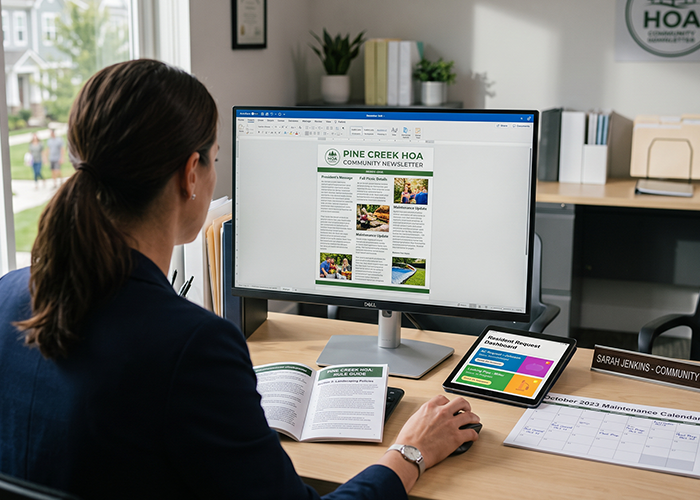
The most successful communities don’t simply react to complaints. They work proactively to prevent them.
Several practical strategies can make a noticeable difference.
Prioritize Transparent Communication
Residents appreciate regular updates, even when there’s little major news to report.
Monthly newsletters, community emails, maintenance calendars, and board meeting summaries keep homeowners informed and reduce unnecessary speculation.
Transparency also builds credibility. When residents understand why decisions are made, they’re more likely to trust the board’s leadership.
Make Governing Documents Easier to Understand
HOA governing documents often contain legal language that homeowners rarely read until a problem arises.
Providing simple guides that explain frequently referenced rules can improve compliance without changing the governing documents themselves.
Topics such as parking, landscaping, architectural requests, pet policies, and amenity usage are excellent candidates for homeowner-friendly summaries.
Respond Promptly
A delayed response can sometimes create more frustration than the original issue.
Even if a complete solution isn’t immediately available, acknowledging receipt of a complaint lets homeowners know their concerns haven’t been ignored.
Simple communication such as confirming that an investigation is underway can go a long way toward maintaining trust.
How Technology Helps Address HOA Homeowner Complaints

Technology has transformed how HOAs communicate with residents and manage community operations. The right tools make it easier to share information, track requests, and keep everyone informed.
Many associations now use online homeowner portals where residents can:
- Submit maintenance requests
- Pay assessments online
- Access governing documents
- Review community announcements
- Check meeting schedules
- Monitor the status of submitted requests
Providing homeowners with easy access to information reduces uncertainty and eliminates many of the questions that would otherwise require emails or phone calls.
Technology also benefits board members and managers. Digital records create a clear history of communications and maintenance requests, helping ensure consistency when responding to homeowner concerns.
Building a Community Where Complaints Are Less Common

Every neighborhood will experience occasional disagreements. The goal isn’t to eliminate complaints entirely but to create an environment where concerns are handled respectfully and resolved efficiently.
Communities with positive relationships often share several qualities. Residents know how to contact the board, understand community expectations, and feel comfortable asking questions before small concerns become larger problems.
Boards can encourage this type of environment by making homeowner engagement a priority. Community events, educational newsletters, welcome packets for new residents, and open board meetings all help strengthen connections between neighbors and association leadership.
When homeowners feel like valued members of the community instead of outsiders, cooperation naturally improves.
Mistakes That Can Make HOA Complaints Worse
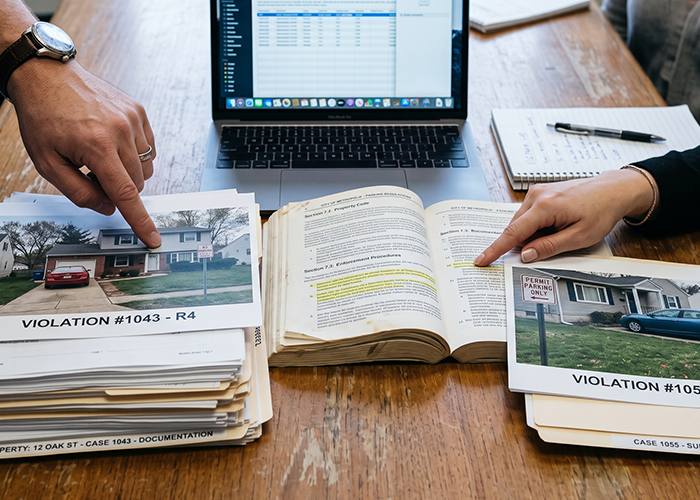
Some complaints become more difficult simply because they aren’t handled effectively. Even well-intentioned boards can unintentionally increase frustration when communication or processes fall short.
Avoiding these common mistakes can make a meaningful difference:
- Waiting too long to respond. Homeowners appreciate timely acknowledgment, even if the issue cannot be resolved immediately.
- Applying rules inconsistently. Fairness is one of the biggest factors influencing homeowner trust.
- Failing to explain decisions. A brief explanation often helps residents understand why a decision was made, even if they disagree with the outcome.
- Allowing documentation to fall behind. Accurate records provide clarity and protect both the association and homeowners.
- Reacting emotionally. Remaining professional during difficult conversations helps keep discussions productive and focused on solutions.
By avoiding these pitfalls, boards can resolve concerns more efficiently while maintaining positive relationships throughout the community.
Consistency Creates Stronger Communities
One successful decision won’t eliminate homeowner complaints overnight. Trust is built through consistent actions over time.
When boards communicate openly, enforce rules fairly, maintain common areas, and respond promptly, homeowners begin to see that the association is committed to serving the community’s best interests.
Consistency also creates predictability. Residents know what to expect, which reduces confusion and helps prevent unnecessary conflicts before they begin.
When residents feel informed, respected, and treated fairly, the entire community benefits.
Better HOA management starts with better support. Harbour Master Management Group is here to help your board manage with confidence. Call 401-414-5130 or connect with us online today.
Related Articles:
- What Is An HOA And How Does It Works In Community Governance?
- Dealing With Difficult Homeowners: Practical Strategies For HOA Boards
- HOA vs. Homeowner Maintenance Responsibilities